CLICK ON IMAGE TO VIEW A HIGH RESOLUTION VERSION
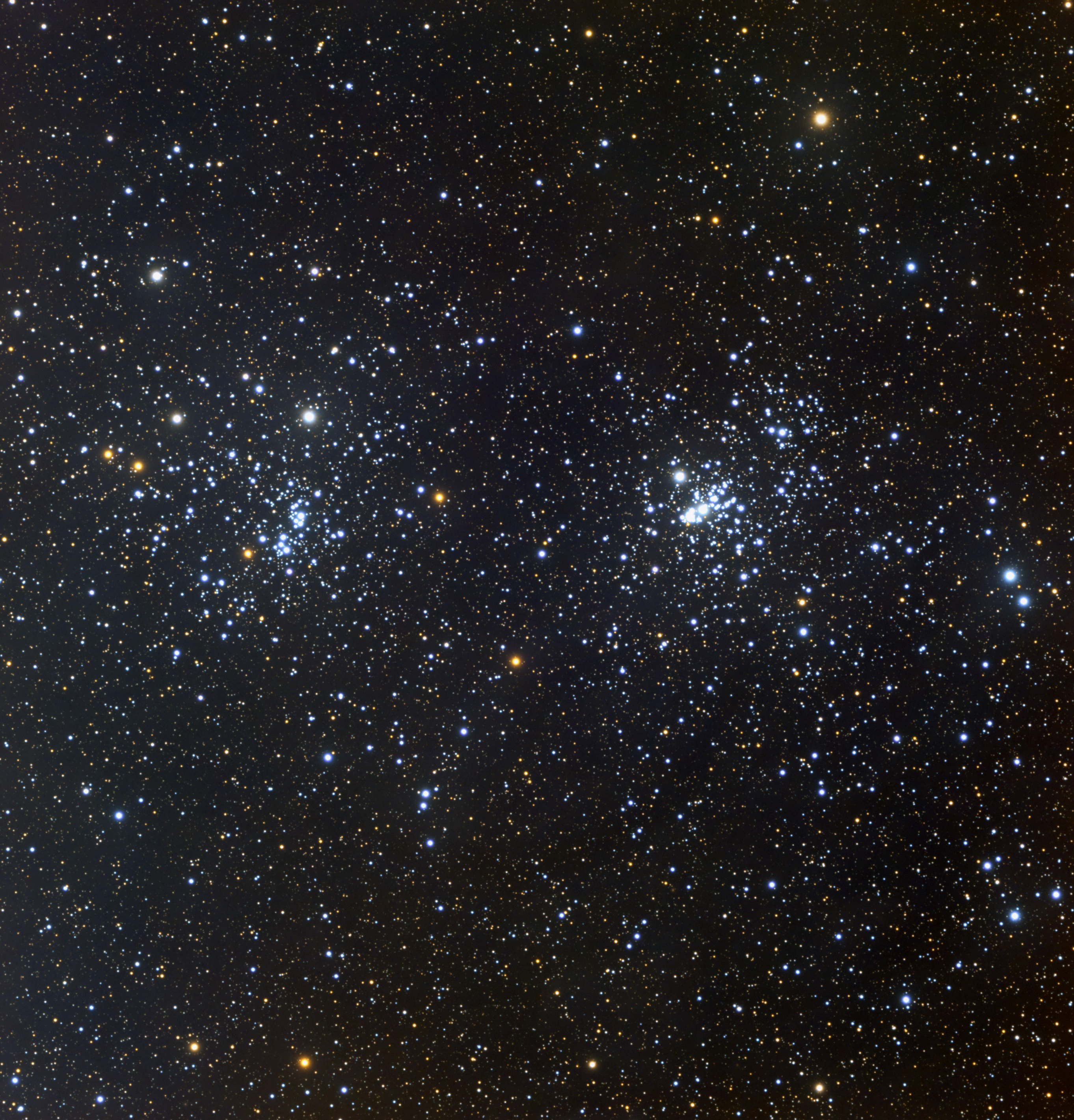
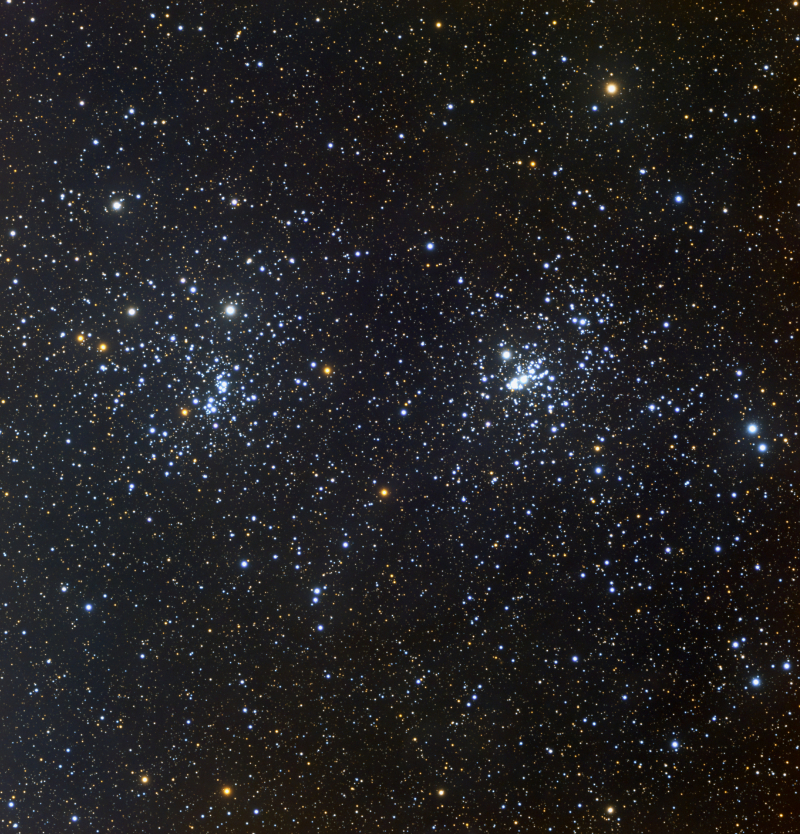
NGC 869 and NGC 884, famously known as the Double Cluster in Perseus, are a stunning pair of open star clusters that sit about 7,500 light-years away in the constellation Perseus. These clusters are relatively young, around 12.8 million years old, and shine brightly with hundreds of hot, blue-white stars, giving them a dazzling appearance through small telescopes or binoculars.
NGC 869, the slightly larger and brighter of the two, lies to the northwest, while NGC 884 sits just southeast of it. Together, they form a spectacular celestial pair easily visible to the naked eye under dark skies as a fuzzy patch. Their proximity and similar age suggest they likely formed from the same giant molecular cloud.
The Double Cluster has been admired since antiquity and has long been a favorite target for amateur astronomers due to its striking beauty, rich stellar population, and the dramatic contrast between the clusters’ young, luminous stars and the dark backdrop of space. It’s often described as one of the crown jewels of northern-sky deep-sky objects.
Technical Details
Telescope: Sky-Watcher Esprit 100ED Refractor
Auto Focus: ZWO Electronic Auto Focuser
Astronomy Camera: ZWO ASI533MC Pro
Filter: Optolong UV-IR cut filter; 1,020 exposures @ 60 seconds each (17 hours)
Total Integration Time: 17 hours
Auto Guiding: William Optics Uniguide 50mm Guide Scope
Auto Guiding Camera: ZWO ASI120MM Mini Guide Camera
Auto Guiding Software: PHD2
Telescope Mount: Sky- Watcher EQ6-R Pro Equatorial Mount
Telescope Computer: BeeLink GK-55 Mini PC / Windows 10 Pro
Wireless Communication: GL-iNEt Beryl Travel Router
Telescope Control & Image Capture Software: Nighttime Imaging ‘N’ Astronomy (N.I.N.A.)
Image Integration Software: Astro Pixel Process, by Aries Productions
Image Post Processing Software: PixInsight, by Pleiades Astrophoto
Images captured:
Palm Springs, CA during December 2022. Dark sky classification = Bright suburban sky (Bortle 6)
Visited 32 times, 1 visit(s) today