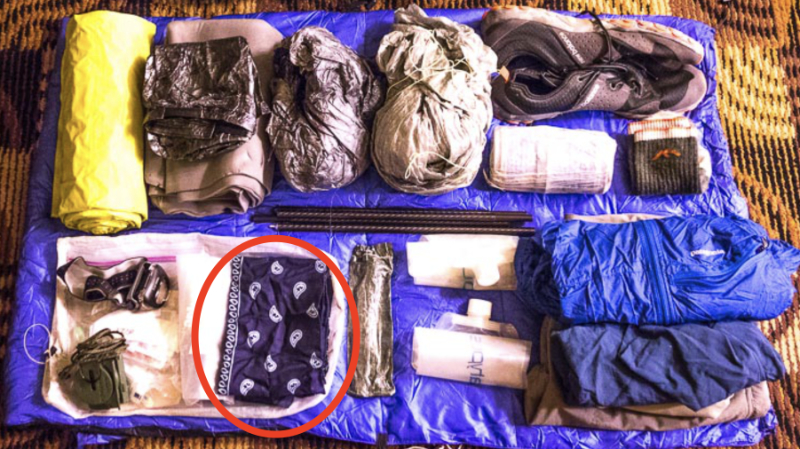
In an era of ultralight gear and high-tech fabrics, one of the most useful pieces of backpacking equipment remains remarkably simple: the ordinary cotton bandana. Cheap, lightweight, and endlessly versatile, a bandana earns its place in any pack by serving dozens of functions—often when you least expect it. For backpackers who value multifunctional gear, a cotton bandana is hard to beat.
Multifunctional Ultralight Gear
Ideally every piece of ultralight gear will be multifunctional, that is, it can take the place of two or more pieces. Unfortunately multifunction often does not meet the proposed criteria: instead it might do more than one thing; none of which very well.
The “lowly” bandana can be a true piece of multi-function gear and it only adds around one ounce to your pack!
Head, Face, and Neck Protection
A bandana shines when worn on your body. Folded as a headband, it keeps sweat out of your eyes on hot days. Worn pirate-style or under a hat, it provides sun protection and helps prevent sunburn. Around the neck, it shields skin from sun exposure, wind, and cold, while also offering light insulation during chilly mornings.
In dusty or buggy conditions, a bandana pulled over the mouth and nose can reduce inhalation of dust, pollen, or smoke and provide some relief from insects.
Sweat Management and Cooling
Cotton absorbs moisture extremely well, making a bandana ideal for managing sweat. You can wipe your face, neck, or hands during strenuous hikes. When soaked in cool water and worn around the neck or head, it becomes an effective evaporative cooling tool in hot, dry climates.
First Aid and Emergency Uses
A cotton bandana can play a valuable role in backcountry first aid. It can be used as:
-
A pressure bandage to control bleeding
-
A sling for an injured arm or shoulder
-
A wrap for sprains or strains
-
A protective pad between skin and splints
In an emergency, it can also serve as a tourniquet (with proper knowledge) or be tied to a trekking pole as a visible signal flag.
Camp Chores and Hygiene
At camp, a bandana quickly becomes indispensable. Use it as a washcloth for sponge baths, to dry dishes, or to clean cookware. It can act as a pot holder when handling hot cookware over a stove or campfire.
A bandana also works well for personal hygiene—wiping off dirt, drying hands, or even serving as emergency toilet paper (afterward properly washed or disposed of following Leave No Trace principles).
Food and Water Applications
When it comes to food prep, a bandana can cover meals to keep flies away or serve as a napkin or placemat. It can be folded into a pouch to carry berries, nuts, or foraged items.
In silty water sources, a bandana can be used as a pre-filter, straining out debris before water is treated or filtered through your main purification system.
Gear Protection and Organization
Bandanas are excellent for protecting and organizing gear. Wrap fragile items like a camera, phone, or sunglasses to prevent scratches. Tie one around a fuel canister to reduce rattling or use it to bundle small items together inside your pack.
They can also function as an impromptu stuff sack, map wrap, or rain cover for sensitive gear during brief showers.
Navigation and Signaling
A brightly colored bandana improves visibility. Tie one to your pack to stand out in low-light conditions or dense brush. In an emergency, it can be waved as a distress signal or laid out in an open area to attract attention from rescuers.
Why Cotton Still Matters
While synthetic buffs and technical fabrics have their place, cotton bandanas remain popular because they’re durable, inexpensive, and versatile. They absorb water well, handle heat safely, and are easy to wash and reuse. For backpackers who prioritize function over fashion, cotton earns its keep.
Final Thoughts
An ordinary cotton bandana may be one of the most underrated pieces of backpacking gear. Weighing almost nothing and taking up minimal space, it can replace or supplement multiple specialized items. Whether for comfort, safety, hygiene, or emergencies, a bandana proves that sometimes the simplest gear is the most useful.
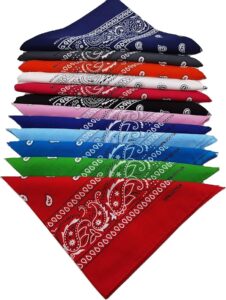
The best size bandana for backpacking balances versatility, packability, and comfort. While bandanas come in a range of sizes, most backpackers find that the classic size of about 22×22 inches (56×56 cm) is ideal for most uses.
Bring two bandanas if you have space — one for hygiene/camp chores and one for wearable use (neck, head, sweat, cooling). Two sizes can also cover a wider range of uses.
This website may be compensated for linking to other sites for sales of products. As an Amazon Associate I earn a small fee from qualifying purchases at no additional cost to the purchaser.
One Dozen 100% Cotton Bandanas Paisley printed 22 X 22 inches