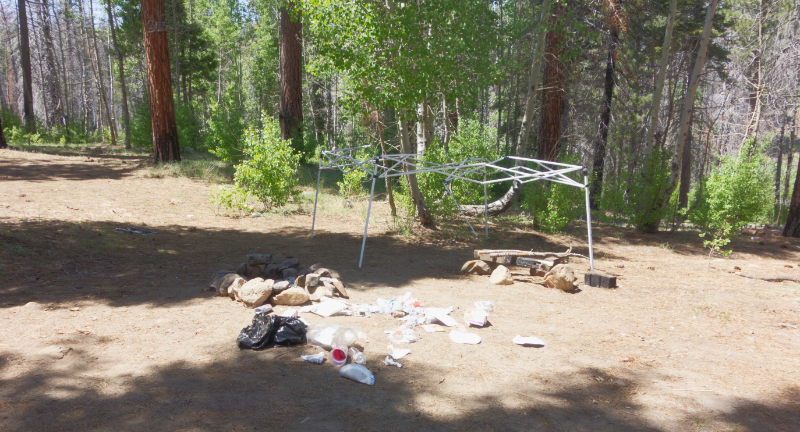
Over the past 25-30 years trash has loomed large as a problem at our at our public campgrounds. At least it is something I have noticed with increasing regularity.
Who are these horrible people who do this? Or maybe the people don’t know the rules?
Perhaps a better question might be, “Why is it happening?”
Finally, I’ll share some “best practices” for those who don’t know.
Ch-ch-changes
A conversation with a NPS Ranger
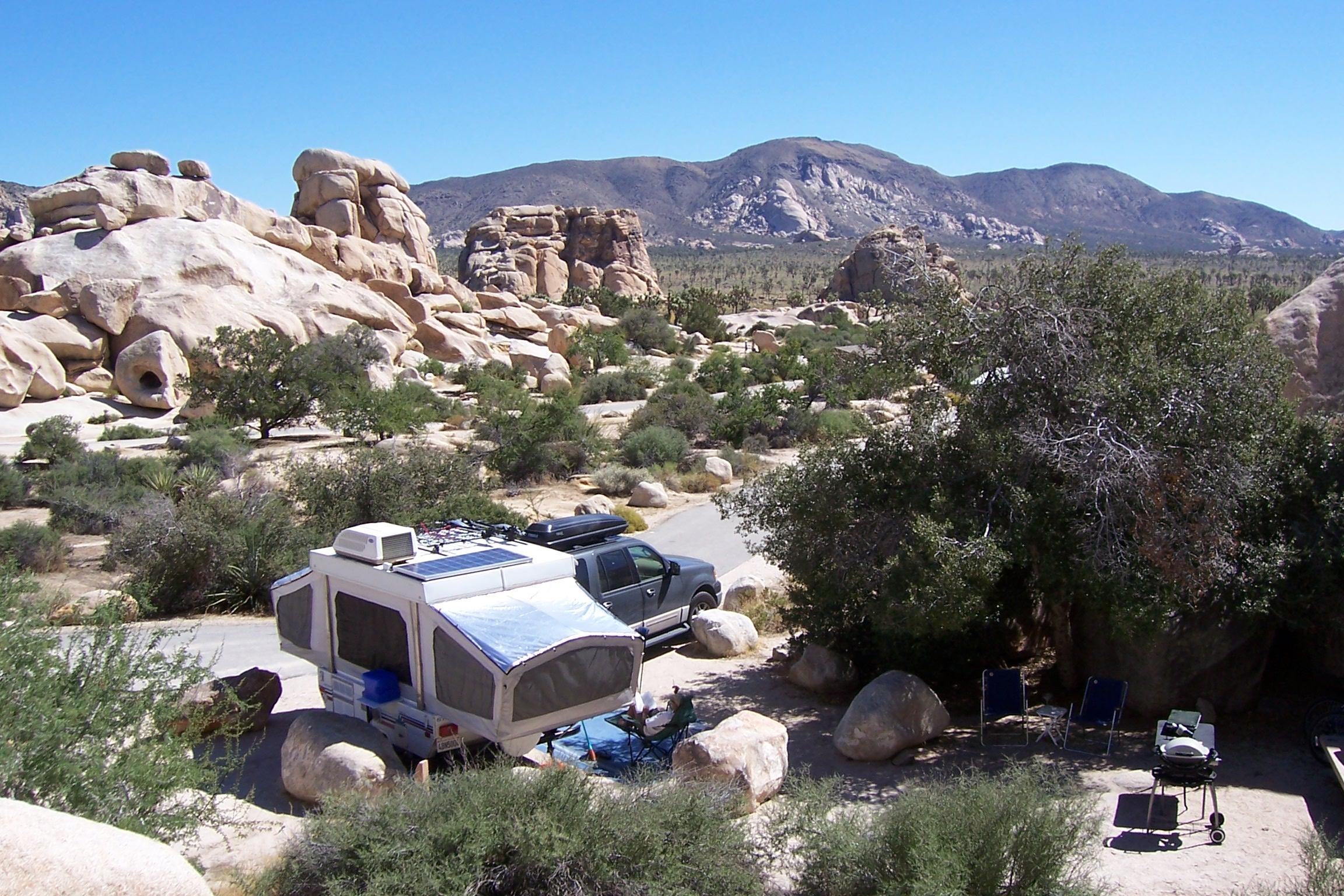
About 20 years ago I was camping in Joshua Tree National Park. I had a conversation with a park ranger who was driving through the campground. I shared that I had been camping and backpacking in the park since the ’70s. He asked what were my favorite backcountry places to visit. He had never heard of them and had never been back into that part of the park, since there was no access by roads. Then he said something that has stuck with me ever since:
“We are no longer rangers, we are police officers.”
A conversation with a USFS Ranger
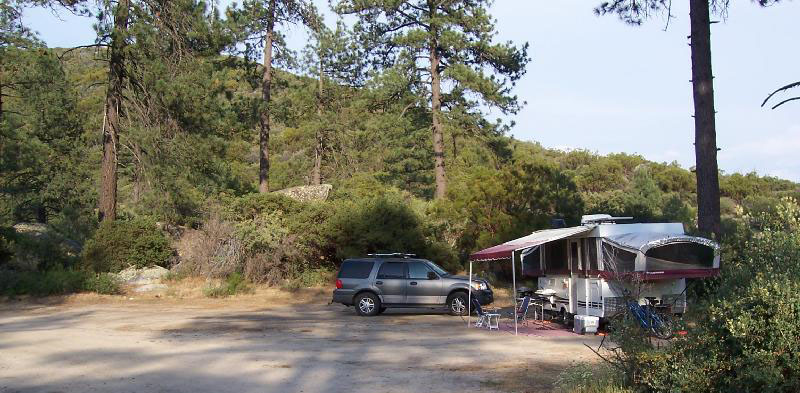
Around the same time, Joyce and I were spending most of our weekends in the San Jacinto Mountains. It is an area that has a couple dozen dispersed campsites. We were there so often that one of the rangers got to know us well, and on weekends made it a point to stop by and talk. We often talked about how his job had changed over the years from doing “ranger stuff” to becoming a police officer. He was frustrated and contemplating leaving the forest service.
From Education to Enforcement
When I was a teenager it seemed forest rangers were mostly engaged in educating campers. Rangers often walked through campgrounds stopping to chat with campers, answer questions, and give advice. Many campgrounds had outdoor amphitheaters with weekend ranger-led programs on Friday and/or Saturday nights. If a campground did not have a weekend program, flyers were posted directing campers to a nearby campground that did. It was rare indeed to see a ranger carrying a gun in a holster.
Over the years this has slowly changed. Fewer and fewer rangers in campgrounds. When they do visit, they aren’t walking, but are driving through. Most are wearing bullet-proof vests with a lawman’s holster belt. Rangers come to campgrounds primarily to enforce the rules, not to educate.
How did this change occur?
Two big things have changed: society and the agencies that administer our public lands.
These agencies: the National Park Service (NPS), United States Forest Service (USFS), and the Bureau of Land Management (BLM) continually see budget cuts along with increased complexity and responsibility in administering our public lands.
Society has changed, especially with the internet and social media. More people are camping, inspired by what they see on a screen. Many are new to camping and lack education — the education our (now understaffed) agencies used to provide. The number of people has increased significantly since the COVID pandemic.
So we have many new to camping who “don’t know what they don’t know” and agencies that are budget-driven, not result-driven.
How these campgrounds used to operate
Campgrounds were mostly first come, first served — that is no reservations. You would find the campsite you wanted, go to a kiosk, enter your information on an envelope, place cash or check in the envelope, and then place the payment into a secure box. A tab from the envelope would be removed and attached to a numbered post in front of your campsite.
Rangers would frequent campgrounds, especially those with high occupancy rates. Rangers would check the tabs placed on the posts to ensure people were in the correct campsite and also make sure they left on time. In some cases, a volunteer campground host would perform these daily checks. Even with an onsite campground host, it was common to see a ranger several times a day.
At more remote sites, there usually wasn’t a campground host and rangers would stop by less frequently, unless a campground developed a reputation for troublesome campers.
Online Reservations
More and more NPS and USFS campgrounds offer reservations through Recreation.gov. This has had an impact on how the NPS, USFS, and to some extent the BLM operate. In other words, reservations have taken the place of some of the face-to-face interactions between rangers and campers.
As a side note, five years ago I wrote about The Problem With Campground Reservations and How to Fix It.
NPS Campground Changes
This year we have spent 48 days camping at several campgrounds run by the NPS. NONE are first come, first serve. All require reservations. Even if the campground is completely empty, you must go online and make a reservation and pay for it at the same time. Thus, the NPS does not accept cash, only credit or debit cards. Even the visitor centers and other non-camping NPS facilities we have visited do not accept cash.
These NPS campgrounds have minimal signage regarding rules and regulations. I guess the NPS expects people to research and locate the rules on the NPS website for each campground. BTW, we have been camping at these campgrounds for over 20 years, they all have amphitheaters and there has not been a program in any of them when we were there — and we are talking about close to 2,000 camping days!
During these 48 days of camping we did NOT see a single ranger!!
USFS Campground Changes
The biggest change over the years is most campgrounds are now run by vendors, not the USPS. Aside from the free dispersed campsites we frequent (these have no amenities), the vendor’s onsite employee will check the campsite occupants agains the reservation list, or the cash payments made for first come, first served campers.
These hosts are also charged with cleaning restrooms (often outhouses) and doing light maintenance. They are not there to enforce rules, and often turn a blind eye to minor infractions to avoid confrontations. For really troublesome campers the vendor onsite will contact the USFS.
The overall condition of the USFS campgrounds we visit have deteriorated over the past 25 years or so. However this is really dependent on the individual forest unit.
In 2021 we spent 14 days in a USFS campground in the Coconino National Forest in Northern Arizona. This campground is run by a vendor. It was one of the nicest USFS campgrounds we have ever stayed at. The vendor had more employees on site than some of the larger USFS campgrounds we have visited in California, which is usually just a single person maintaining a 50+ campsite facility. Plus fairly frequent visits by USFS rangers, and a nighttime program in the amphitheater!! Campers were well aware of the rules and regulations, and they followed them.
TRASH
Okay, the title of this post states we need to talk about trash. If not handled properly, it not only makes a campground ugly, diminishes the experience for people who follow the rules, and can become a problem because it attracts animals. The last item is very, very important. Often troublesome animals that have become reliant of trash have to be euthanized. Remember the saying, “A fed bear is a dead bear.”
Below are some examples of how not to manage your trash. All of these are pictures I took just this year. Pretty depressing.
Dispersed Campsites
A dispersed campsite is a free, camping spot outside a designated campground, usually on public land like a national forest or Bureau of Land Management (BLM) area. Some NPS recreation areas and preserves also have dispersed campsites. These sites have no amenities like restrooms, running water, or trash cans. So, campers have to be self-sufficient and follow Leave No Trace principles. That means packing out all their trash and taking care of their waste responsibly.
This dispersed campsite is within the Giant Sequoia National Monument in the Southern Sierra Nevada. There is an outhouse. No water other than a creek. No trash cans. I have camped here occasionally over the past 60+ years.
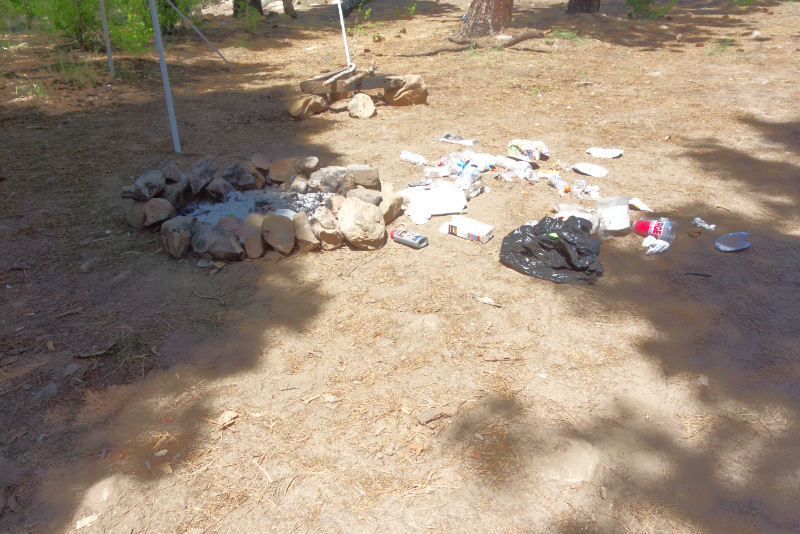
It appears all the trash was left in a plastic trash bag, which an animal quickly found. Plus the occupants decided to leave their broken shade structure. This is bear country. So ALL trash needs to be packed out. And it wasn’t just this one site. Lots of broken glass and other trash in the area.
I must point out that there are some dispersed camping areas that were created in the 1930s in Sequoia National Forest. I have camped in a couple of them many times. A few years ago the USFS posted signs warning campers to pack out all trash or the sites will be closed to camping. And they did close them. It has been closed to camping for several years now. Here we have the actions of a few ruin it for the many.
Trash Bins
The administering agency contracts out refuse hauling. Usually these contracts do not include the manual removal of trash not in the bin. So if it is not in the bin, it will not be hauled away.
Wherever there is a trash bin, use it. If it has a locking lid, lock the lid to keep animals out.
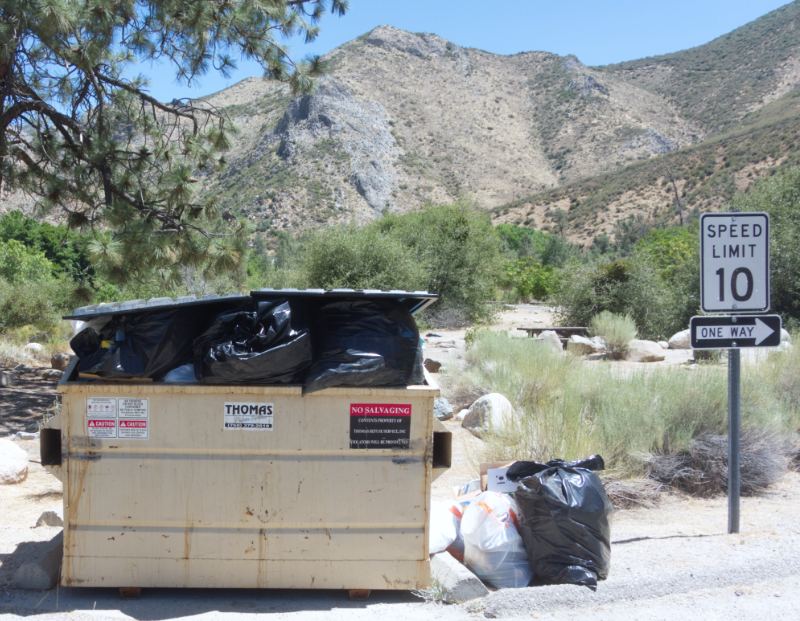
Above: we see two problems.
First is the bin is over filled and the lid cannot close all the way, which means animals are going to get into the bin. Do not place trash into a bin if you cannot completely close the lid.
Second problem is the trash bags left on the ground. The refuse company did not pick these up (we placed them in the bin afterwards).
This particular bin was close to the entrance/exit road. And many people drove here to dispose of trash on their way out of the campground, even though they could have used several other bins in other parts of the campground that were not full. Were these people just lazy or did they assume the trash company would take all the trash? Now we know they won’t take the trash not in the bin.
Bulky Items
Campground bins are really for trash generated during your stay. They are not for large bulky items such broken furniture, shade canopies, inflatable rafts, broken bicycles, stoves, ice chests, etc. In addition, if you have boxes, break them down to minimize the space taken up.
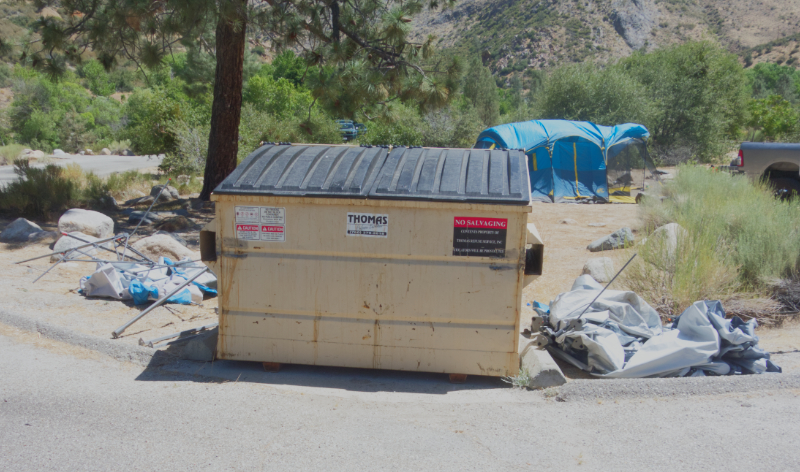
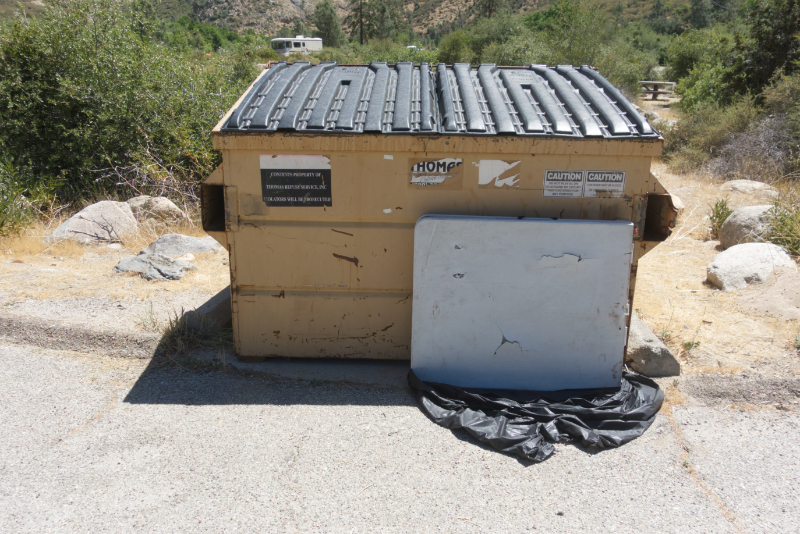
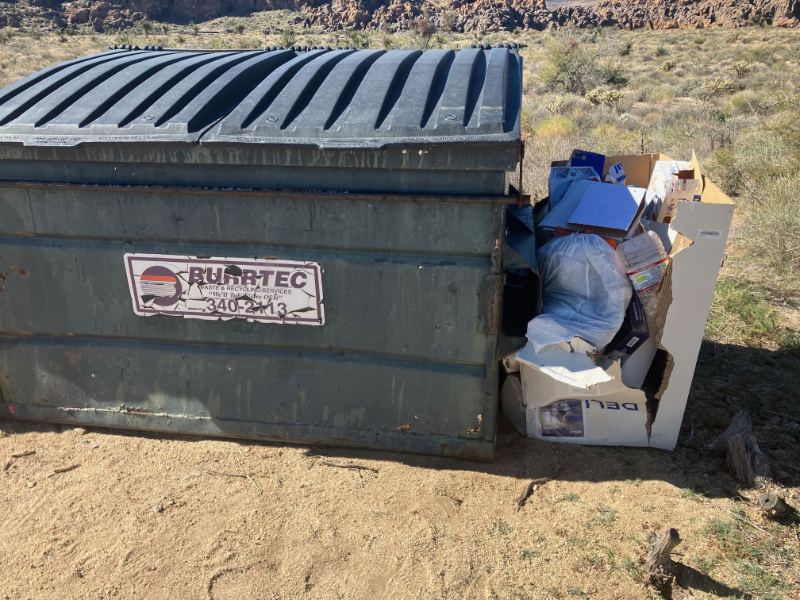
This cardboard box was placed next to the empty bin the day after trash pick up. It would have taken little effort to lift the bin lid and properly dispose of the trash.
Hazardous Material
Do not throw hazardous materials in bins.
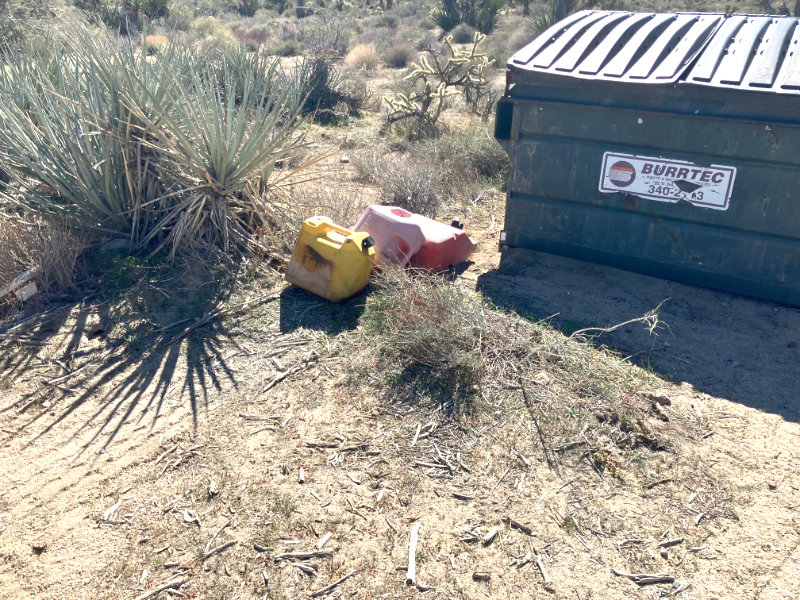
Apparently this camper knew the gas cans were not to be placed in the bin, as the bin was empty, or else they were too lazy to put them in anyway. As it turned out, the refuse company left the cans on the ground,
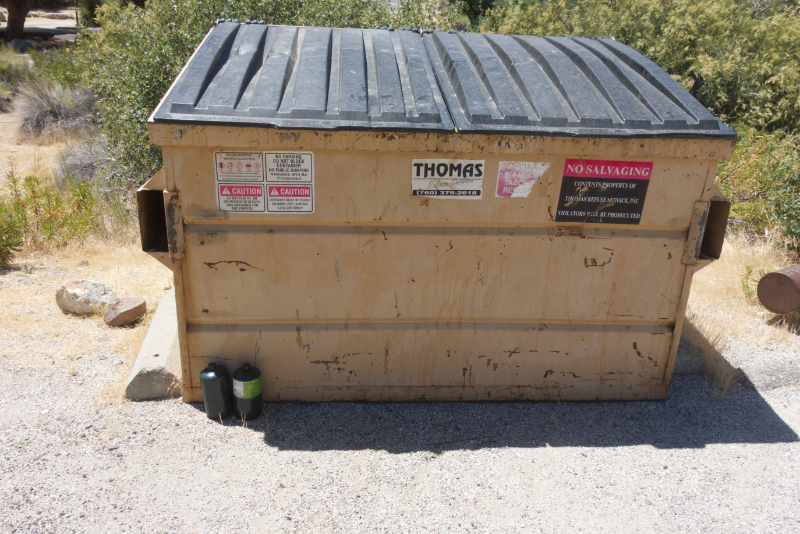
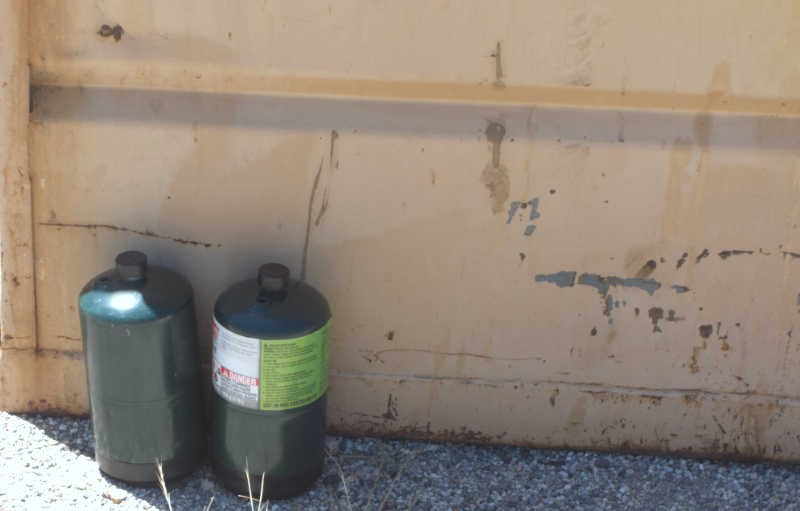
Disposable propane canisters are considered hazardous containers needing special handling. California has banned their sale.
Apparently this camper knew this, as they carefully placed these two empty canisters in front of the empty trash bin.
Best Practices
- Always leave your campsite cleaner than you found it. If we all pick up a little extra trash our campgrounds would soon become immaculate.
- If your trash cannot fit into the trash container, then take it home and dispose of it.
- All trash must go into the bin and the bin needs to be securely closed.
- Do not place large bulky items in bins.
- Break down large boxes and other materials.
- Do not throw hazardous materials into the bin.
Remember that I shared how inconsiderate campers caused some awesome campsites to be closed, sites that were next to some good trout fishing creeks. If we cannot keep our campgrounds clean there are only two outcomes:
- The sites will be closed.
- Campground fees will be increased to cover the extra cost to pay someone to clean up after us.