Category Archives: Astrophotography

I added an Astrophotography Image Gallery to PopUpBackpacker

Given that astrophotography is something I do on most of our camping trips and that many astrophotographers go camping, I decided to add an Astrophotography Image Gallery of my deep sky pictures to PopUpBackpacker.

One great thing about this gallery is I can upload high resolution images that are normally too large to email, text, or even post on the internet. Plus I think they can be downloaded (I haven’t tried).

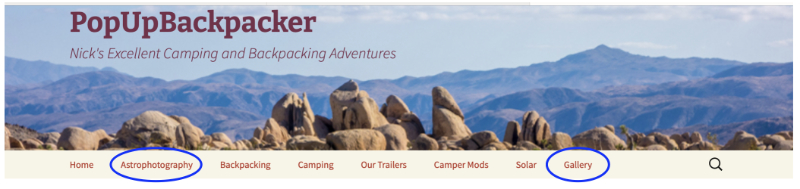
In addition to the link above, you can also reach the gallery via the Menu Bar

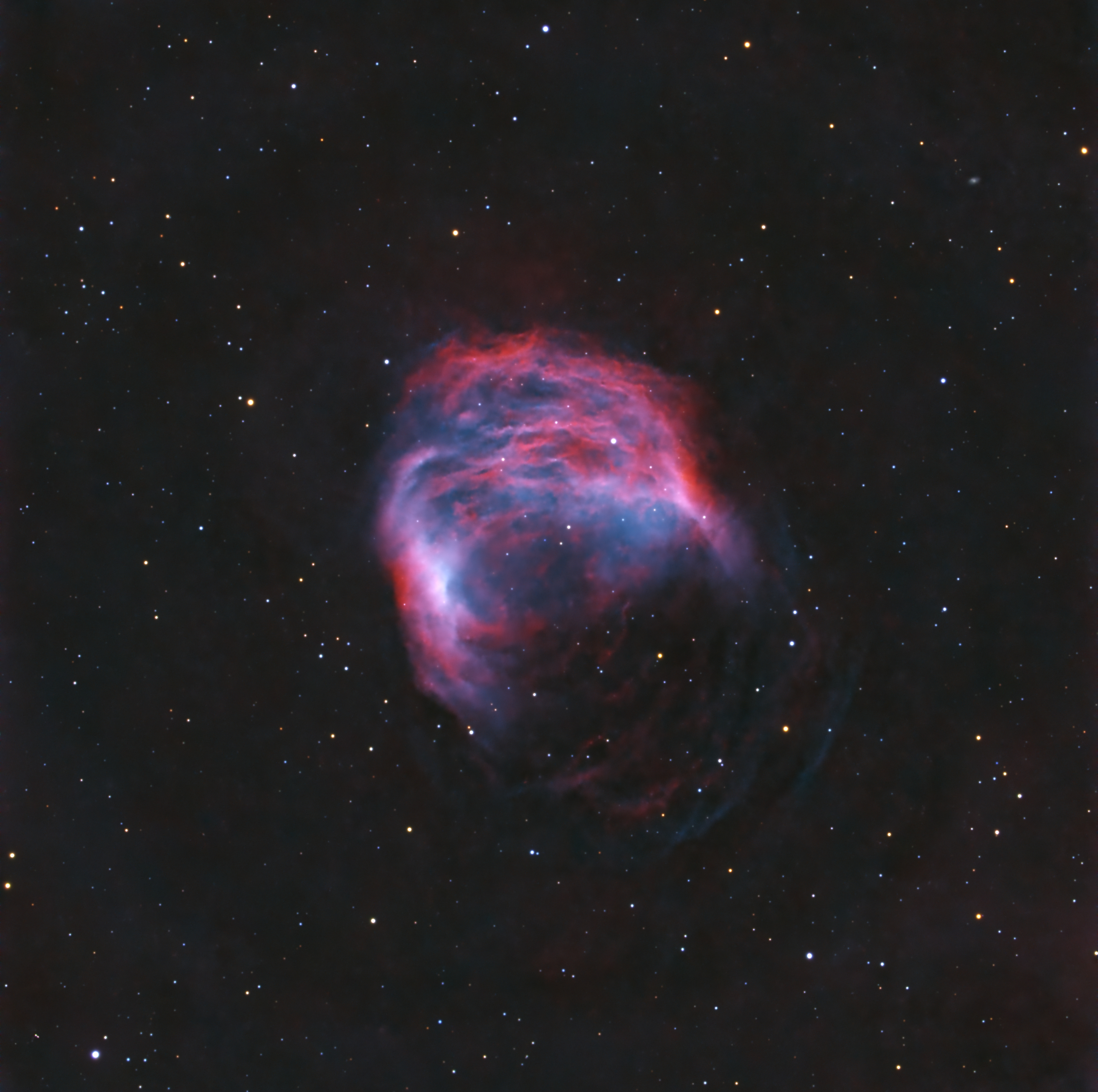
SH2-274 Medusa Nebula

CLICK ON IMAGE TO VIEW A HIGH RESOLUTION VERSION

SH2-274, commonly known as the Medusa Nebula, is a striking planetary nebula located in the constellation Gemini. This ethereal object is the glowing remnant of a dying star, where the outer layers have been expelled into space and energized by the intense radiation from the hot central white dwarf. Its intricate structure features delicate, filamentary threads of ionized gas, giving it a wispy, almost serpentine appearance—hence the nickname “Medusa,” reminiscent of the mythological figure with snakes for hair.

The nebula emits predominantly in the characteristic red of hydrogen-alpha, along with greenish-blue hues from doubly ionized oxygen, creating a subtle but captivating color palette. Though relatively faint, it spans a significant portion of the sky, presenting a fine example of how dying stars enrich the interstellar medium with their elemental remnants. Observationally, the Medusa Nebula is often sought after by amateur astronomers and astrophotographers using narrowband filters to bring out its delicate, lace-like filaments.

It serves as both a beautiful celestial spectacle and a fascinating laboratory for studying the late evolutionary stages of medium-mass stars.


Technical Details

Telescope: Celestron C8 SCT (8″ Schmidt-Cassegrain) with Celestron 0.63 Focal Reducer

Auto Focus: Celestron Electronic Auto Focuser

Astronomy Camera: ZWO ASI533MC Pro

Filter: Optolong UV-IR  cut filter; 900 exposures @ 60 seconds each (15 hours)

Total Integration Time: 15 hours

Off-Axis Auto Guiding: ZWO OAG-L

Auto Guiding Camera: ZWO ASI174MM Mini Guide Camera

Telescope Mount: Celestron CGX Equatorial Mount

Telescope Computer: BeeLink GK-55 Mini PC / Windows 10 Pro

Wireless Communication: GL-iNEt Beryl Travel Router

Telescope Control & Image Capture Software: Nighttime Imaging ‘N’ Astronomy (N.I.N.A.)

Image Integration Software: Astro Pixel Process, by Aries Productions

Image Post Processing Software:  PixInsight, by Pleiades Astrophoto

Images captured in Palm Springs, CA during January 2025. Dark sky classification = Bright suburban sky (Bortle 6).


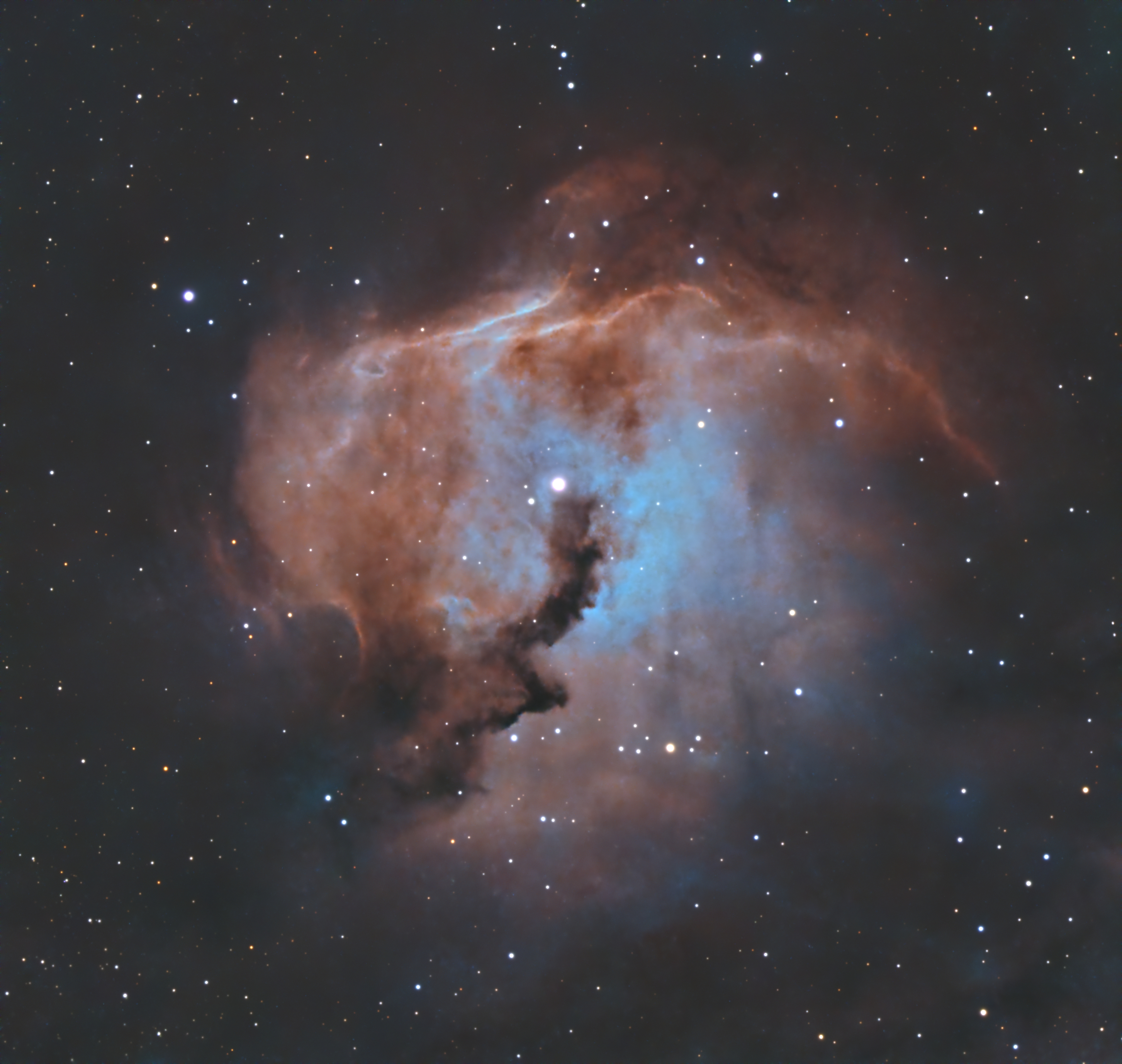
SH2-292 Seagull’s Head Nebula

CLICK ON IMAGE TO VIEW A HIGH RESOLUTION VERSION

Sh2-292, often referred to as the Seagull’s Head Nebula, is a striking emission nebula located in the constellation Canis Major. It is part of a larger star-forming complex that also includes nearby nebulae such as the Seagull Nebula (IC 2177). Sh2-292 gets its evocative name from the shape of its brightest gas clouds, which, in long-exposure images, resemble the head of a seagull in flight.

This nebula is dominated by glowing hydrogen gas, which shines in vivid red hues due to the intense ultraviolet radiation emitted by young, massive stars embedded within the region. These stars not only illuminate the surrounding gas but also sculpt intricate shapes of filaments and pillars through stellar winds and radiation pressure, giving Sh2-292 its dramatic, sculpted appearance.

Sh2-292 is a relatively compact star-forming region, yet it hosts a variety of stellar nurseries where new stars are born from dense clouds of gas and dust. Observations in different wavelengths, from optical to infrared, reveal dark lanes of dust threading through the luminous gas, highlighting the ongoing processes of star formation and stellar feedback.

Overall, the Seagull’s Head Nebula is a visually captivating and scientifically rich region, showcasing the complex interplay of massive stars, glowing gas, and dark dust in one of the Milky Way’s active stellar nurseries.


Technical Details

Telescope: Celestron C8 SCT (8″ Schmidt-Cassegrain) with Celestron 0.63 Focal Reducer

Auto Focus: Celestron Electronic Auto Focuser

Astronomy Camera: ZWO ASI533MC Pro

Filter: Optolong UV-IR  cut filter; 180 exposures @ 60 seconds each (3 hours)

Filter: Optolong Lenhance Dual Narrowband Ha/Oiii Filter; 264 exposures @ 5 minutes each (22 hours)

Total Integration Time: 12.4 hours

Off-Axis Auto Guiding: ZWO OAG-L

Auto Guiding Camera: ZWO ASI174MM Mini Guide Camera

Telescope Mount: Sky- Watcher EQ6-R Pro Equatorial Mount

Telescope Computer: BeeLink GK-55 Mini PC / Windows 10 Pro

Wireless Communication: GL-iNEt Beryl Travel Router

Telescope Control & Image Capture Software: Nighttime Imaging ‘N’ Astronomy (N.I.N.A.)

Image Integration Software: Astro Pixel Process, by Aries Productions

Image Post Processing Software:  PixInsight, by Pleiades Astrophoto

Images captured in Palm Springs, CA during February 2025. Dark sky classification = Bright suburban sky (Bortle 6).


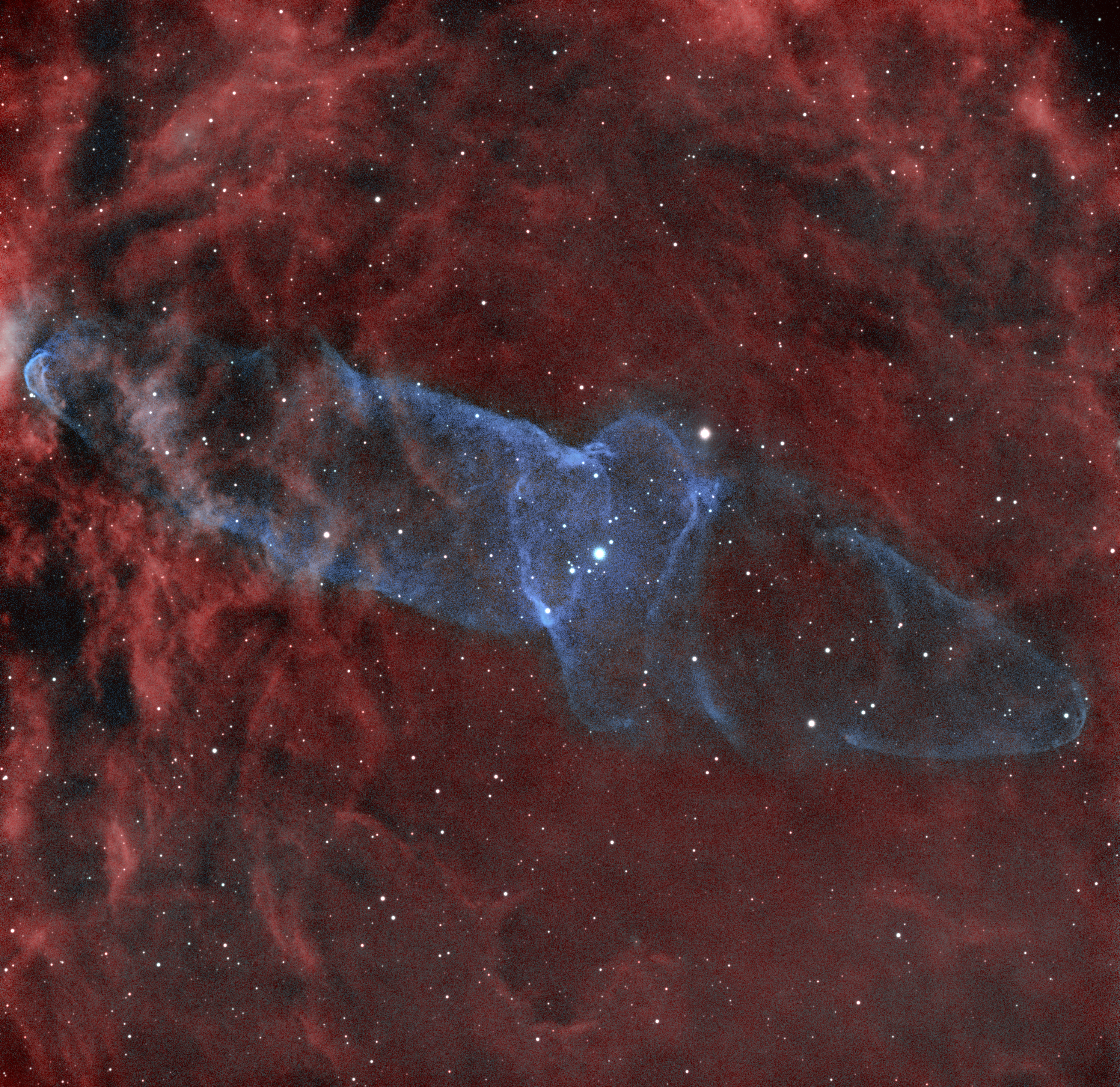
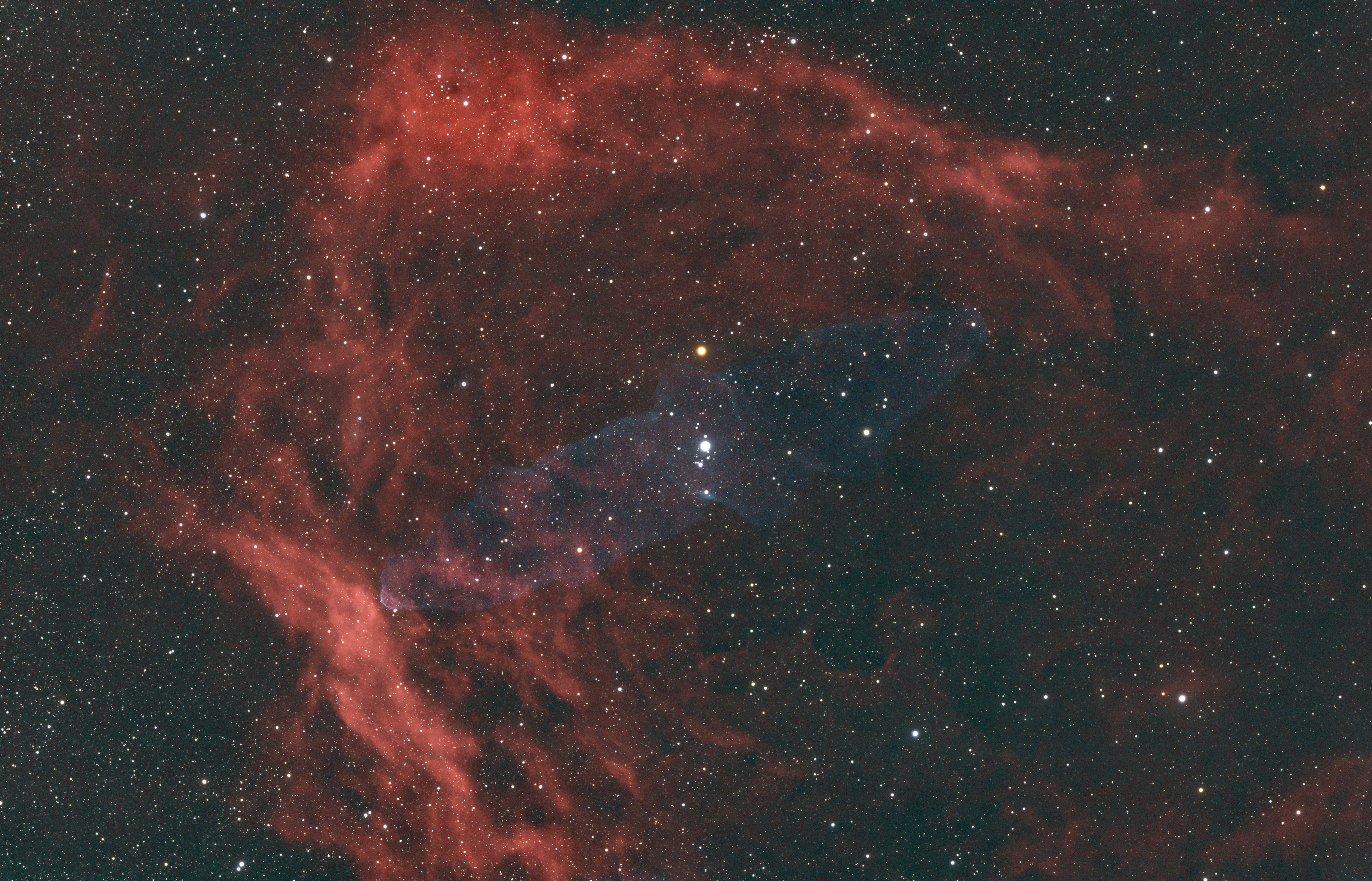
OU4 Squid Nebula

CLICK ON IMAGE TO VIEW A HIGH RESOLUTION VERSION

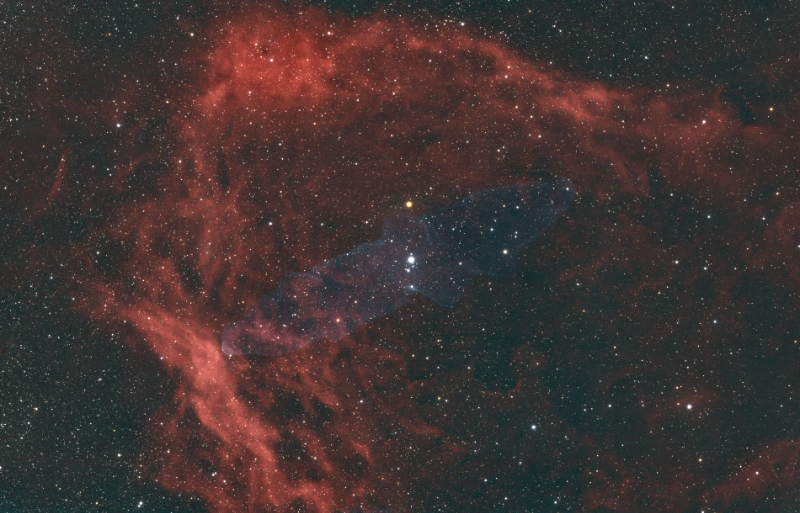
The OU4 Squid Nebula is one of the most unusual and enigmatic objects in the night sky. Discovered in 2011 by French astrophotographer Nicolas Outters, OU4 is a vast, ghostly cloud of ionized oxygen located in the constellation Cepheus. Its distinctive shape—resembling a giant, bi-lobed squid with long, flowing tentacles—has made it a favorite target among deep-sky imagers.

Unlike most nebulae, the Squid Nebula shines almost exclusively in doubly ionized oxygen (O III) light, giving it an ethereal blue glow and making it nearly invisible in broadband images. Spanning an enormous area of sky—several times larger than the full Moon—OU4’s true physical size remains uncertain due to ongoing debate about its distance.

The nebula appears projected against the bright SH2-129 Flying Bat Nebula, but it is not physically related. Its origin is still a mystery; leading theories suggest it may be the result of an ancient, powerful outflow from a massive star or a highly energetic event that sculpted the surrounding interstellar medium.

The OU4 Squid Nebula stands as a reminder that the deep sky still holds surprises—faint, fragile structures that challenge our understanding and reward patient observation with haunting beauty.


Technical Details

Telescope: Sky-Watcher Esprit 100ED Refractor

Auto Focus: ZWO Electronic Auto Focuser

Astronomy Camera: ZWO ASI071MC Pro

Filter: Antlia ALP-T Dual Narrowband Ha/Oiii Filter; 1200 exposures @ 5 minutes each (100 hours) 

Total Integration Time: 100 hours

Auto Guiding: William Optics Uniguide 50mm Guide Scope

Auto Guiding Camera: ZWO ASI120MM Mini Guide Camera

Auto Guiding Software: PHD2

Telescope Mount: Sky- Watcher EQ6-R Pro Equatorial Mount

Telescope Computer: BeeLink GK-55 Mini PC / Windows 10 Pro

Wireless Communication: GL-iNEt Beryl Travel Router

Telescope Control & Image Capture Software: Nighttime Imaging ‘N’ Astronomy (N.I.N.A.)

Image Integration Software: Astro Pixel Process, by Aries Productions

Image Post Processing Software:  PixInsight, by Pleiades Astrophoto

Images captured: Palm Springs, CA during September 2022. Dark sky classification = Bright suburban sky (Bortle 6)
SH2-129 Flying Bat Nebula & OU4 Squid Nebula

CLICK ON IMAGE TO VIEW A HIGH RESOLUTION VERSION

Sh2-129, commonly known as the Flying Bat Nebula, is a vast and faint emission nebula located in the constellation Cepheus, roughly 1,600 light-years from Earth. Spanning several degrees of sky, its sweeping wings and arched structure give it the unmistakable silhouette of a bat in flight when captured in deep, wide-field images.

This nebula is composed primarily of glowing hydrogen gas, energized by radiation from nearby hot stars. Its low surface brightness makes Sh2-129 a challenging target visually, but long-exposure astrophotography reveals intricate filaments, rippling shock fronts, and subtle variations in color that hint at complex interactions between stellar winds and the surrounding interstellar medium.

Hidden within the nebula is one of its most remarkable features: Ou4, a mysterious and enormous bipolar outflow often nicknamed the Squid Nebula. This rare structure, rich in doubly ionized oxygen, appears to burst outward from the central region of Sh2-129, adding an element of cosmic intrigue and ongoing scientific study.

Sh2-129 is a striking example of the delicate and dynamic nature of nebular structures, where stellar energy sculpts immense clouds of gas into dramatic forms, quietly shaping the future sites of star formation across the Cepheus region.


Technical Details

Telescope: Sky-Watcher Esprit 100ED Refractor

Auto Focus: ZWO Electronic Auto Focuser

Astronomy Camera: ZWO ASI071MC Pro

Filter: Optolong UV-IR  cut filter; 180 exposures @ 60 seconds each (3 hours) 

Filter: Antlia ALP-T Dual Narrowband Ha/Oiii Filter; 600 exposures @ 5 minutes each (50 hours) 

Total Integration Time: 53 hours

Auto Guiding: William Optics Uniguide 50mm Guide Scope

Auto Guiding Camera: ZWO ASI120MM Mini Guide Camera

Auto Guiding Software: PHD2

Telescope Mount: Sky- Watcher EQ6-R Pro Equatorial Mount

Telescope Computer: BeeLink GK-55 Mini PC / Windows 10 Pro

Wireless Communication: GL-iNEt Beryl Travel Router

Telescope Control & Image Capture Software: Nighttime Imaging ‘N’ Astronomy (N.I.N.A.)

Image Integration Software: Astro Pixel Process, by Aries Productions

Image Post Processing Software:  PixInsight, by Pleiades Astrophoto

Images captured: Palm Springs, CA during August 2024. Dark sky classification = Bright suburban sky (Bortle 6)