Category Archives: Astrophotography

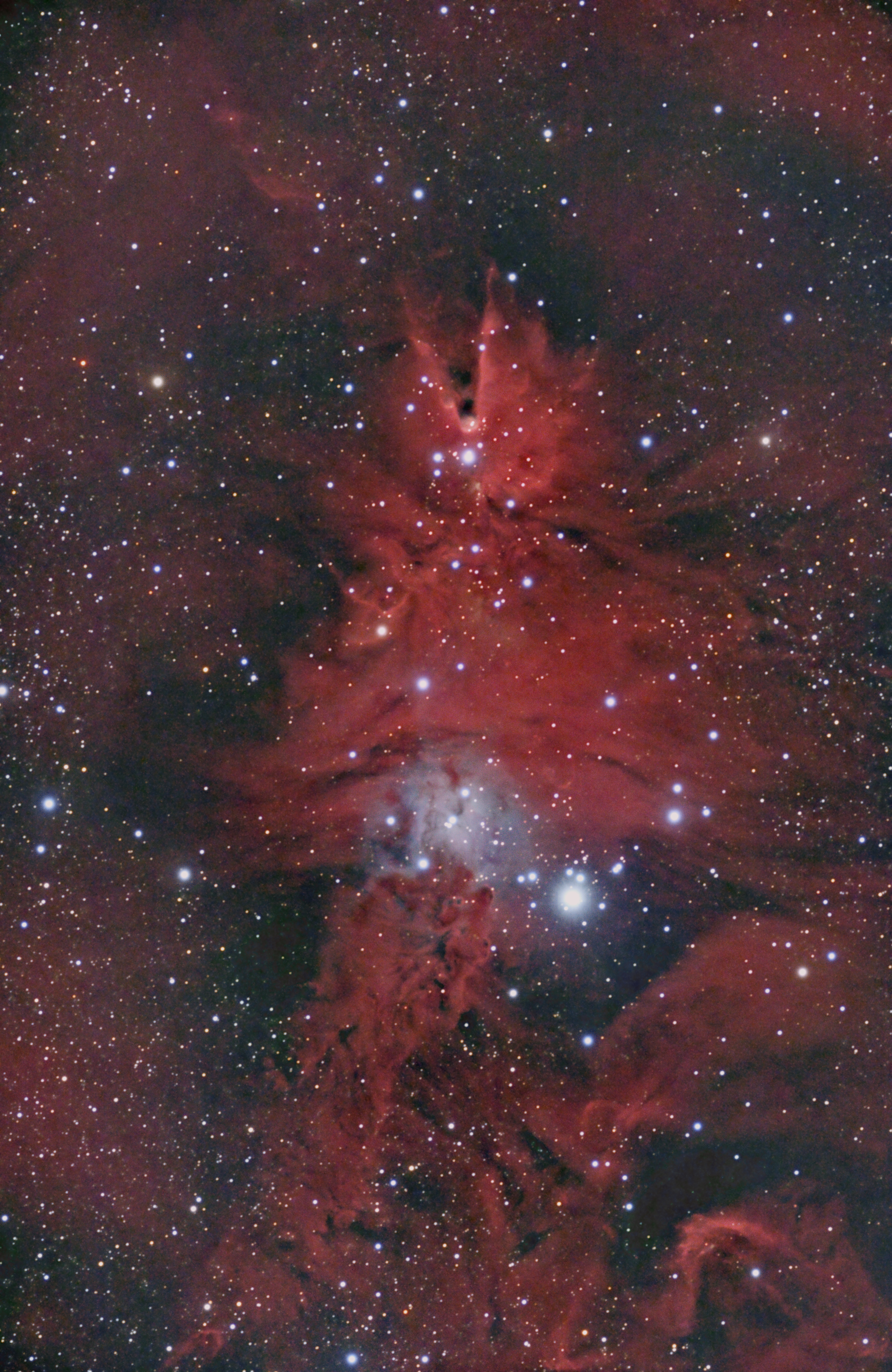
NGC2264 Cone Nebula and Christmas Tree Cluster

CLICK ON IMAGE TO VIEW A HIGH RESOLUTION VERSION

NGC 2264 is a rich and dynamic star-forming region in the constellation Monoceros, best known for the striking combination of the Cone Nebula and the Christmas Tree Cluster. Located about 2,500 light-years away, this complex showcases both the birth of stars and the sculpting power of stellar radiation.

The Cone Nebula appears as a dark, triangular pillar of cold gas and dust, silhouetted against the glowing red emission of surrounding hydrogen. This dense column is being eroded by intense ultraviolet light from nearby young, massive stars, a process that gradually shapes and disperses the nebula while potentially triggering new star formation within its depths.

Embedded within the same region is the Christmas Tree Cluster (NGC 2264 proper), a young open cluster whose stars trace a distinctive, tree-like pattern. Bright, blue-white stars form the “branches,” while reddish nebular glow and scattered dust give the cluster a festive, ornamented appearance. At the top of the tree lies the bright star S Monocerotis, whose energetic radiation illuminates and influences the surrounding nebula.

Together, the Cone Nebula and Christmas Tree Cluster offer a vivid portrait of stellar youth—a place where gravity, radiation, and time are actively shaping the next generation of stars.


Technical Details

Telescope: Sky-Watcher Esprit 100ED Refractor

Auto Focus: ZWO Electronic Auto Focuser

Astronomy Camera: ZWO ASI183MC Pro

Filter: Antlia ALP-T Dual Narrowband Ha/Oiii Filter; 180 exposures @ 5 minutes each (15 hours) 

Total Integration Time: 15 hours

Auto Guiding: William Optics Uniguide 50mm Guide Scope

Auto Guiding Camera: ZWO ASI120MM Mini Guide Camera

Auto Guiding Software: PHD2

Telescope Mount: Celestron CGX Equatorial Mount

Telescope Computer: BeeLink GK-55 Mini PC / Windows 10 Pro

Wireless Communication: GL-iNEt Beryl Travel Router

Telescope Control & Image Capture Software: Nighttime Imaging ‘N’ Astronomy (N.I.N.A.)

Image Integration Software: Astro Pixel Process, by Aries Productions

Image Post Processing Software:  PixInsight, by Pleiades Astrophoto

Images captured: Palm Springs, CA during February 2022. Dark sky classification = Bright suburban sky (Bortle 6)
NGC1514 Crystall Ball Nebula

CLICK ON IMAGE TO VIEW A HIGH RESOLUTION VERSION

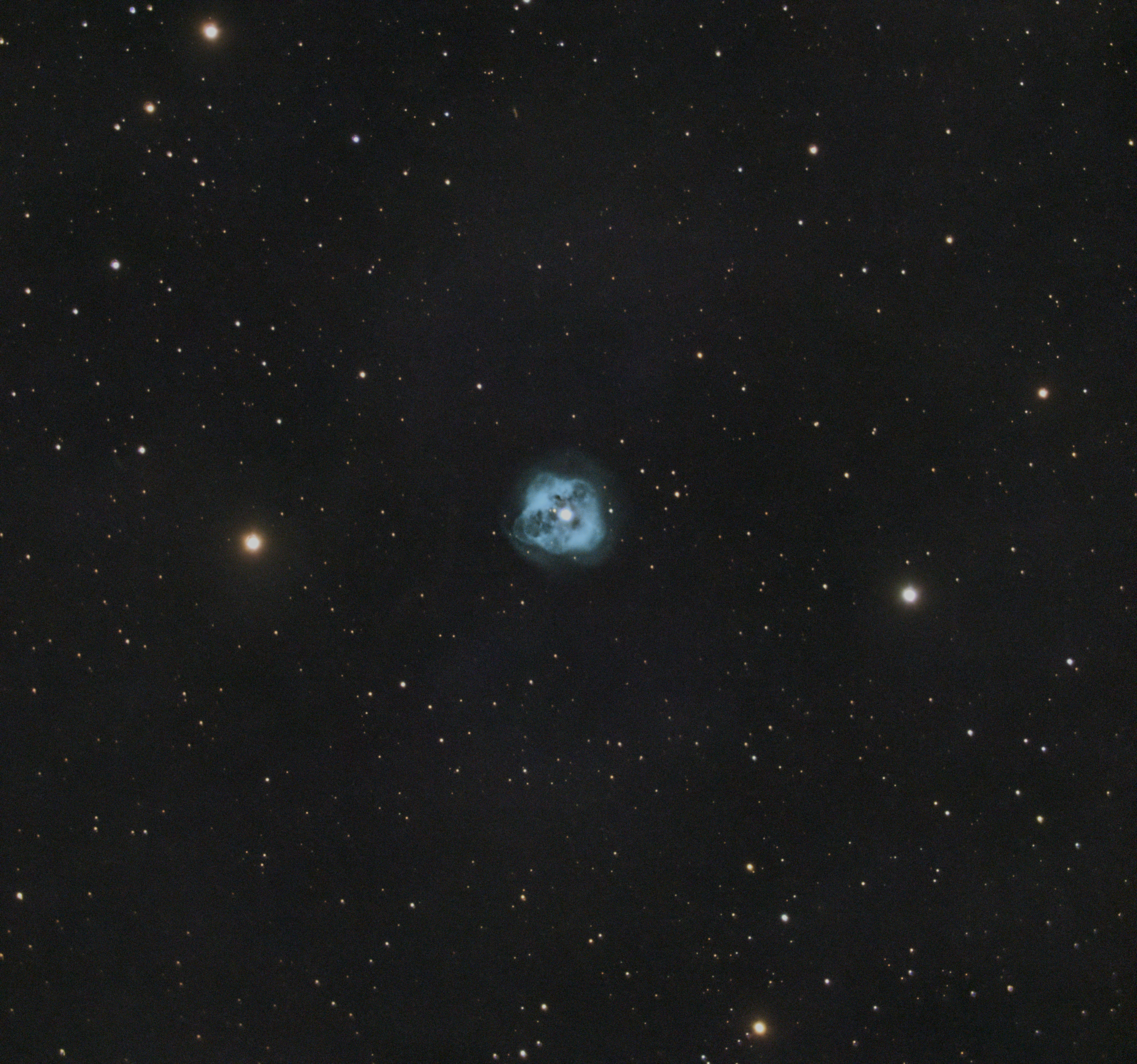
NGC 1514, known as the Crystal Ball Nebula, is a striking planetary nebula located about 1,500 light-years away in the constellation Taurus. Its nickname comes from its translucent, bubble-like appearance, with a softly glowing spherical shell that seems to float against the star-filled background.

At the heart of the nebula lies an unusual binary star system, whose complex interactions have shaped the nebula’s symmetrical form. The central stars illuminate the expanding clouds of gas that were gently shed during the final stages of stellar evolution. These gases glow primarily in blues and subtle reds, revealing delicate internal structures and faint outer halos that hint at multiple episodes of mass loss.

NGC 1514 stands out for its clarity and balance—less chaotic than many planetary nebulae, yet rich in detail upon close inspection. Often overlooked compared to brighter showpieces, the Crystal Ball Nebula offers a serene and elegant glimpse into the fate awaiting Sun-like stars, making it a rewarding target for both visual observers and astrophotographers alike.


Technical Details

Telescope: Celestron C8 SCT (8″ Schmidt-Cassegrain) with Celestron 0.63 Focal Reducer

Auto Focus: Celestron Electronic Auto Focuser

Astronomy Camera: ZWO ASI533MC Pro

Filter: Optolong UV-IR  cut filter; 600 exposures @ 60 seconds each (10 hours)

Filter: Antlia ALP-T Dual Narrowband Ha/Oiii Filter; 120 exposures @ 5 minutes each (10 hours)

Total Integration Time: 20 hours

Off-Axis Auto Guiding: ZWO OAG-L

Auto Guiding Camera: ZWO ASI174MM Mini Guide Camera

Telescope Mount: Sky- Watcher EQ6-R Pro Equatorial Mount

Telescope Computer: BeeLink GK-55 Mini PC / Windows 10 Pro

Wireless Communication: GL-iNEt Beryl Travel Router

Telescope Control & Image Capture Software: Nighttime Imaging ‘N’ Astronomy (N.I.N.A.)

Image Integration Software: Astro Pixel Process, by Aries Productions

Image Post Processing Software:  PixInsight, by Pleiades Astrophoto

Images captured in Palm Springs, CA during November 2023. Dark sky classification = Bright suburban sky (Bortle 6).


NGC1491 Fosssil Footprint Nebula


CLICK ON IMAGE TO VIEW A HIGH RESOLUTION VERSION

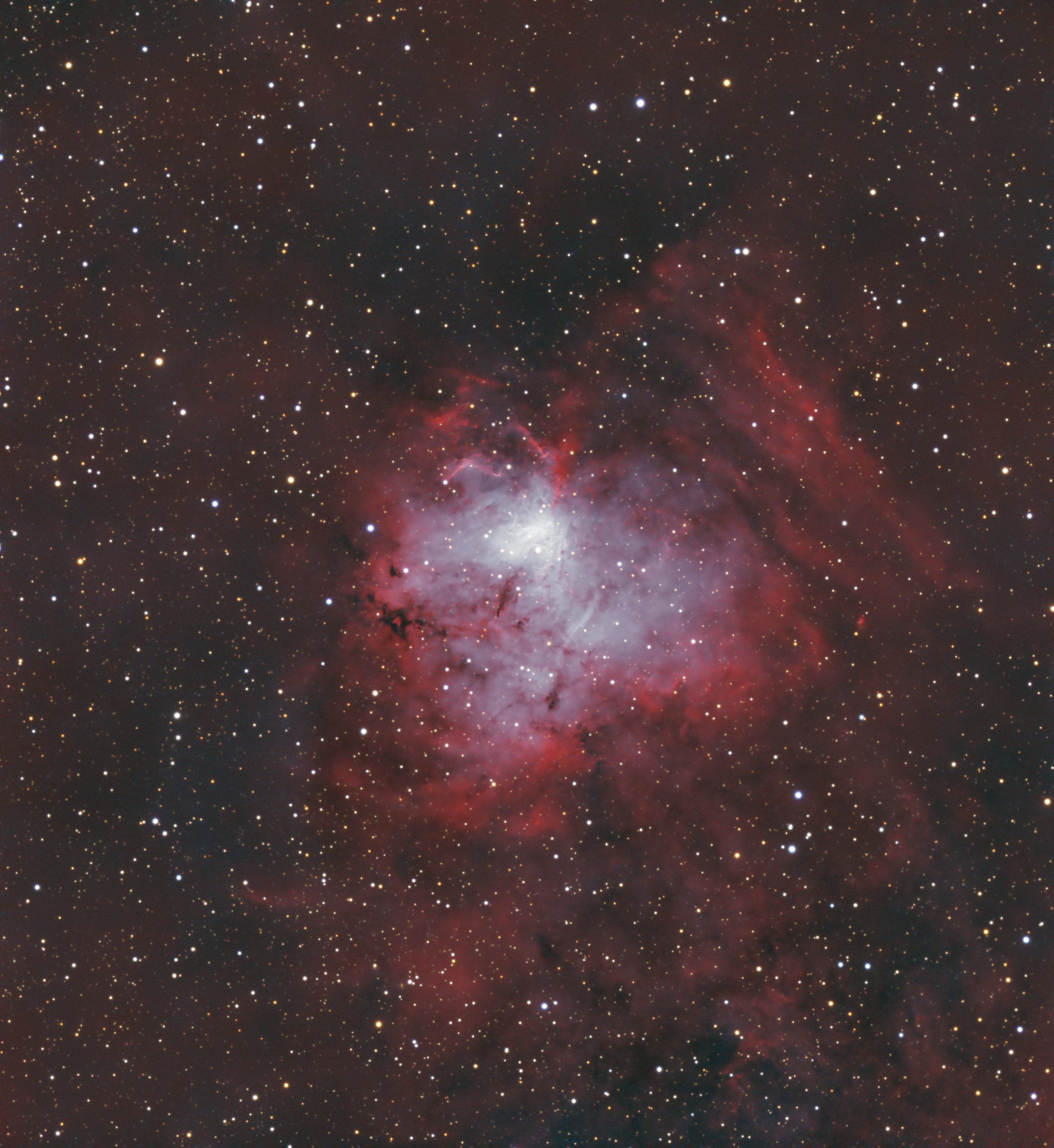
NGC 1491, often nicknamed the Fossil Footprint Nebula, is a compact but striking emission nebula located in the constellation Perseus, roughly 9,000 light-years from Earth. Illuminated primarily by a small group of hot, young O- and B-type stars embedded within it, the nebula glows strongly in hydrogen-alpha, revealing intricate arcs, filaments, and curved structures that give rise to its footprint-like appearance.

This region is an active site of ongoing star formation, where intense ultraviolet radiation from massive stars ionizes the surrounding gas and sculpts the nebula into complex shapes. Dark lanes of interstellar dust weave through the glowing clouds, adding depth and contrast and hinting at dense pockets where new stars may still be forming.

Though relatively small and faint compared to more famous nebulae, NGC 1491 is a rewarding target for astrophotographers. Narrowband imaging highlights its rich textures and subtle gradients, showcasing a fossil-like imprint of stellar feedback frozen in the interstellar medium—a fleeting snapshot of the dynamic processes that shape our galaxy.


Technical Details

Telescope: Sky-Watcher Esprit 100ED Refractor

Auto Focus: ZWO Electronic Auto Focuser

Astronomy Camera: ZWO ASI533MC Pro

Filter: Optolong UV-IR  cut filter; 300 exposures @ 60 seconds each (5 hours) 

Filter: Antlia ALP-T Dual Narrowband Ha/Oiii Filter; 270 exposures @ 5 minutes each (22.5 hours) 

Total Integration Time: 27.5 hours

Auto Guiding: William Optics Uniguide 50mm Guide Scope

Auto Guiding Camera: ZWO ASI120MM Mini Guide Camera

Auto Guiding Software: PHD2

Telescope Mount: Sky- Watcher EQ6-R Pro Equatorial Mount

Telescope Computer: BeeLink GK-55 Mini PC / Windows 10 Pro

Wireless Communication: GL-iNEt Beryl Travel Router

Telescope Control & Image Capture Software: Nighttime Imaging ‘N’ Astronomy (N.I.N.A.)

Image Integration Software: Astro Pixel Process, by Aries Productions

Image Post Processing Software:  PixInsight, by Pleiades Astrophoto

Images captured: Palm Springs, CA during September 2022. Dark sky classification = Bright suburban sky (Bortle 6)
NGC1333 Nebula in Perseus

CLICK ON IMAGE TO VIEW A HIGH RESOLUTION VERSION

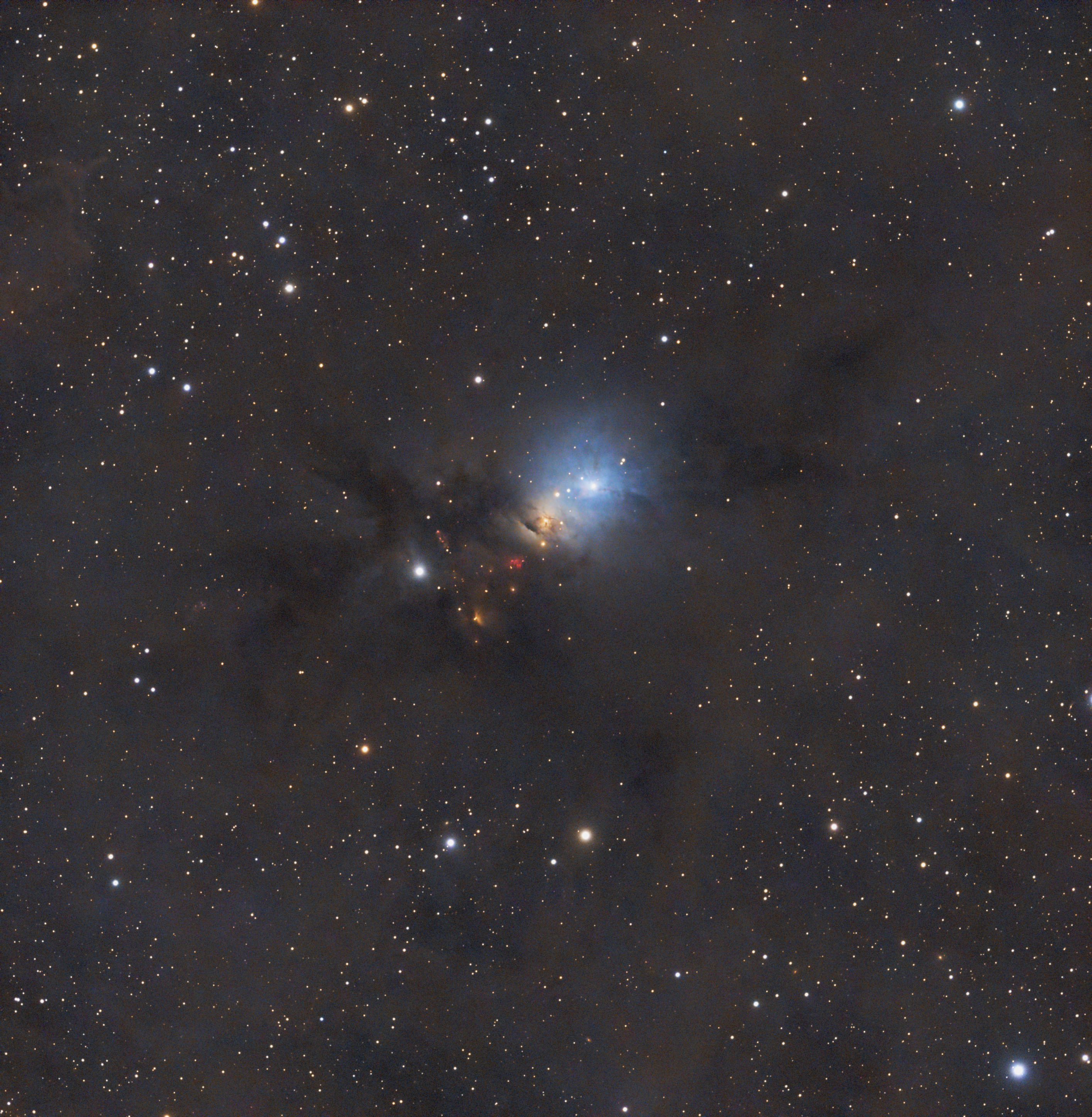
NGC 1333 is a dynamic star-forming nebula nestled within the Perseus Molecular Cloud, about 1,000 light-years from Earth in the constellation Perseus. Unlike bright emission nebulae dominated by glowing hydrogen, NGC 1333 is primarily a reflection nebula, shining as starlight from young, newly formed stars scatters off surrounding dust. This gives the region its distinctive bluish tones, interwoven with dark, sinuous lanes of obscuring gas.

The nebula is a stellar nursery in its earliest stages, filled with protostars, T Tauri stars, and Herbig–Haro objects—jets of material ejected from infant stars as they carve paths through the surrounding cloud. These energetic outflows collide with nearby gas, creating shock fronts that reveal ongoing and turbulent star birth.

Visually, NGC 1333 presents a textured, chaotic appearance, with wisps of illuminated dust set against inky black molecular clouds. Though modest in size compared to famous nebulae like Orion, it offers a compelling glimpse into the raw beginnings of star formation, capturing a moment when gravity, gas, and radiation are actively shaping the next generation of stars.


Technical Details

Telescope: Sky-Watcher Esprit 100ED Refractor

Auto Focus: ZWO Electronic Auto Focuser

Astronomy Camera: ZWO ASI533MC Pro

Filter: Optolong UV-IR  cut filter; 1,400 exposures @ 60 seconds each (23.3 hours) 

Total Integration Time: 23.3 hours

Auto Guiding: William Optics Uniguide 50mm Guide Scope

Auto Guiding Camera: ZWO ASI120MM Mini Guide Camera

Auto Guiding Software: PHD2

Telescope Mount: Sky- Watcher EQ6-R Pro Equatorial Mount

Telescope Computer: BeeLink GK-55 Mini PC / Windows 10 Pro

Wireless Communication: GL-iNEt Beryl Travel Router

Telescope Control & Image Capture Software: Nighttime Imaging ‘N’ Astronomy (N.I.N.A.)

Image Integration Software: Astro Pixel Process, by Aries Productions

Image Post Processing Software:  PixInsight, by Pleiades Astrophoto

Images captured: Palm Springs, CA during December 2023. Dark sky classification = Bright suburban sky (Bortle 6)
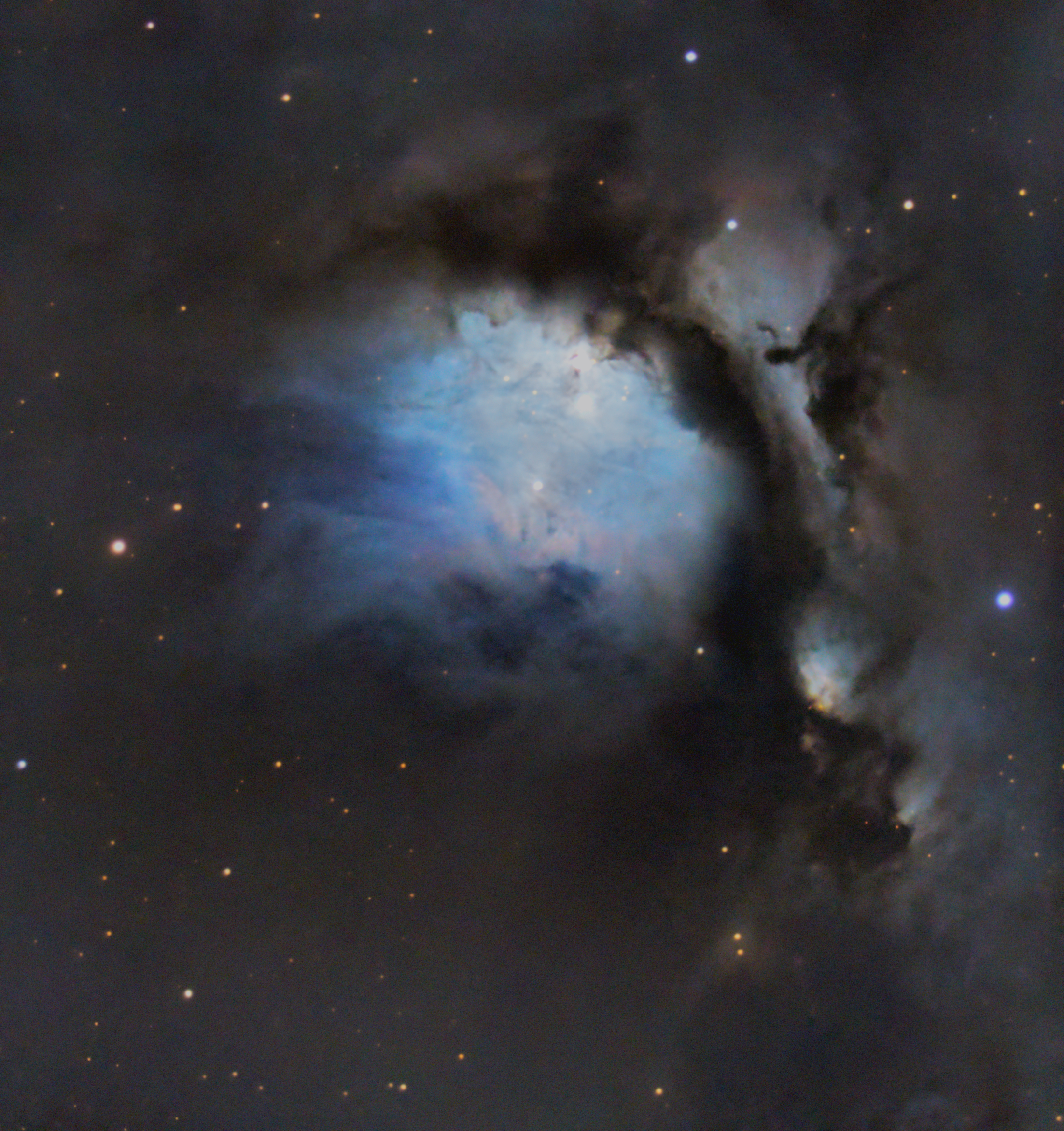
M78 Nebula in Orion

CLICK ON IMAGE TO VIEW A HIGH RESOLUTION VERSION

Messier 78 (M78) is a striking reflection nebula nestled within the rich star-forming complex of the Orion constellation, approximately 1,600 light-years from Earth. Unlike emission nebulae that glow from ionized gas, M78 shines by reflecting the light of nearby young, hot stars, giving it a soft blue glow that contrasts beautifully against the surrounding dark dust lanes.

The nebula’s illumination comes primarily from two embedded stars, which scatter their light off fine interstellar dust, revealing intricate wisps and curved structures shaped by stellar winds and gravity. Surrounding M78 are dense regions of cold molecular gas and opaque dust, where new stars are still forming, making the area an active and evolving stellar nursery.

Often overshadowed by the brighter Orion Nebula (M42), M78 rewards careful observation and astrophotography with subtle detail and depth. Its ethereal blue tones and delicate textures make it one of the finest examples of a reflection nebula in the night sky and a beautiful reminder of the early stages of star formation.


Technical Details

Telescope: Celestron C8 SCT (8″ Schmidt-Cassegrain) with Celestron 0.63 Focal Reducer

Auto Focus: Celestron Electronic Auto Focuser

Astronomy Camera: ZWO ASI533MC Pro

Filter: Optolong UV-IR  cut filter; 1,140 exposures @ 60 seconds each (19 hours)

Total Integration Time: 19 hours

Off-Axis Auto Guiding: ZWO OAG-L

Auto Guiding Camera: ZWO ASI174MM Mini Guide Camera

Telescope Mount: Sky- Watcher EQ6-R Pro Equatorial Mount

Telescope Computer: BeeLink GK-55 Mini PC / Windows 10 Pro

Wireless Communication: GL-iNEt Beryl Travel Router

Telescope Control & Image Capture Software: Nighttime Imaging ‘N’ Astronomy (N.I.N.A.)

Image Integration Software: Astro Pixel Process, by Aries Productions

Image Post Processing Software:  PixInsight, by Pleiades Astrophoto

Images captured in Palm Springs, CA during December 2022. Dark sky classification = Bright suburban sky (Bortle 6).