Category Archives: Astrophotography

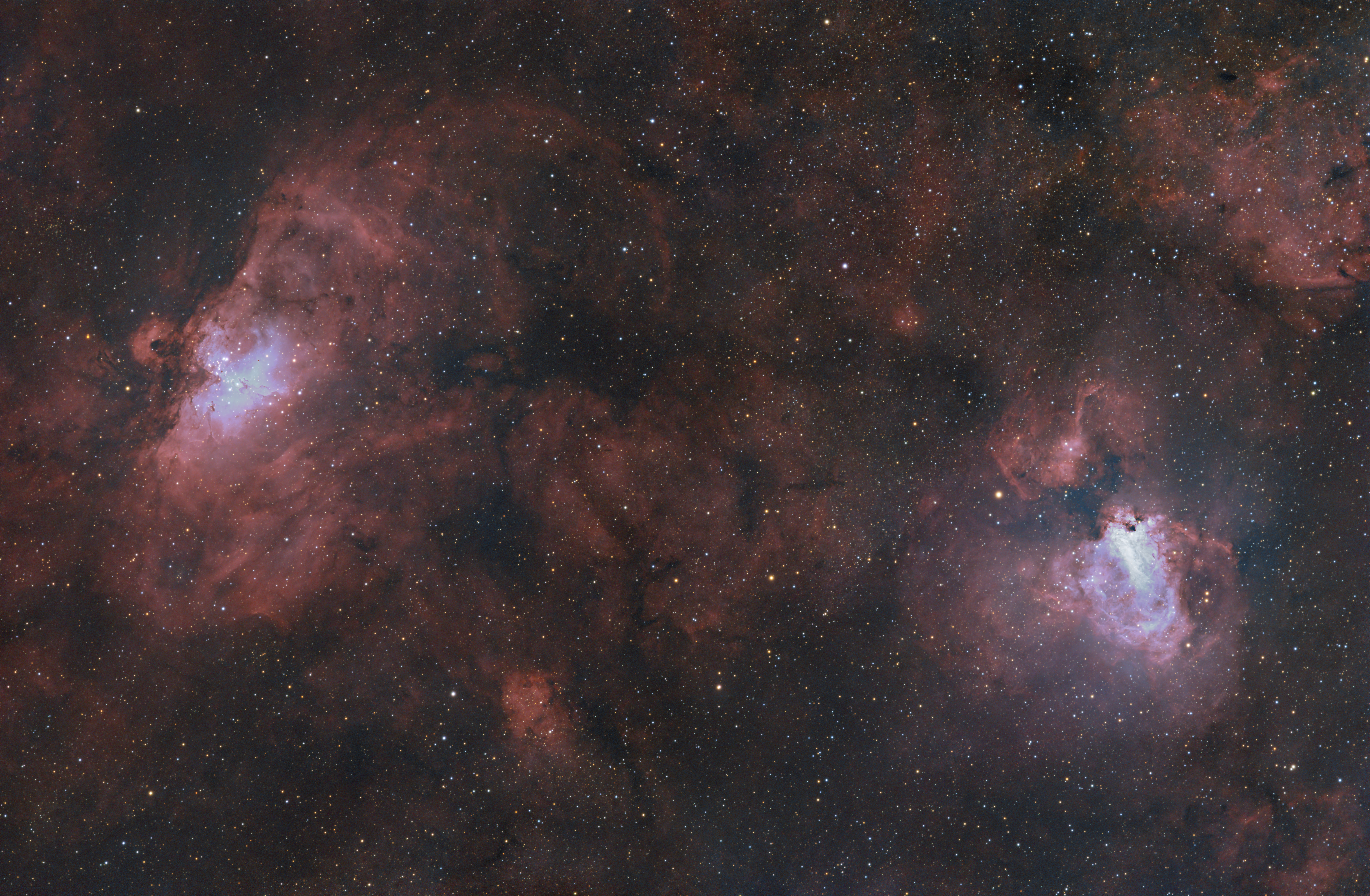
M16 The Eagle Nebula and M17 The Omega Nebula

CLICK ON IMAGE TO VIEW A HIGH RESOLUTION VERSION

M16 (The Eagle Nebula) and M17 (The Omega Nebula) are two of the Milky Way’s most striking emission nebulae, both located in the rich star fields of the constellation Sagittarius and serving as active stellar nurseries.

M16 – The Eagle Nebula
The Eagle Nebula is a vast cloud of glowing hydrogen gas and dark dust, illuminated by intense ultraviolet radiation from a cluster of young, massive stars at its center. It is best known for the iconic “Pillars of Creation,” towering columns of cold gas and dust where new stars are forming, hidden from view within their dense cores. These sculpted structures are shaped by stellar winds and radiation, giving the nebula a dramatic contrast between luminous reds and inky black dust lanes. M16 lies about 7,000 light-years away and spans tens of light-years across, offering a vivid glimpse into the processes that give birth to stars.

M17 – The Omega (or Swan) Nebula
Nearby in the sky, the Omega Nebula glows as a bright, sweeping arc of ionized gas, its curved shape earning it names such as the Swan, Horseshoe, or Checkmark Nebula. Powered by a cluster of hot, young stars embedded within its core, M17 is one of the brightest and most massive star-forming regions in our galaxy. Dense clouds of gas and dust frame the nebula, while brilliant emission regions reveal where stellar radiation is actively shaping the surrounding material. Located roughly 5,500 light-years from Earth, M17 showcases star formation on a grand and energetic scale.


Technical Details

Telescope: Celestron C8 SCT (8″ Schmidt-Cassegrain) with Celestron 0.63 Focal Reducer

Auto Focus: Celestron Electronic Auto Focuser

Astronomy Camera: ZWO ASI071MC Pro

Filter: Optolong UV-IR  cut filter; 180 exposures @ 60 seconds each (3 hours)

Filter: Optolong Lenhance Dual Narrowband Ha/Oiii Filter; 180 exposures @ 5 minutes each (15 hours)

Total Integration Time: 18 hours

Off-Axis Auto Guiding: ZWO OAG-L

Auto Guiding Camera: ZWO ASI174MM Mini Guide Camera

Telescope Mount: Celestron CGX Equatorial Mount

Telescope Computer: BeeLink GK-55 Mini PC / Windows 10 Pro

Wireless Communication: GL-iNEt Beryl Travel Router

Telescope Control & Image Capture Software: Nighttime Imaging ‘N’ Astronomy (N.I.N.A.)

Image Integration Software: Astro Pixel Process, by Aries Productions

Image Post Processing Software:  PixInsight, by Pleiades Astrophoto

Images captured in Palm Springs, CA during July 2025. Dark sky classification = Bright suburban sky (Bortle 6).
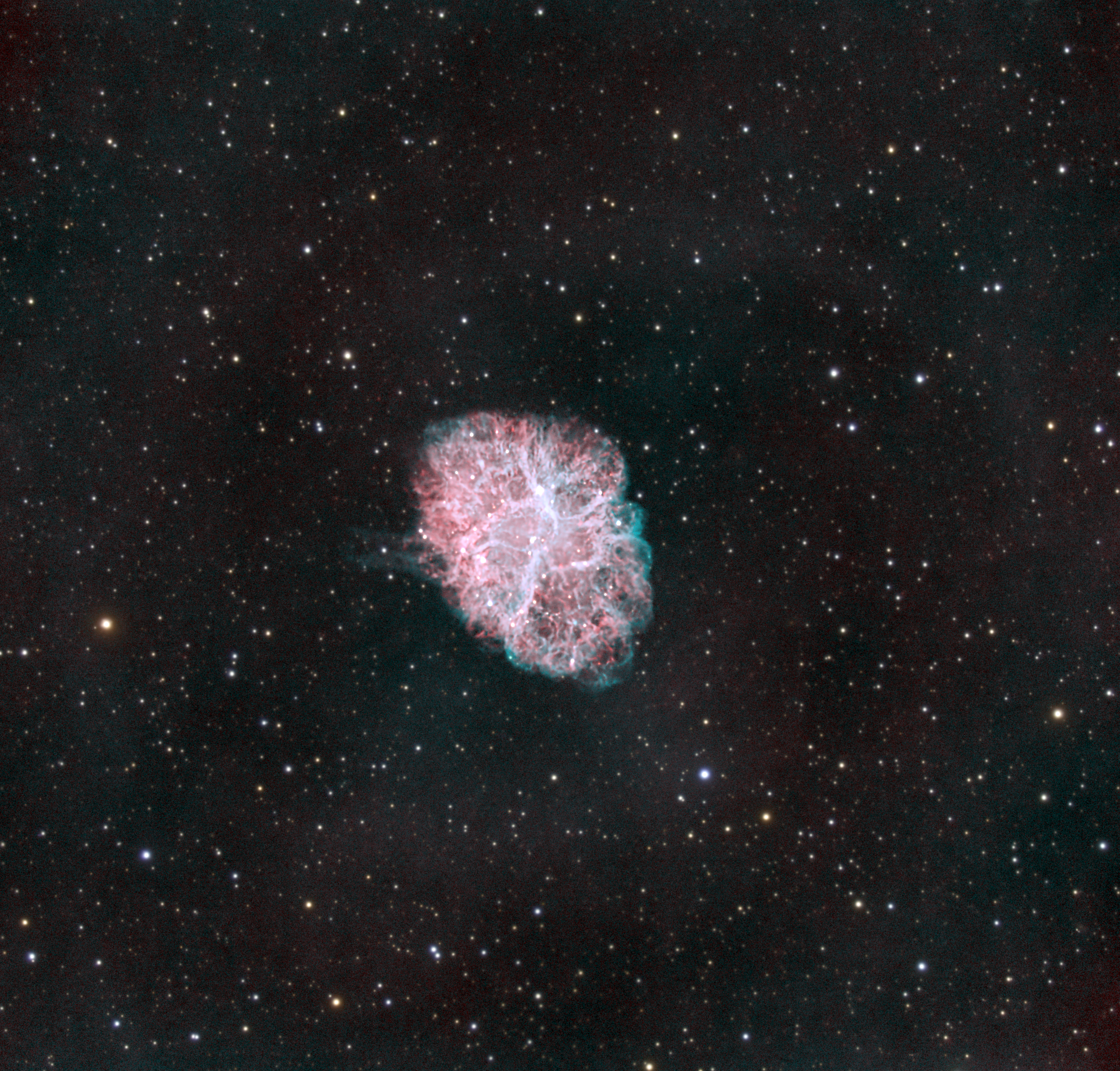
 

M1 Crab Nebula

CLICK ON IMAGE TO VIEW A HIGH RESOLUTION VERSION

The Crab Nebula (M1) is one of the most famous and well-studied supernova remnants in the night sky. Located in the constellation Taurus, it lies about 6,500 light-years from Earth. The nebula is the remnant of a supernova explosion recorded by Chinese astronomers in 1054 AD, and its expanding cloud of gas and dust continues to glow brightly across the electromagnetic spectrum.

The Crab Nebula spans roughly 11 light-years in diameter and is powered by a central pulsar—a rapidly rotating neutron star that emits beams of radiation and generates a strong magnetic field. Its intricate filaments of ionized gas display stunning colors in visible light, ranging from reddish hydrogen and nitrogen to bluish oxygen, while X-ray and radio observations reveal energetic particles accelerated to near-light speeds.

M1 is a remarkable cosmic laboratory for astronomers, offering insights into stellar death, neutron stars, and high-energy astrophysics, making it a true jewel in the celestial sphere.


Technical Details

Telescope: Celestron C8 SCT (8″ Schmidt-Cassegrain) with Celestron 0.63 Focal Reducer

Auto Focus: Celestron Electronic Auto Focuser

Astronomy Camera: ZWO ASI533MC Pro

Filter: Optolong UV-IR  cut filter; 340 exposures @ 60 seconds each (5.6 hours)

Filter: Antlia ALP-T Dual Narrowband Ha/Oiii Filter; 147 exposures @ 5 minutes each (12.25 hours)

Total Integration Time: 17.85 hours

Off-Axis Auto Guiding: ZWO OAG-L

Auto Guiding Camera: ZWO ASI174MM Mini Guide Camera

Telescope Mount: Sky- Watcher EQ6-R Pro Equatorial Mount

Telescope Computer: BeeLink GK-55 Mini PC / Windows 10 Pro

Wireless Communication: GL-iNEt Beryl Travel Router

Telescope Control & Image Capture Software: Nighttime Imaging ‘N’ Astronomy (N.I.N.A.)

Image Integration Software: Astro Pixel Process, by Aries Productions

Image Post Processing Software:  PixInsight, by Pleiades Astrophoto

Images captured in Palm Springs, CA during October 2023. Dark sky classification = Bright suburban sky (Bortle 6).
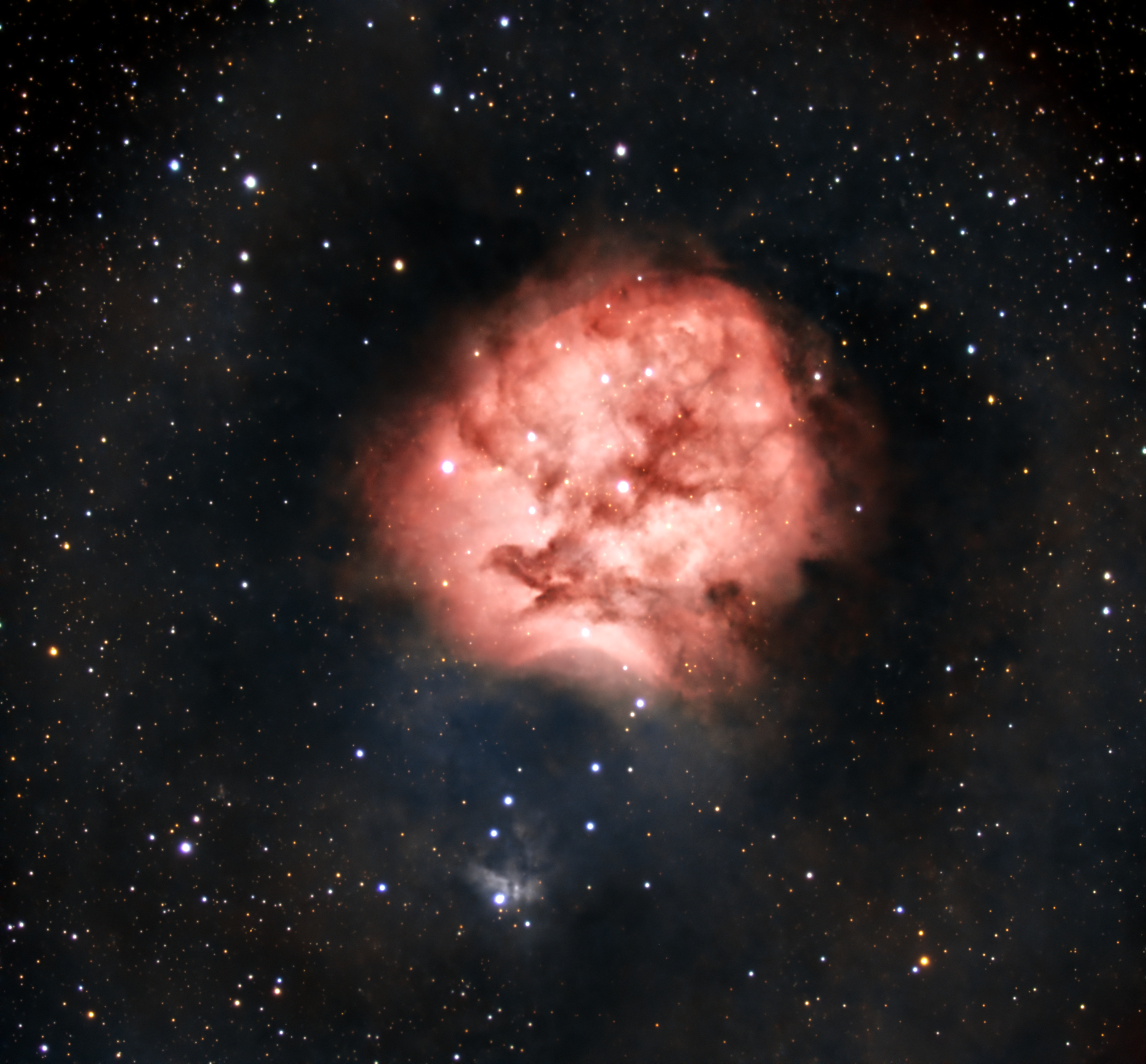
IC5146 Cocoon Nebula

CLICK ON IMAGE TO VIEW A HIGH RESOLUTION VERSION

IC 5146 – The Cocoon Nebula is a striking emission and reflection nebula located in the constellation Cygnus, approximately 4,000 light-years away from Earth. It is often celebrated for its combination of glowing gas, dark dust lanes, and a central open star cluster. The nebula itself is an active stellar nursery, where new stars are forming within dense molecular clouds.

The “cocoon” appearance comes from a bright cluster of young stars at the center, whose intense radiation illuminates the surrounding hydrogen gas, causing it to emit a vivid red glow. Surrounding this core, dark lanes of interstellar dust weave through the nebula, creating a visually stunning contrast with the bright gas. The nebula also reflects the light of its young stars in patches of bluish reflection nebula.

IC 5146 spans roughly 12 arcminutes across the sky and is accompanied by an extensive molecular cloud stretching westward, which forms a dark, elongated region known as the Cocoon Nebula filament. It is a favorite target for astrophotographers due to its intricate structures, rich colors, and the delicate interplay between light and dark regions.


Technical Details

Telescope: Celestron C8 SCT (8″ Schmidt-Cassegrain) with Celestron 0.63 Focal Reducer

Auto Focus: Celestron Electronic Auto Focuser

Astronomy Camera: ZWO ASI533MC Pro

Filter: Optolong UV-IR  cut filter; 120 exposures @ 60 seconds each (2 hours)

Filter: Antlia ALP-T Dual Narrowband Ha/Oiii Filter; 196 exposures @ 5 minutes each (16.3 hours)

Total Integration Time: 18.3 hours

Off-Axis Auto Guiding: ZWO OAG-L

Auto Guiding Camera: ZWO ASI174MM Mini Guide Camera

Telescope Mount: Sky- Watcher EQ6-R Pro Equatorial Mount

Telescope Computer: BeeLink GK-55 Mini PC / Windows 10 Pro

Wireless Communication: GL-iNEt Beryl Travel Router

Telescope Control & Image Capture Software: Nighttime Imaging ‘N’ Astronomy (N.I.N.A.)

Image Integration Software: Astro Pixel Process, by Aries Productions

Image Post Processing Software:  PixInsight, by Pleiades Astrophoto

Images captured in Palm Springs, CA during October 2023. Dark sky classification = Bright suburban sky (Bortle 6).


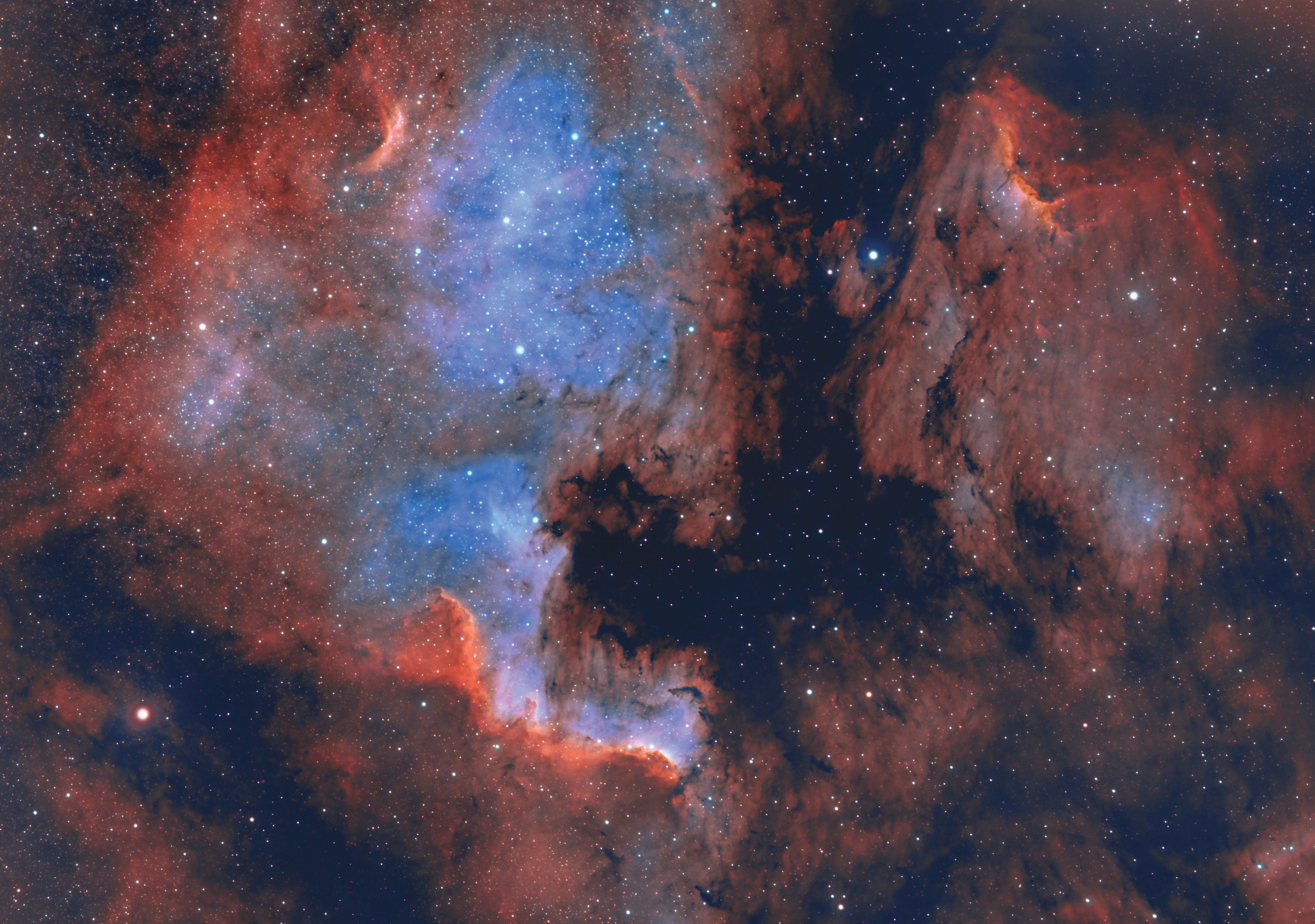
IC5070 & NGC7000 North America Nebulae

CLICK ON IMAGE TO VIEW A HIGH RESOLUTION VERSION

IC 5070 – Pelican Nebula
IC 5070, popularly known as the Pelican Nebula, is an emission nebula located in the constellation Cygnus, roughly 1,800 light-years away from Earth. Its glowing hydrogen gas is sculpted into intricate shapes by the intense radiation and stellar winds of nearby young, massive stars, giving it the distinctive appearance of a pelican in flight. Rich in star-forming regions, IC 5070 is a stellar nursery where new stars are born from dense clouds of gas and dust. The nebula is often captured alongside the nearby North America Nebula due to their close proximity and shared stellar environment.


NGC 7000 – North America Nebula
NGC 7000, or the North America Nebula, is an expansive emission nebula in Cygnus, named for its striking resemblance to the North American continent. Like the Pelican Nebula, it lies around 1,600–1,800 light-years away and is composed primarily of hydrogen gas glowing under the influence of nearby hot stars. The “Gulf of Mexico” region is a dark dust lane that cuts across the nebula, creating a dramatic contrast against the bright, glowing hydrogen regions. This nebula is part of a larger complex of star-forming regions, including the Pelican Nebula, and is a favorite target for astrophotographers due to its vivid structures and vast, intricate details.


Technical Details

Telescope: William Optics Zenithstar 61ii  Refractor

Auto Focus: ZWO Electronic Auto Focuser

Astronomy Camera: ZWO ASI071MC Pro

Filter: Optolong UV-IR  cut filter; 240 exposures @ 60 seconds each (4 hours) 

Filter: Optolong Lenhance Dual Narrowband Ha/Oiii Filter; 480 exposures @ 5 minutes each (40 hours) 

Total Integration Time: 44 hours

Auto Guiding: William Optics Uniguide 50mm Guide Scope

Auto Guiding Camera: ZWO ASI120MM Mini Guide Camera

Auto Guiding Software: PHD2

Telescope Mount: Celestron CGX Equatorial Mount

Telescope Computer: BeeLink GK-55 Mini PC / Windows 10 Pro

Wireless Communication: GL-iNEt Beryl Travel Router

Telescope Control & Image Capture Software: Nighttime Imaging ‘N’ Astronomy (N.I.N.A.)

Image Integration Software: Astro Pixel Process, by Aries Productions

Image Post Processing Software:  PixInsight, by Pleiades Astrophoto

Images captured: Palm Springs, CA during August 2022. Dark sky classification = Bright suburban sky (Bortle 6)


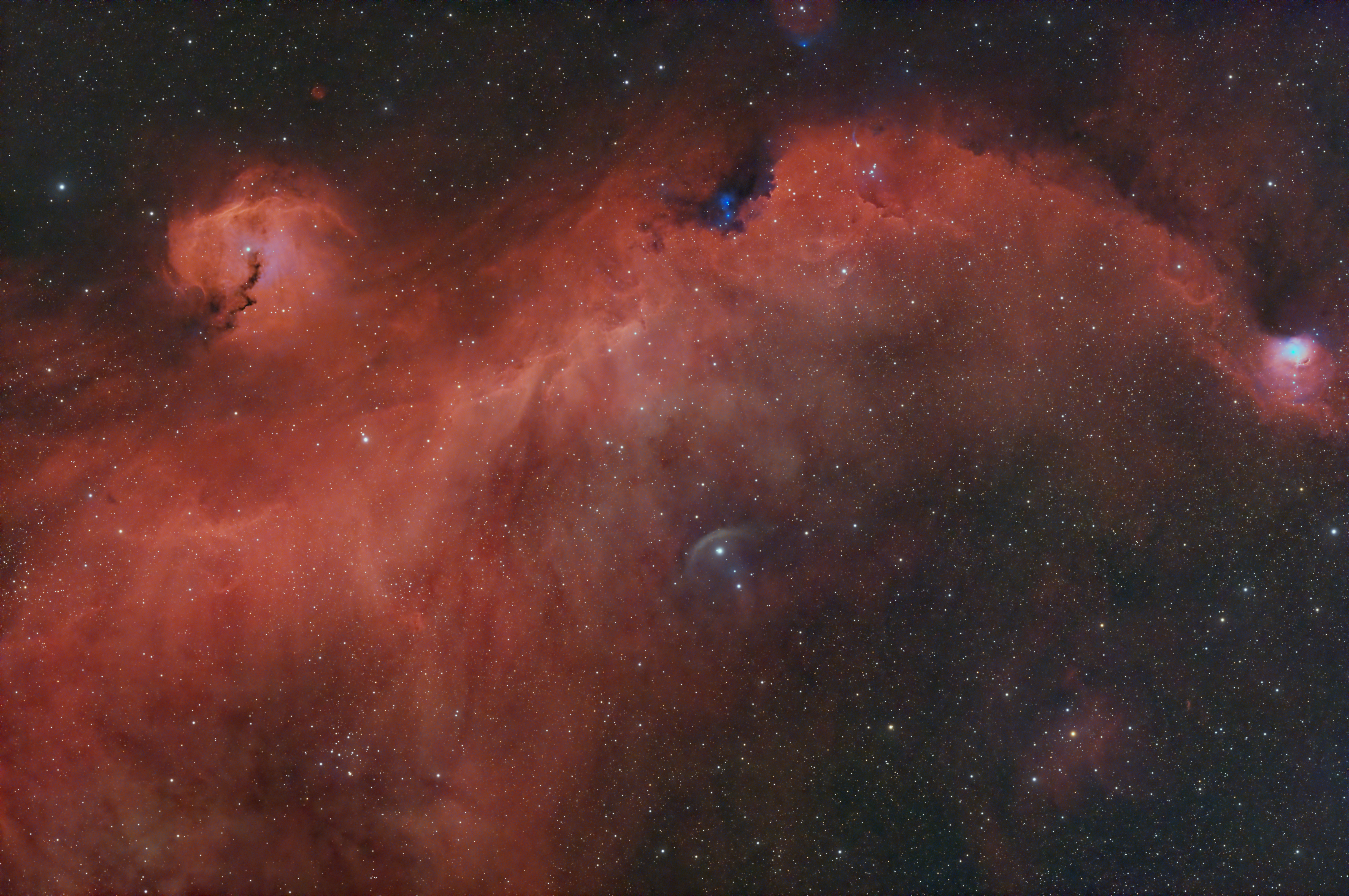
IC2177 Seagull Nebula

CLICK ON IMAGE TO VIEW A HIGH RESOLUTION VERSION

The Seagull Nebula (IC 2177) is a vast and graceful emission nebula stretching across the border of the constellations Monoceros and Canis Major. Shaped strikingly like a seabird in flight, its sweeping “wings” span nearly 100 light-years, glowing softly with deep reds from ionized hydrogen gas energized by nearby young, hot stars.

At the heart of the nebula lies the brighter region NGC 2327, where active star formation is taking place. Embedded stellar nurseries sculpt the surrounding gas and dust into flowing arcs and dark lanes, giving the Seagull its dynamic, windswept appearance. Subtle blue reflections and intricate filaments add depth and contrast to the dominant crimson glow.

Located approximately 3,800 light-years from Earth, IC 2177 is a favorite target for wide-field astrophotography, revealing delicate structures that are often invisible visually. The Seagull Nebula stands as a serene yet powerful portrait of stellar creation, frozen mid-flight against the rich backdrop of the Milky Way.


Technical Details

Telescope: Sky-Watcher Esprit 100ED Refractor

Auto Focus: ZWO Electronic Auto Focuser

Astronomy Camera: ZWO ASI071MC Pro

Filter: Optolong UV-IR  cut filter; 180 exposures @ 60 seconds each (3 hours) 

Filter: Antlia ALP-T Dual Narrowband Ha/Oiii Filter; 150 exposures @ 5 minutes each (13 hours) 

Total Integration Time: 16 hours

Auto Guiding: William Optics Uniguide 50mm Guide Scope

Auto Guiding Camera: ZWO ASI120MM Mini Guide Camera

Auto Guiding Software: PHD2

Telescope Mount: Celestron CGX Equatorial Mount

Telescope Computer: BeeLink GK-55 Mini PC / Windows 10 Pro

Wireless Communication: GL-iNEt Beryl Travel Router

Telescope Control & Image Capture Software: Nighttime Imaging ‘N’ Astronomy (N.I.N.A.)

Image Integration Software: Astro Pixel Process, by Aries Productions

Image Post Processing Software:  PixInsight, by Pleiades Astrophoto

Images captured: Palm Springs, CA during February 2025. Dark sky classification = Bright suburban sky (Bortle 6)