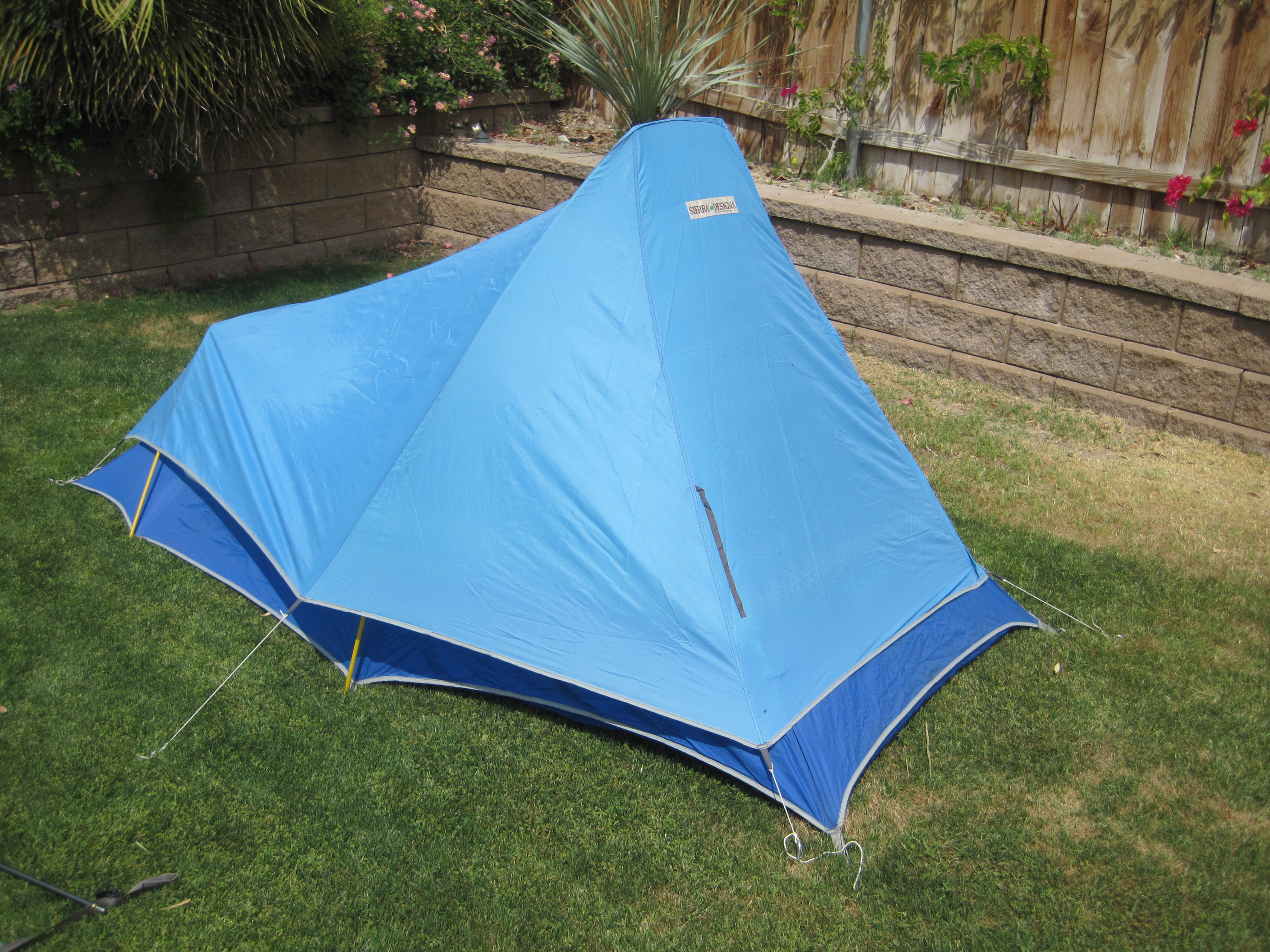
During the late 1970’s I began to venture into the local mountains during winter to try my hand at backpacking and camping in the snow. My first purchase was a double-walled Sierra Designs Flashlight tent. My memory is a little fuzzy, but I am fairly certain that it was the late 70’s, as I remember getting stuck in my tent during a snow storm. I didn’t have snowshoes and it was a miserable trek back home.
The Flashlight only weights 3.5 lbs and it its day was extremely light and roomyy for one person (it was marketed as a two person tent). Because of the sleeves it was very stable in winds.
The main advantage to a double-wall tent is that condensation does not form on the inner tent fabric. The main disadvantage is that it is heavier. I quickly had found that the condensation under my tarp resulted in wet gear and in particular a damp sleeping bag. So I purchased my first double-wall tent.
The Flashlight was really a 3 season tent, not designed for snow. But I got up every hour or so to know the snow off the tent.
I am pretty sure the Flashlight came out in the late 70’s. The tent poles slide through the tent in fabric sleeves. In the early 80’s Sierra Designs came out with the Flashlight II, which used clips to attach the tent to the poles.
Front view of inner tent. Notice that the poles are slid into the sleeves of the tent fabric.Rear view of the inner.Outer wall (fly) installed over the inner tent.
After mixed results in winter with the original Sierra Designs Flashlight and the Chouinard Pyramid I finally purchased this tent in 1989. It is a true 4 season tent.
This tent was used by the U.S. Antarctic Program. The tent weighs 6.2 lbs.
To be really secure in the worst weather the tent requires all tie-outs be used, which means 20 stakes. But it will handle just about anything Mother Nature can throw at you.
Super Flash with all tie-outs and stakes in use.The inner tent uses clips that attach to 3 hoops (unlike the earlier Flashlights that only used 2 hoops)
The fly extends beyond the front of the inner tent to create a vestibule for storing gear or CAREFULLY cooking meals.
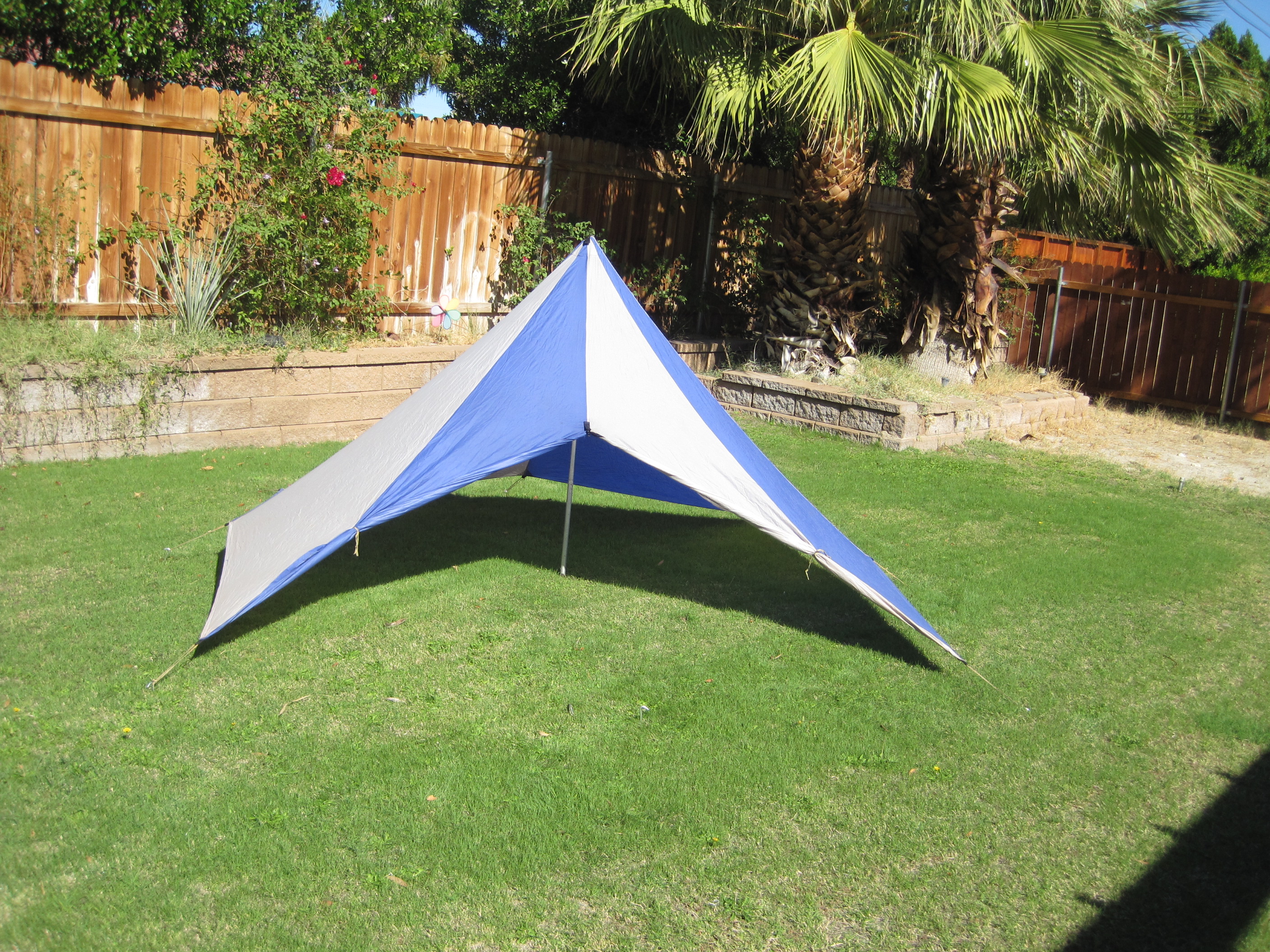
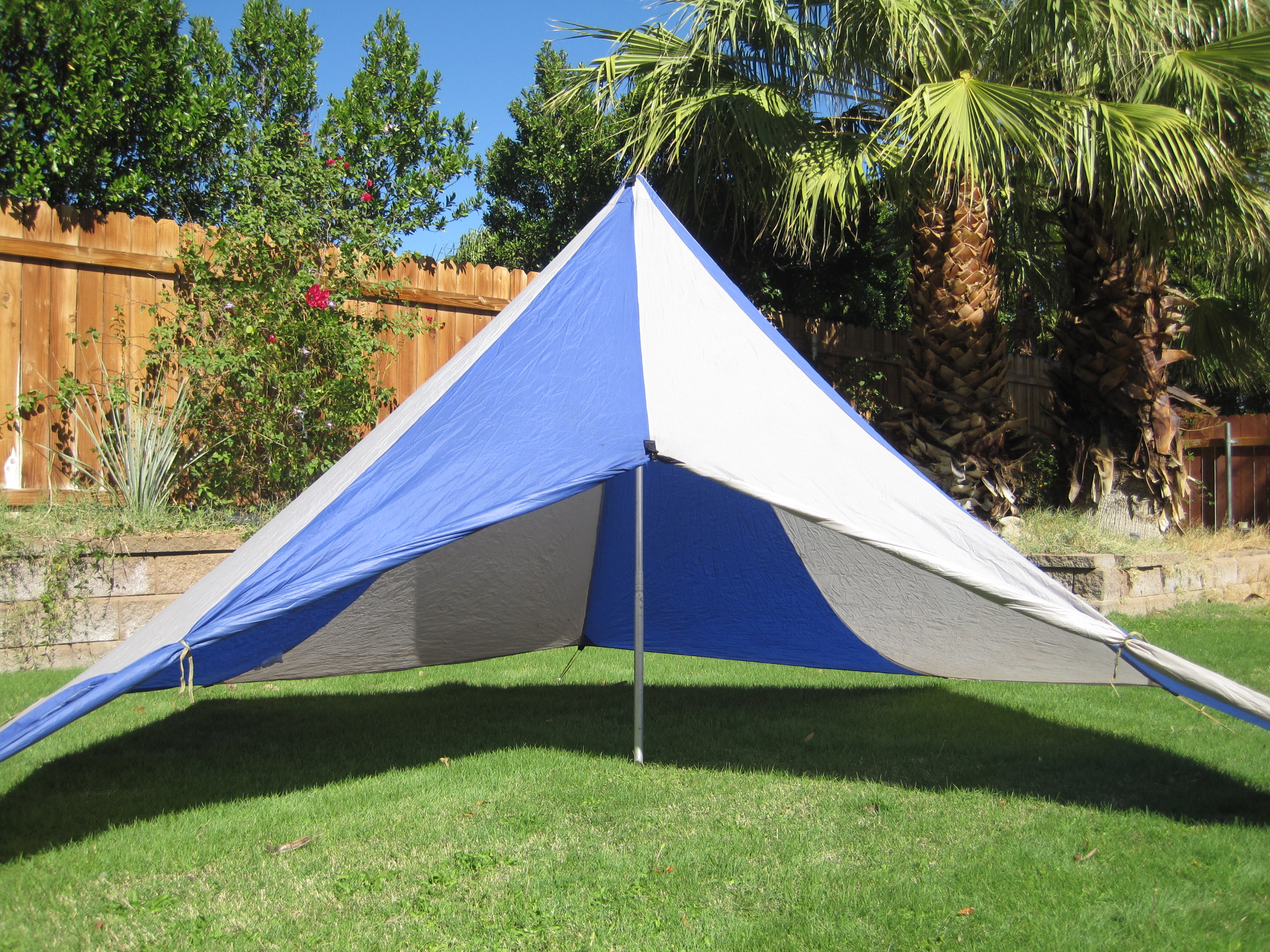
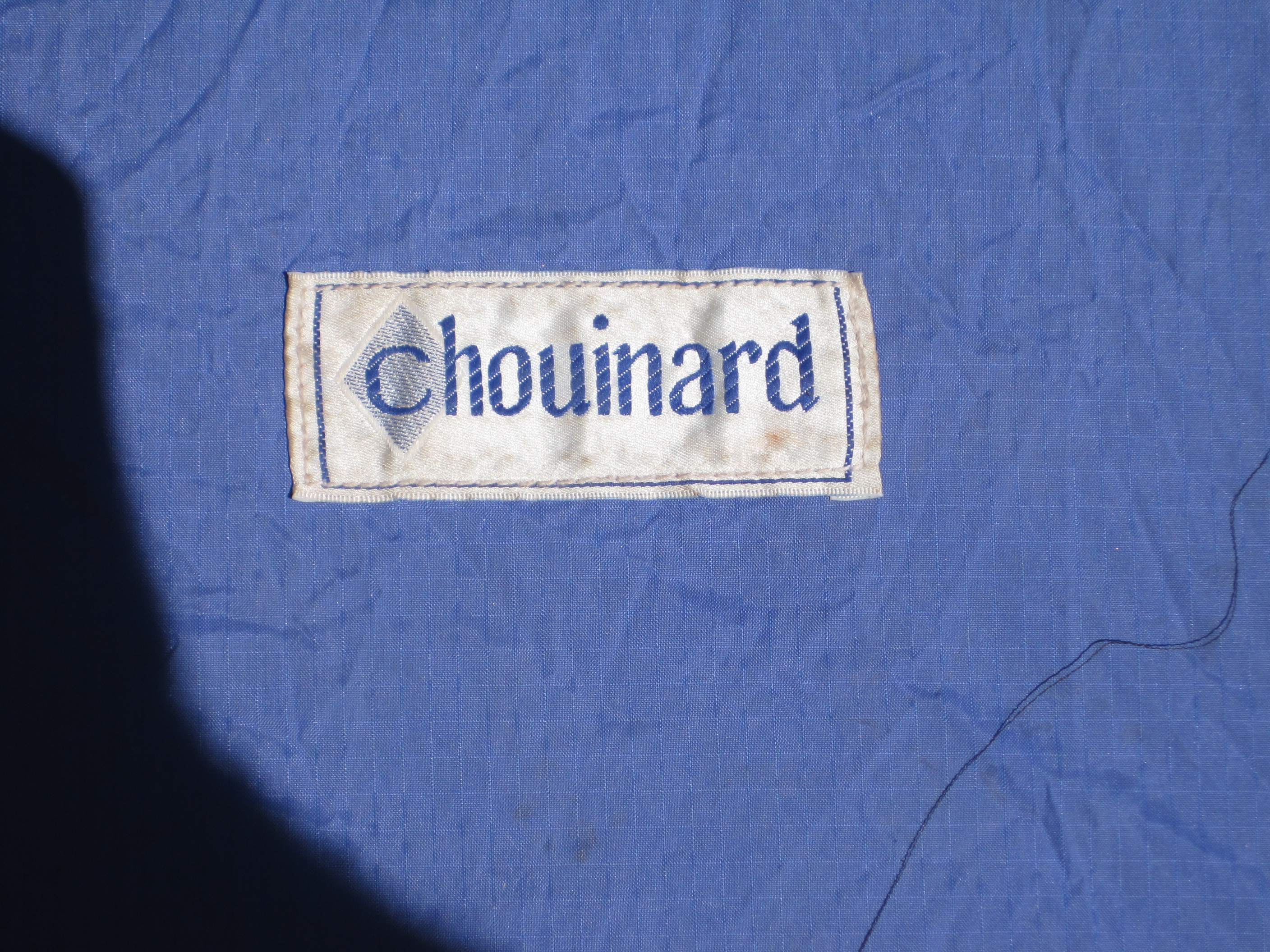
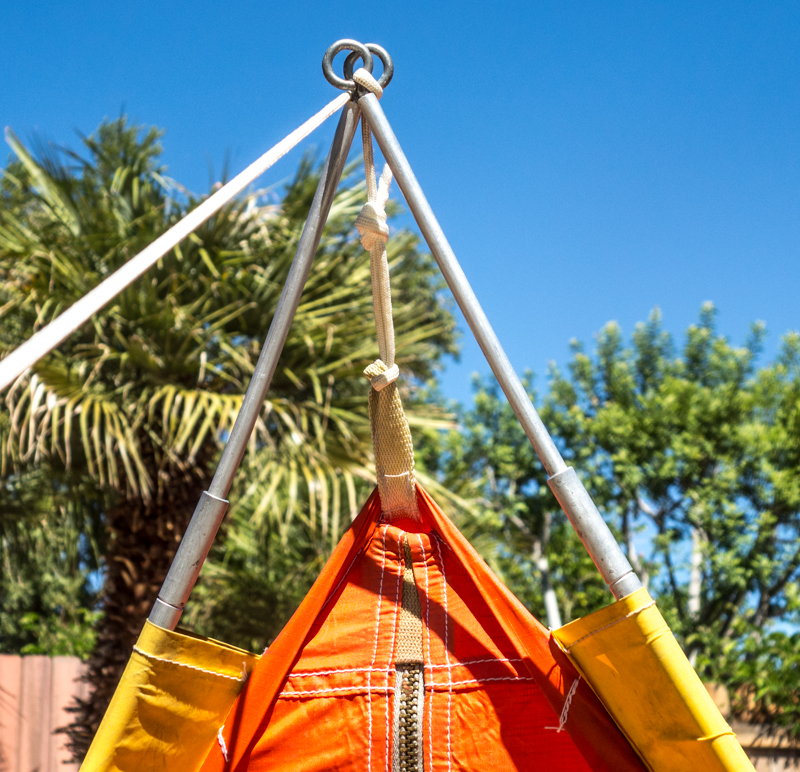
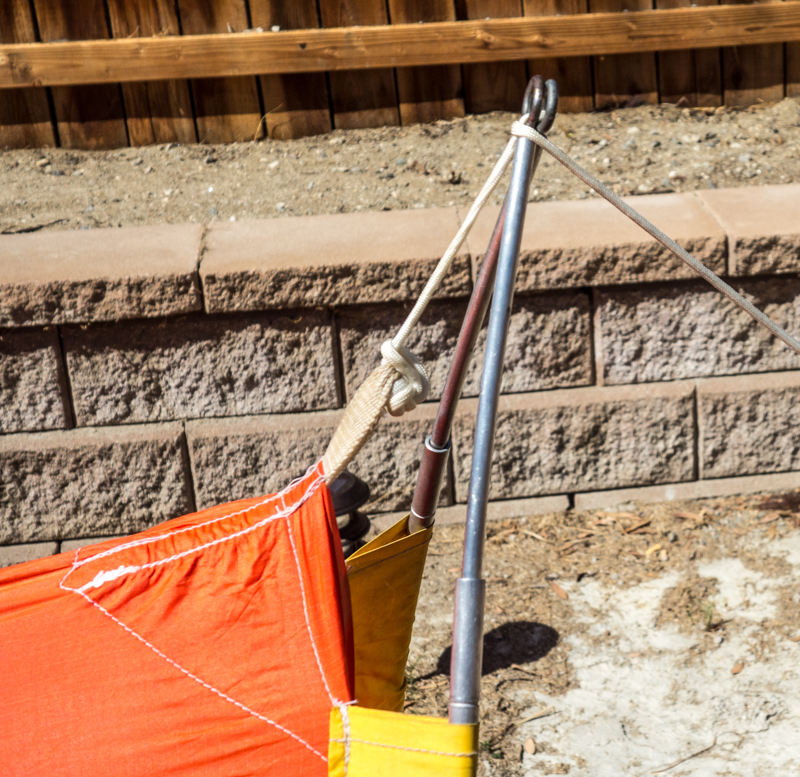
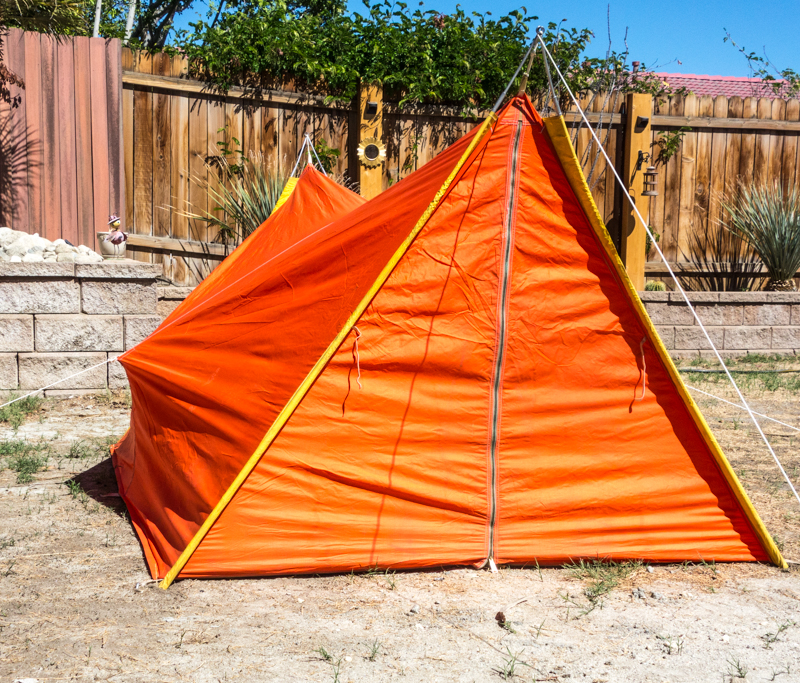
Unhappy with the Sierra Design’s Flashlight as a winter tent in snow I purchased a Chouinard Pyramid tent in 1985. Unable to afford a true 4 season double-walled tent, the Chouinard appealed to me because of its
Price
Light weight (2 lbs 9 oz without poles and stakes)
Stability in poor weather
Large interior area
What did not appeal to me after using it was
Condensation in cold weather
A pole in the middle that forced me to sleep on either side
But I used it for many years on many trips. However on most 3 season trips I reverted to my tried and true tarp, which was lighter and could be pitched in many configurations.
Today many ultralight shelters use a pyramid or modified pyramid shape, and with newer lightweight materials are super light and stable.
When it comes to shelters, I am tarp guy. I first learned about tarps in 1969 in USAF survival training, where we learned to construct shelters out of parachutes and ponchos.
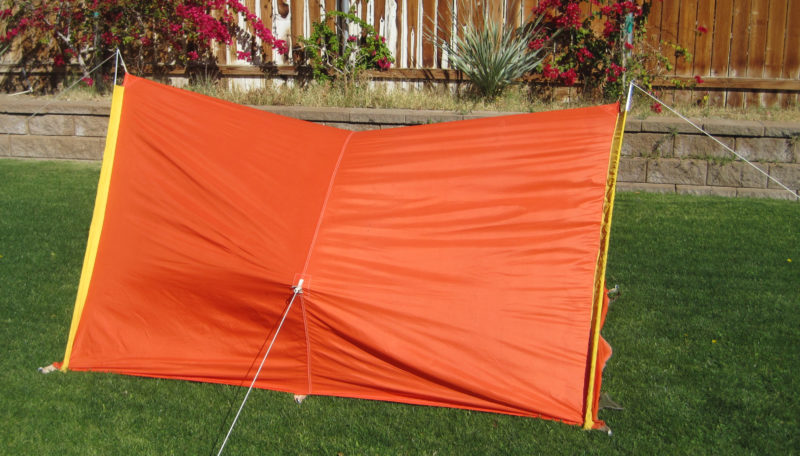
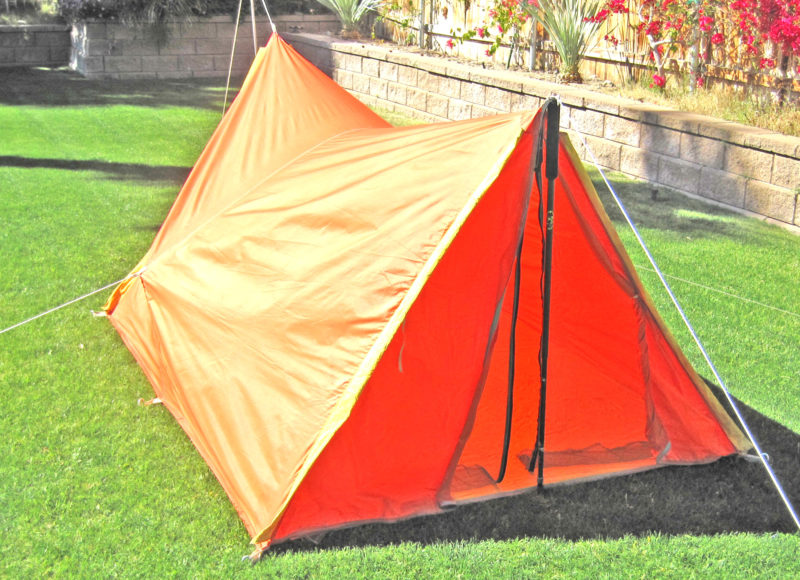
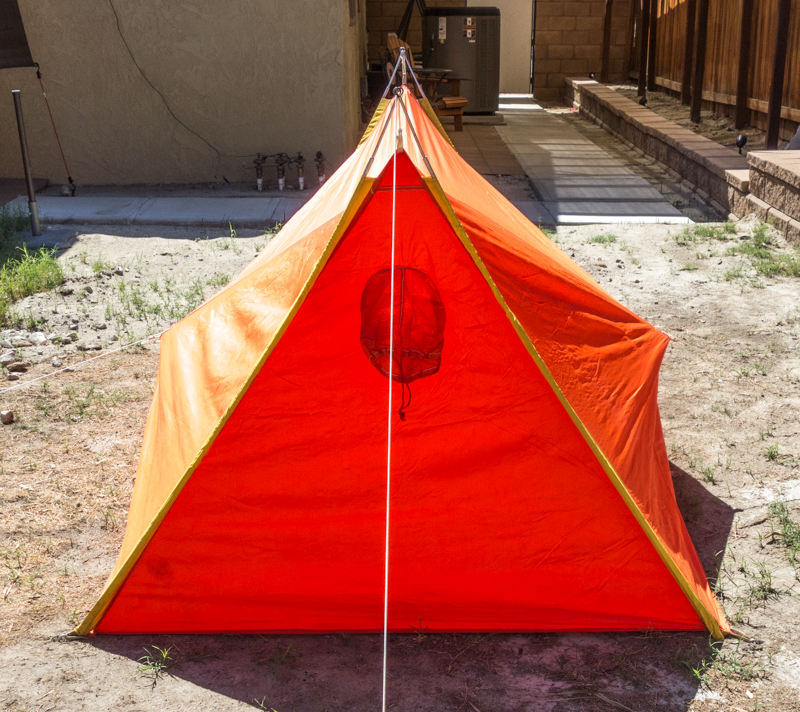
In high school I bought a used REI A-frame tent at a swap meet. It is made from nylon and being ‘single-walled’ it is not great in snow and generates a lot of condensation. It’s not that good in wind compared to other designs, but it never collapsed, even in strong winds — but there is a lot of movement on the side panels. Compared to other A-frame shelters I have seen it is very stable for an A-Frame. But then it is over 50 years old. Also it is heavy at 5.5 lbs.
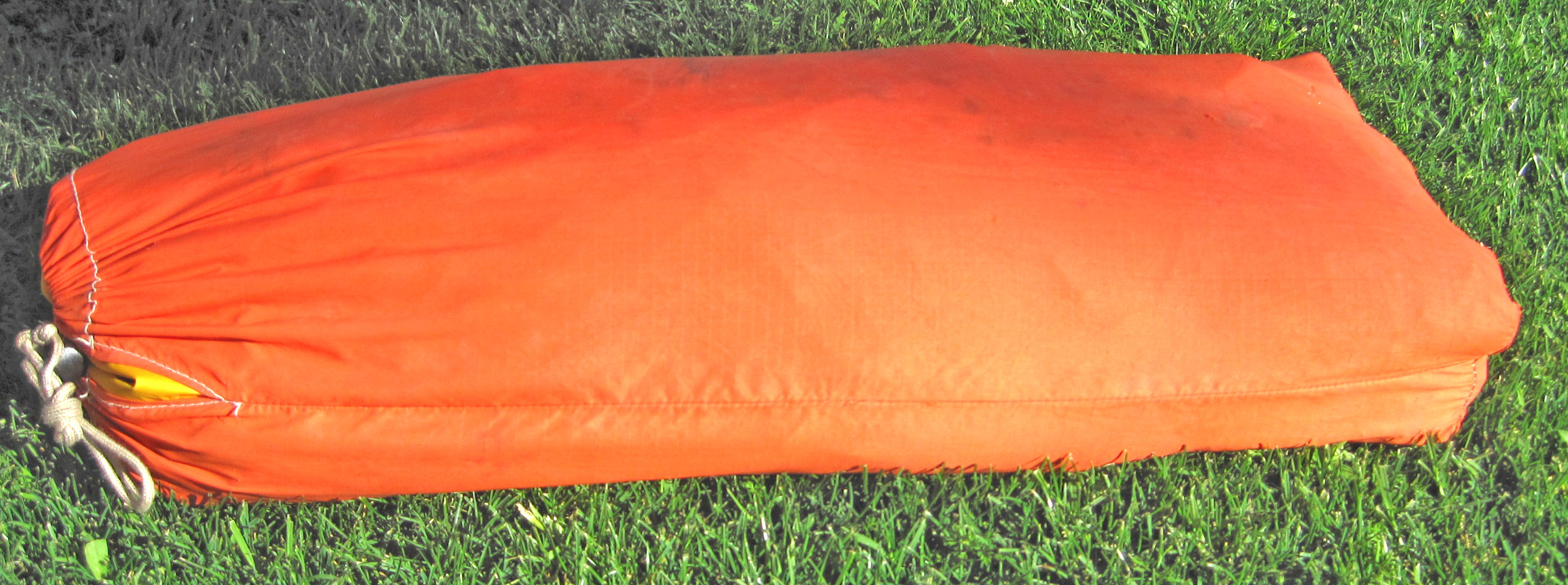
STUFF SACK
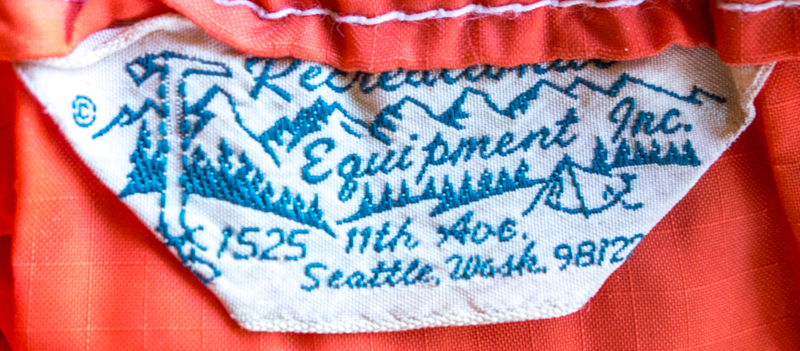
Tent in Stuff SackOld REI Label for Stuff Sack
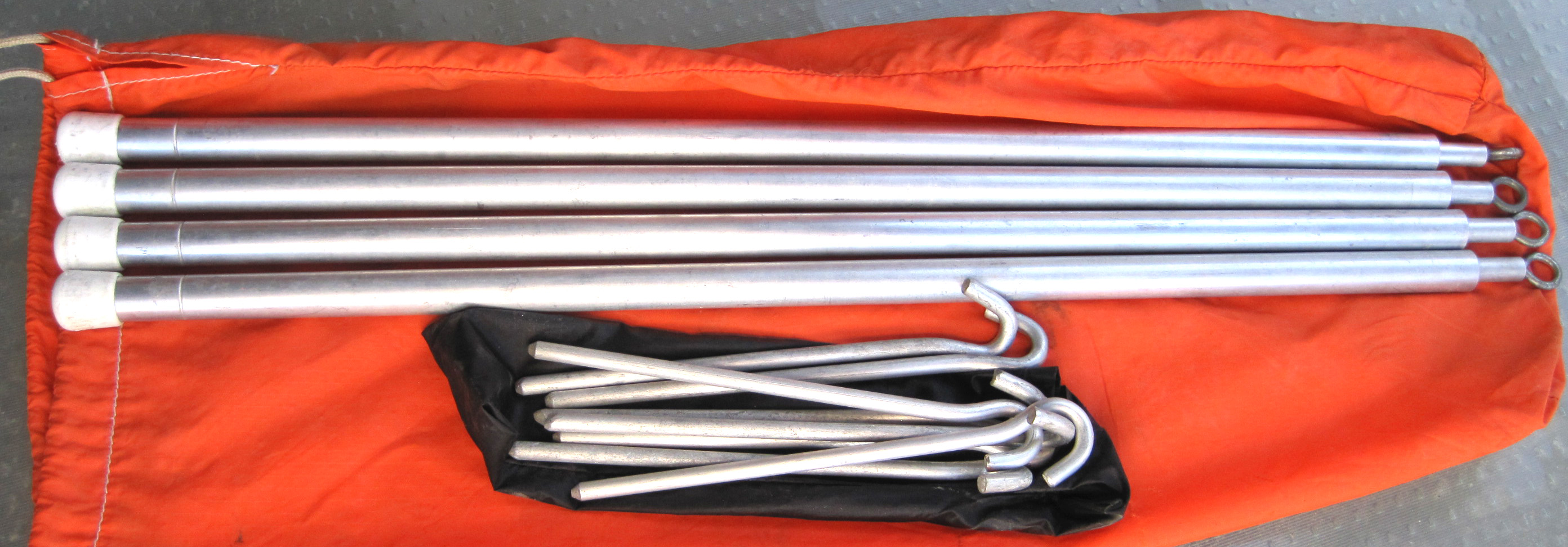
POLES AND STAKES
Poles and Stakes
The shelter has 4 telescoping poles. When each pole is pulled apart, sections are flipped end-to-end and can be snuggly connected making a 59″ pole. Two poles slide into sleeves at each end of the tent forming an inverted “V.”
Pole Specifications
Each pole weights 7 5/8 ounces (216 grams)
Length of each pole assembled is 59 inches (150 cm)
Outer diameter of pole sections (larges to smallest)
5/8″ (15.95 mm)
1/2″ (12.60 mm)
3/8″ (9.48 mm)
1/4″ (6.30 mm)
The wall thickness of all poles is 1/16″ (1.50 mm)
Apex of tent poles (2 at each end of the tent)Apex of tent poles (side view)
FRONT VIEWS
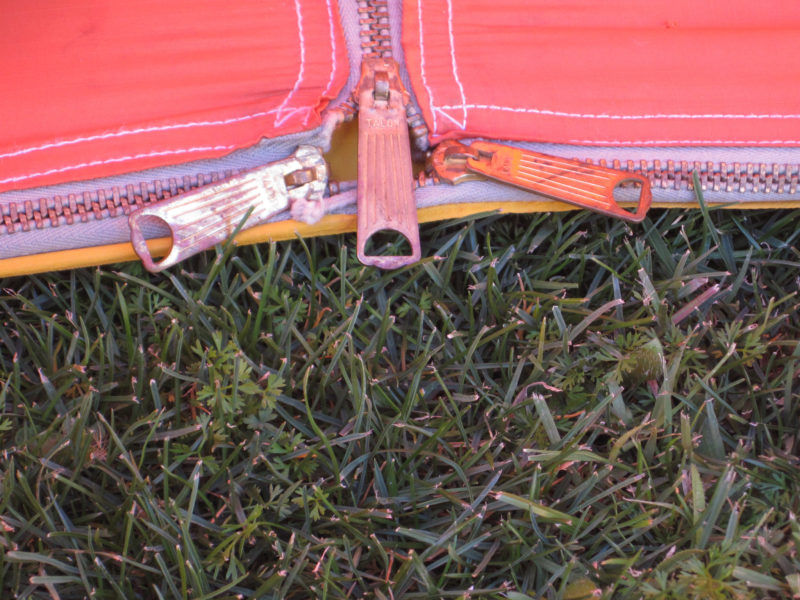
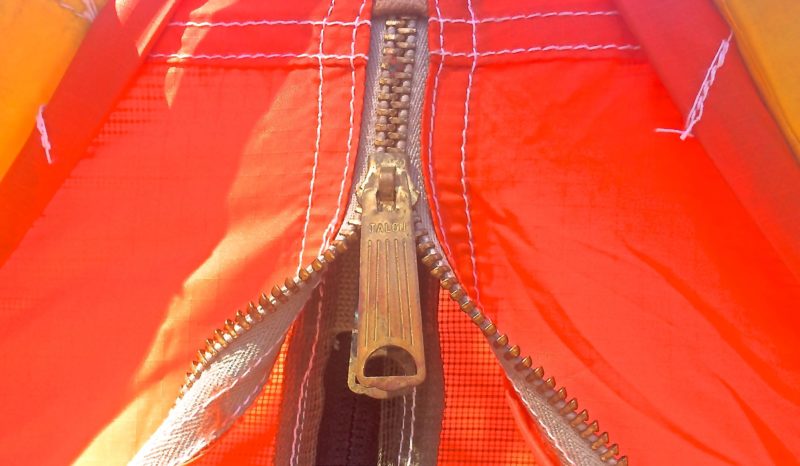
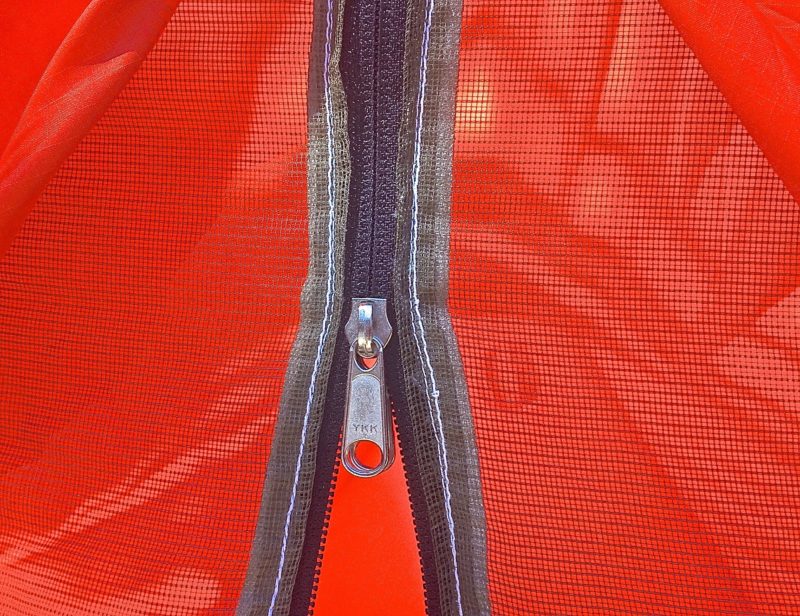
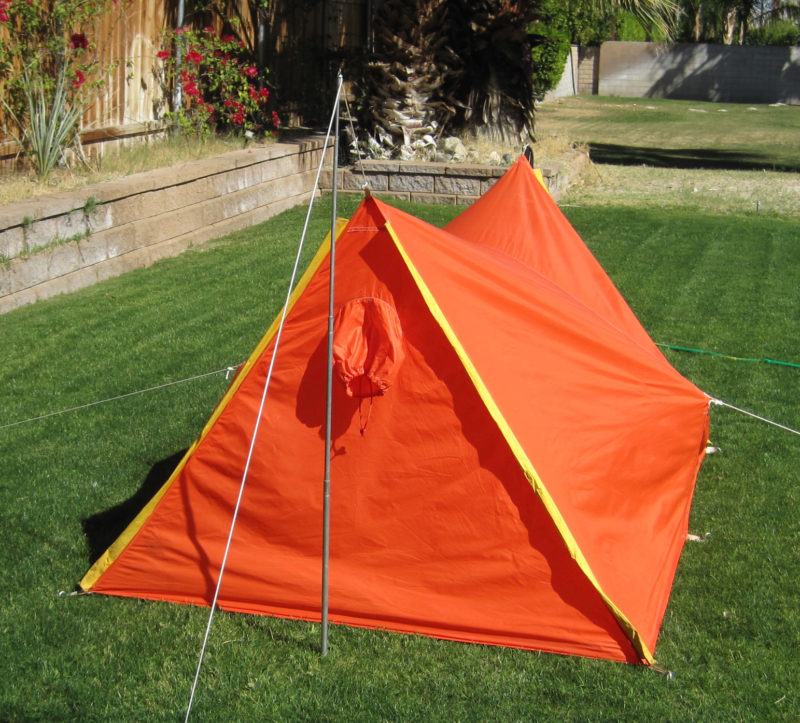
Front door closed. There are 3 zippers: one in the center and two at the bottomIn this picture I just used my hiking staff as a single front pole (outside of the sleeve) and one of the included tent poles at the rear (outside of the sleeve). This way I could save 1.5 pounds of weight by leaving 3 poles at home — yes even in the old days we tried to par down our weight 🙂Junction of the 3 zippers for the front doorFront door metal zippers are very robustAbout 4 years ago I had to replace the zipper for the front mesh door. I can’t remember if the original was metal or nylon, but the new on is nylon.
REAR VIEW
In this picture I just used one pole at the rear (outside of the sleeve) and my hiking staff for the front pole. This way I could save 1.5 pounds of weight by leaving 3 poles at home — yes even in the old days we tried to par down our weight 🙂 Note the rear vent.Rear View
SIDE VIEW
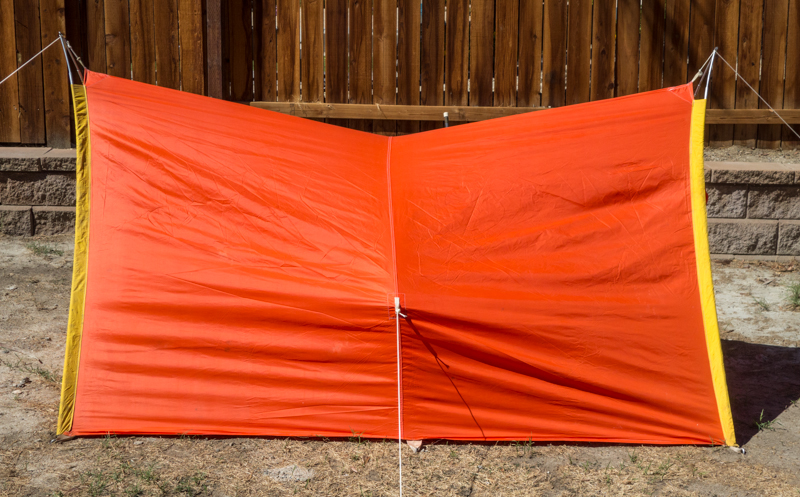
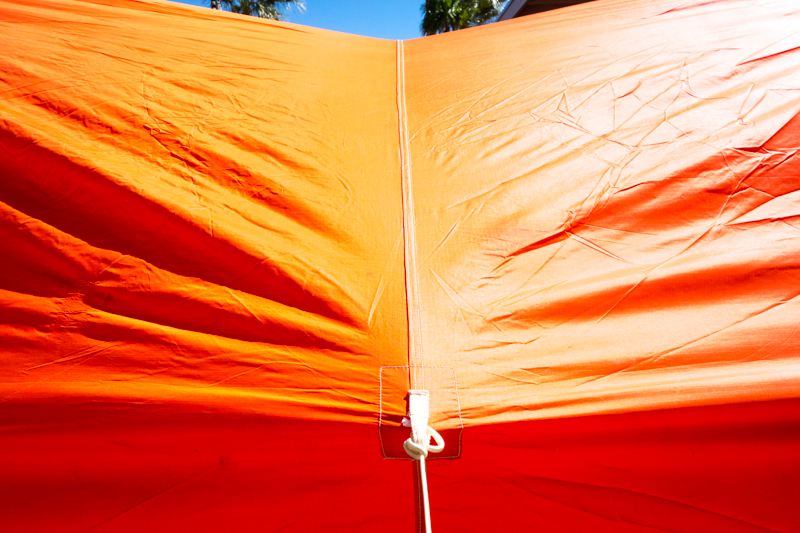
Side ViewSide ViewSide View Close-up. Notice that there is not a seam sewn as the ridge line, but the seam is perpendicular to the ridge — I think might possibly help keep the tension on the panel.