What’s Up With That?
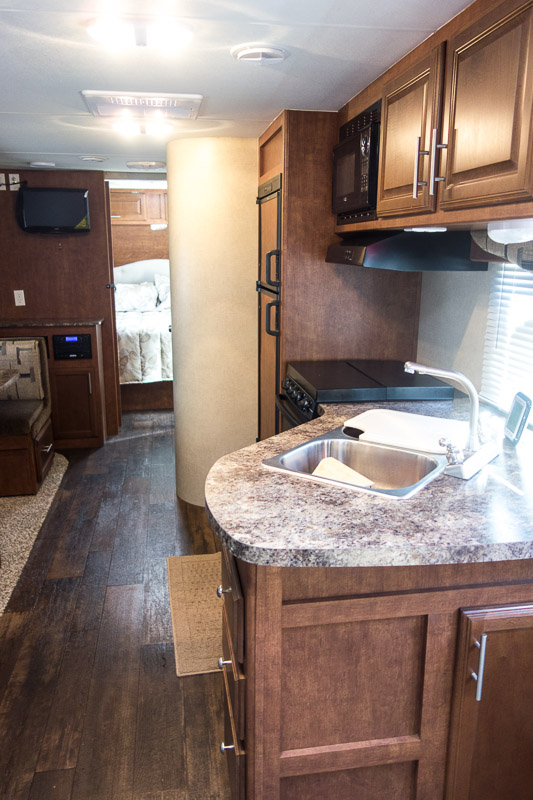
Ah, you may think this is a rant about balance of trade, or the evil Chinese Communists. Nope, none of that. It is about the water faucet in the kitchen in our new camper and the one in our 2006 Fleetwood Niagara.
Ah, you may think this is a rant about balance of trade, or the evil Chinese Communists. Nope, none of that. It is about the water faucet in the kitchen in our new camper and the one in our 2006 Fleetwood Niagara.
If you don’t camp in full service campgrounds (I hope you don’t) then you are forced to power your camper with a 12 volt battery bank. You may have charging solutions such as solar (preferred) or maybe a generator (I hope not — too noisy).
Camping off the electrical grid requires monitoring your power consumption and in most cases conserving energy to some degree. Most campers come with automotive-type incandescent bulbs, which aren’t very efficient and are power hogs.
A few days ago I posted an article titled, You need a new TV. I shared the conversation Joyce and I had about a possible new camper, and her perception that we need a new TV, or Tow Vehicle.
As it turned out, she was correct. We ended up getting a new camper and the new tow vehicle (TV), does an excellent job towing it.
After we took delivery of our new camper, Joyce declared, “We need a new TV!”
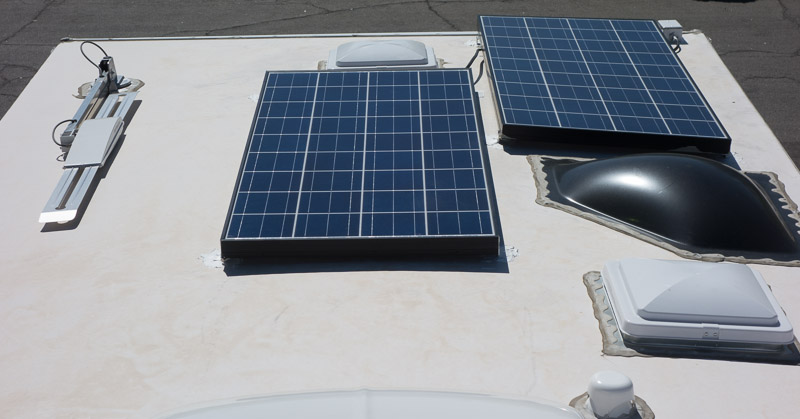
As with our last camper, the very first mod we did to our Milan was to install a solar system.
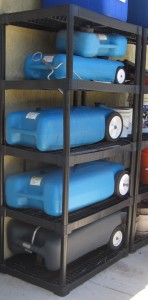
When camping in a recreational vehicle (travel trailer, motor home, tent trailer, etc.) it is more than likely you will generate waste water. Disposal of this water can become problematic. What follows are the methods and solutions we have used over the years.
If you camp in campgrounds with sewer hook-ups, then waste water disposal is not a problem. But I will suggest that these “parking lot” campgrounds are not camping. Pick you’re poison. Many campgrounds without RV hook-ups have an RV dump, where you can drive your camper to and off-load the waste water. Of course if you have a tent trailer, it would require packing up the camper before driving to the dump station. And if you fill your tanks before your trip is over, you would have to return to your campsite and set up the camper again. If you camp in dispersed camping areas, it is unlikely there would be a dump station within reasonable driving distance. To overcome these obstacles, many campers utilize portable waste tanks.