Hate Speech: What’s Up With That?

Hate
I’ve hated Barney and what he stood for ever since he first appeared on television in 1992 on the show Barney and Friends. My kids, who were 5 and 7 at the time, loved him. Worse than that, they were constantly singing the Barney song, I love you, you love me . . .
Fortunately in the early ’90s the Internet and the World Wide Web became a thing. Thus, began the backlash against Barney. A new song, I hate you, you hate me . . . a Barney spoof became popular. There was even a Barney hate group: the I Hate Barney Secret Society, which was part of a broader cultural movement of “Barney bashing,” a phenomenon that included college events and online platforms dedicated to disparaging the character.
And there we have it: in the ’90s you could love or hate Barney without fear. There were a lot of things (including people) we could hate or love without fear.
Today, in 2025, all of this has me worried. I might be at risk of arrest or even more serious consequences for engaging in “hate speech” by sharing the fact that I hate the purple dinosaur named Barney.
What is Hate Speech?
In the US, “hate speech” isn’t a legal term. It’s just a way of saying speech that’s mean or disrespectful to someone or a group because of who they are, like their race, religion, ethnicity, sexual orientation, gender, disability, or other stuff.
It’s protected by the First Amendment: In the US, most hate speech is protected by the First Amendment, even if it’s offensive, insulting, or biased. The government can’t punish or ban speech just because it says hateful things.
It’s not protected if it crosses certain lines: Hate speech can lose its protection if it falls into other categories of unprotected speech, such as
- Inciting people to do something illegal right away (like telling a crowd to fight). Making true threats (saying you mean to hurt someone seriously).
- Harassing or intimidating someone (especially in workplaces, schools, or housing, where there are laws to protect people).
- Being obscene or using fighting words (though fighting words are rarely used these days).
Private consequences still apply: While the government usually can’t punish hate speech, private companies (like employers, universities, or social media sites) can set their own rules and punish people for it.
So in short: In everyday language, hate speech means prejudiced or bigoted expression.
Why do we have the First Amendment?
The Founding Fathers crafted the First Amendment to safeguard our freedom of thought, speech, and belief from government interference. Their decision was shaped by their own experiences under British rule and Enlightenment ideas about individual liberty. Here’s the breakdown:
1. Reaction to British Censorship and Oppression
- Colonists faced laws that punished people for criticizing the King or government (“seditious libel”).
- Dissenting religious groups were often persecuted in England and, at times, even in the colonies.
- The founders wanted to ensure that in the new republic, the government couldn’t silence political opposition or dictate religion.
2. Core Democratic Principle
- They believed free speech and a free press were crucial for self-government.
- Citizens must be able to debate, criticize leaders, and exchange ideas to hold power accountable.
- A “marketplace of ideas” was seen as the best way to discover truth and prevent tyranny.
3. Religious Freedom
- Many colonists had fled Europe because of state-imposed religions.
- The Establishment Clause (“Congress shall make no law respecting an establishment of religion”) prevented a national church.
- The Free Exercise Clause guaranteed people could practice (or not practice) religion without government interference.
4. Protection Against Tyranny
- The founders saw free expression as a safeguard against concentrated power.
- If people can openly criticize the government, it’s harder for leaders to become despots.
5. Enlightenment Influence
- Thinkers like John Locke, Montesquieu, and Voltaire emphasized natural rights, liberty of conscience, and limits on government.
- The First Amendment reflected these ideas by limiting Congress’s ability to restrict fundamental freedoms.
In short, the First Amendment was created to secure individual liberty, ensure open debate, and prevent government overreach — all seen as essential to preserving the new republic.
Who is the Guardian of Free Speech?
The Founders intended the Press to be the guardian of free speech and the First Amendment. Today we call the media The Press, which includes newspapers, magazines, and news stations; whether they be printed, online, broadcasted, or streamed.
While private companies can impose consequences on employees for what they say or write, our tradition is these companies will fight tooth and nail against any government interference as to what the company can or cannot publish or broadcast.
Jimmy Kimmel
I dislike Kimmel. I never watch his show. And yet his monologue about Charlie Kirk and MAGA, which got his show suspended was mild in comparison to my declaration that I hate Barney.
So why isn’t Kimmel the air any longer? Because the FCC, Trump, JD Vance and others in power threatened ABC/Disney. And ABC caved in to these threats. They did not defend their First Amendment right to free speech. Same thing happened to the show 60 Minutes and CBS. CBS caved into government threats, instead of defending the First Amendment.
What does this have to do with Backpacking and Camping?
For the most part, PopUpBackpacker.com is about my camping and backpacking adventures. Of course I can writ about anything because I own the site.
But what is happening begs the question, Will I be able to criticize the government on subject related to our public lands that that might be a threat to camping and backpacking by government actions?
You see, either we have free speech or we don’t. There is no middle ground. The Founders thought it so important, they made it the Number 1 item in our Bill of Rights.
Conclusion
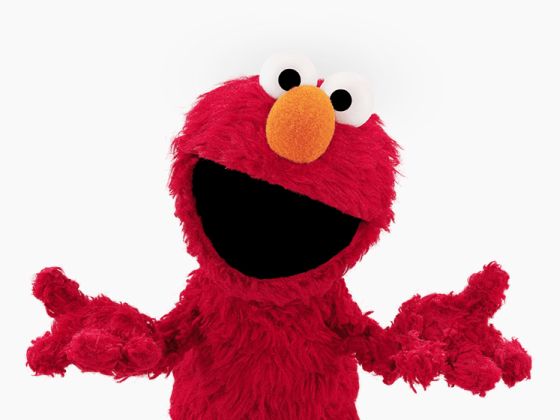
I hate Elmo too. I might even hate him more than Barney.
There. I said it. It is my right as an American.