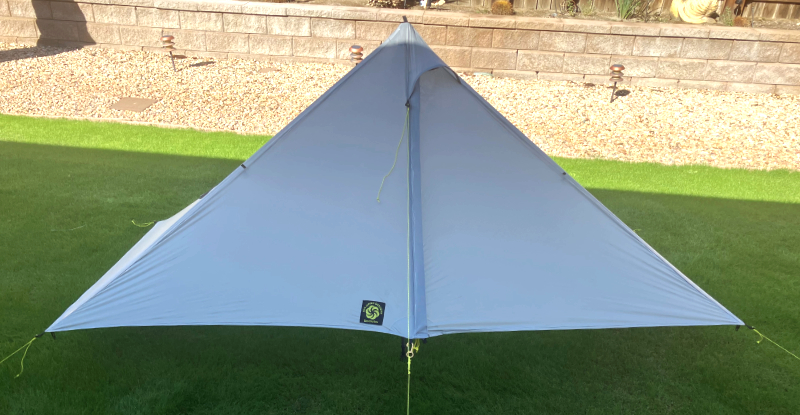
Joyce bought me a Six Moon Designs Deschutes Silpoly shelter for my birthday.
The Deschutes is, in my opinion, the best buy on the market for a ultralight one person shelter.
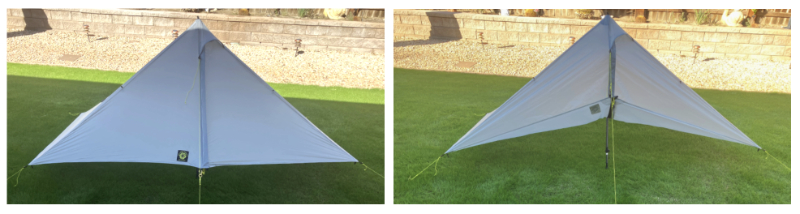
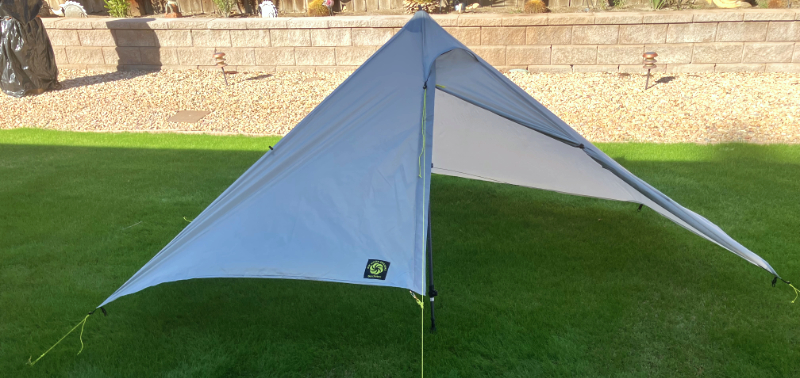
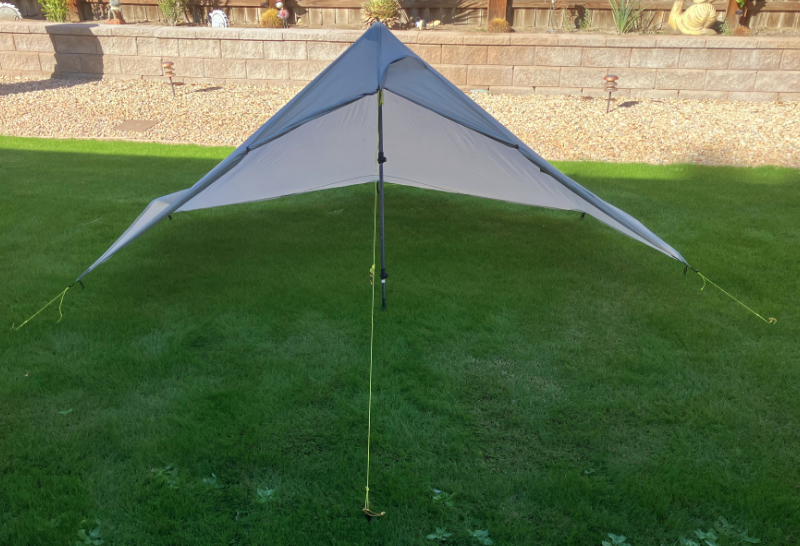
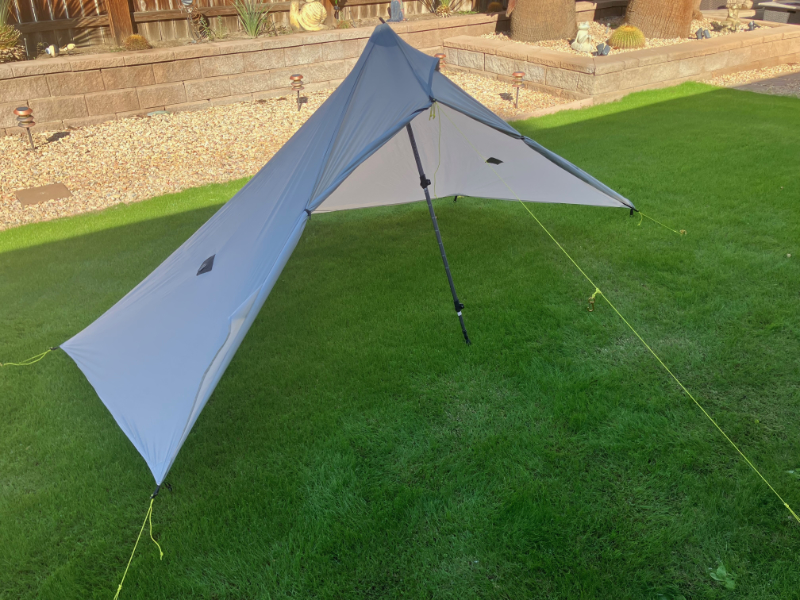
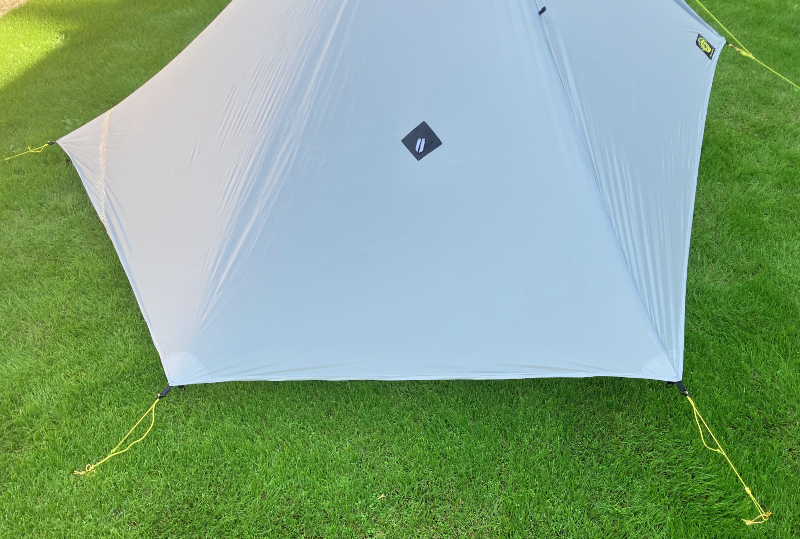
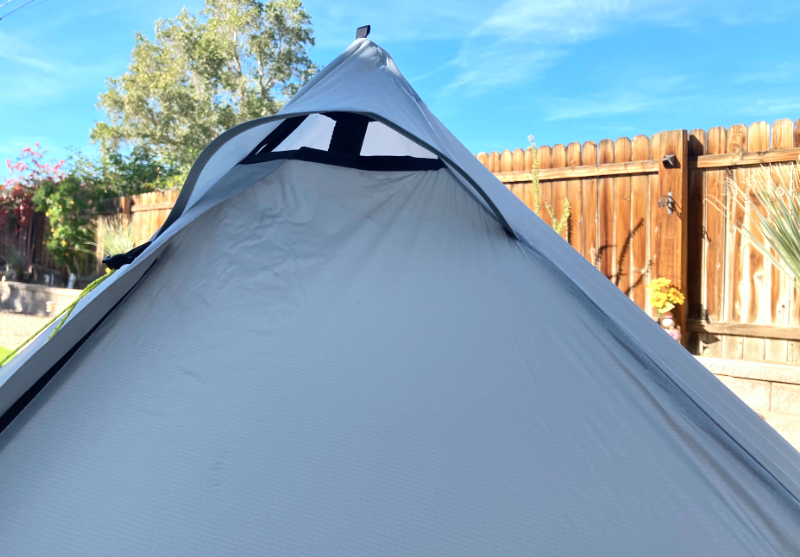
After several days of rain, I finally got the chance to set up the shelter to seal the seams. While doing this I took a few pictures.
This website may be compensated for linking to other sites for sales of products. As an Amazon Associate I earn a small fee from qualifying purchases at no additional cost to the purchaser.
Do I Need Another Shelter?
Last month I shared in this post that my Deschutes CF is my “Go To” shelter. It is the shelter I take on most trips. At the time, I also mentioned that the shelter, after 10 years of use, is beginning to delaminate.
. . . my Deschutes CF is showing its age. I’ve made several repairs to it with DCF repair tape. The needed repairs is not a reflection of the quality of manufacture, but a limitation in the material itself.
So it was time for another “Go To” shelter.
Researching A New Shelter
No, I didn’t do any real research. I like one-person (1P) pyramid shelters. There are several companies that make them and they are all very similar. I’ve owned three different ones. Two were made by Six Moon Designs and one by zPacks.
What I did not want was anything made from Dyneema Composite Fabric (DCF), which use to be known as Cuben Fiber. It may be the lightest material, but it has its downsides as I wrote back in 2024, in this post:
So all I needed to know is what well-known companies make a one-person pyramid shelter in a material other than DCF. The list was short. Only two: Six Moon Designs and Mountain Laurel Designs. I have done business with both companies and both produce quality products.
Since I had been using the DCF version of the Deschutes for 10 years and found nothing I disliked about it other than the material, I opted for the silpoly Deschutes by Six Moon Designs, plus it was a lot less expensive than my other option.
Below is a table of 1P pyramid shelters made by well known companies. I have purchased products from all of them except Hyperlite Mountain Gear and can attest to the quality of everything I have purchased.
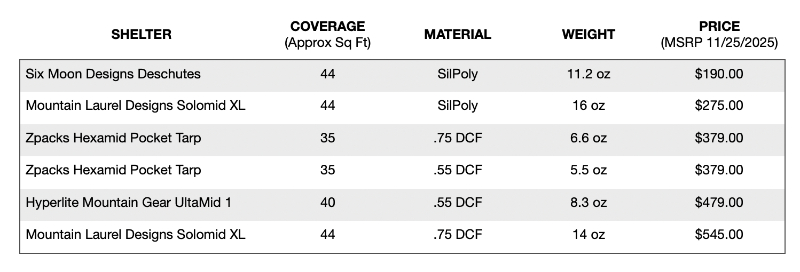

Some Comparison Information
Back in 2015 I did a first impression review of the Six Moon Designs DCF version of the Deschutes shelter. They no longer sell the DCF version, but the current silpoly offering is pretty much the same shelter with a different material.
This first impression article provides a lot of useful information on these simple shelters along with options for a center pole and different types of tent stakes.
One Big Difference On The New Deschutes
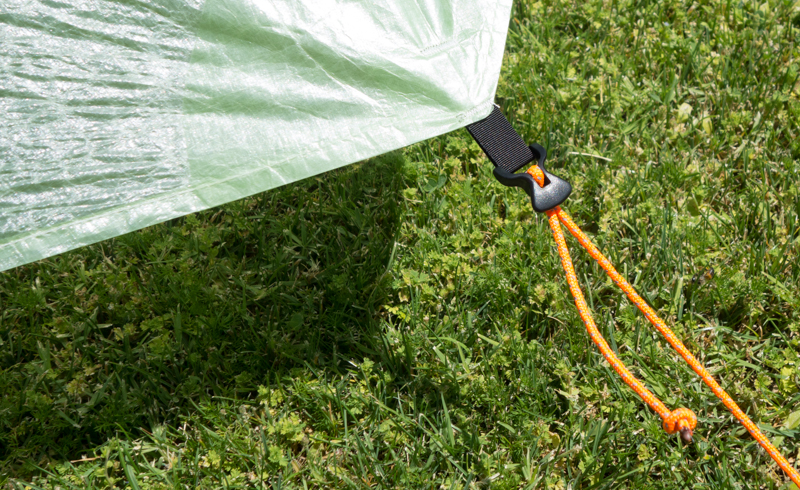
My original Deschutes CF came with LineLoc 3 guyline adjusters and 2.5mm guylines. The guylines had a tendency to slip, so I replaced the guylines with 3.0 mm lines. The new version comes with a smaller LineLoc and 2.5mm guylines. I won’t need to replace the lines.
A Quick Look At The New Deschutes Shelter
Initial “Unboxing”
The shelter comes with all the guylines (6) already attached to the shelter (some manufacturers just include a shank of cordage expecting you to cut and attach the guylines). It does not come with a tube of silicone for sealing as some companies include. I actually prefer using Permatex 81730 Flowable Silicone Windshield and Glass Sealer to the sealant provided by some of the shelter manufacturers.
https://www.amazon.com/dp/B000BKEBO0?ref=ppx_yo2ov_dt_b_fed_asin_title&th=1
Like most ultralight shelters, it does not come with tent stakes either (minimum of 6 needed).
Weight
The Six Moon Designs website states the weight is 13 ounces. I suspect that they haven’t updated the site ever since they made some minor changes to the shelter. Mine weighed 11.125 ounces plus .5 ounces for the stuff sack. I found a couple other users online who also stated theirs was right around 11 ounces too.
Packed Size
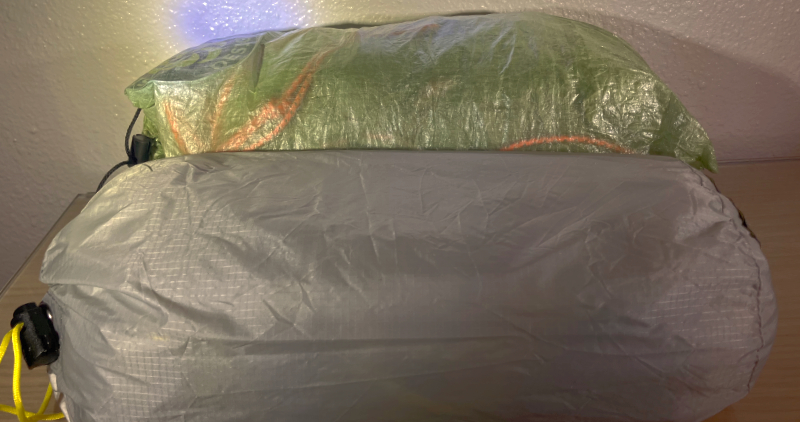
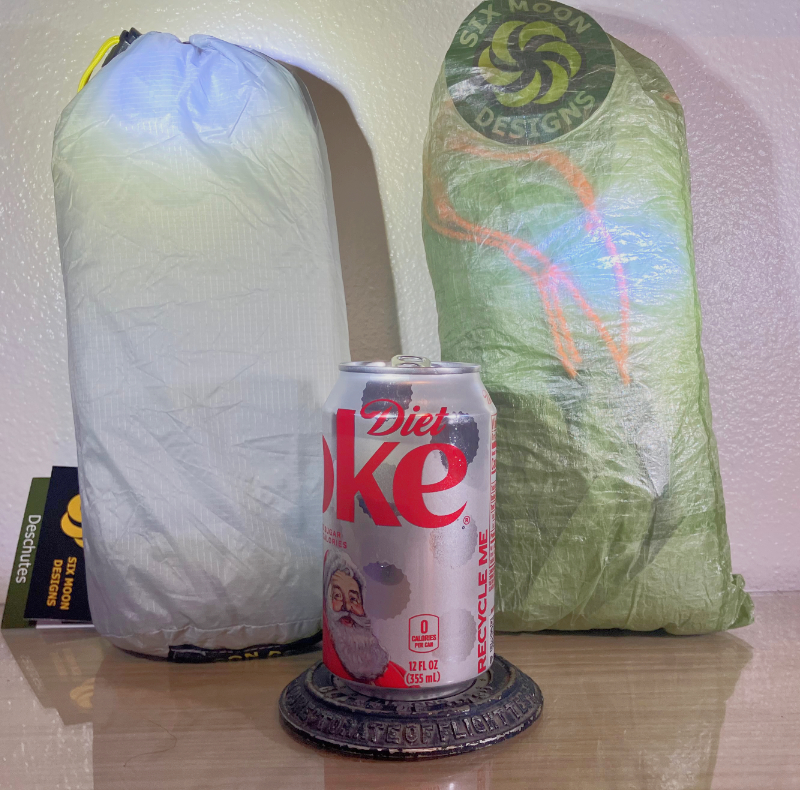
One negative about shelters made from DCF versus silnylon or silpoly, is the DCF doesn’t compress as much. Above you can see how much higher the DCF shelter is when placed in a stuff sack. Actually the picture doesn’t tell the whole story. The DCF version is tightly packed and I had to cram it into the sack. On the other hand, with the silpoly version, the stuff sack fits the shelter somewhat loosely.
This brings up another point of concern. I have read several reports of backpackers who experienced delamination of their shelters when repeatedly packing it into a stuff sack. Apparently frequent stuffing into a sack causes abrasion of the material. So over the years I have always carried the shelter in my backpack without using a stuff sack of any kind. The new shelter is going to take up a lot less space in my pack.
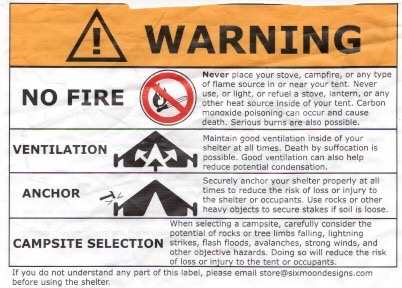
Warning Tag & Instructions
Sewn to the inside of the shelter is a warning tag (probably required by their lawyers). At first sight it was big and ugly.
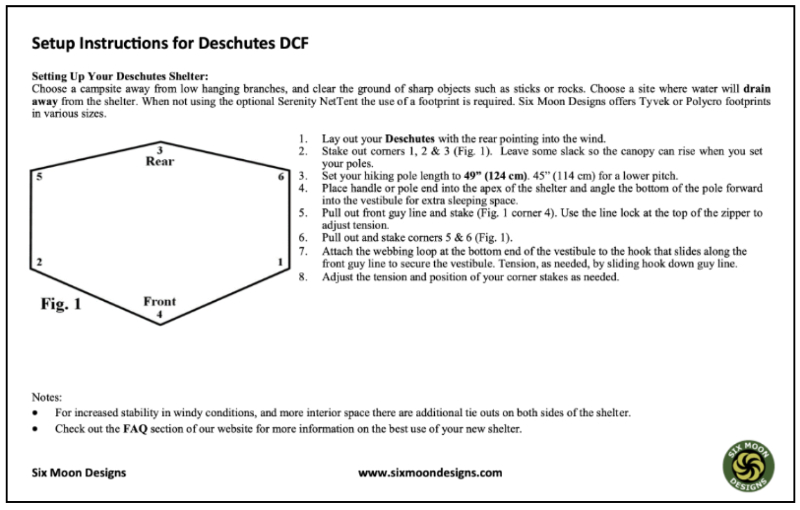
Then I noticed the back side of the tag had set-up instructions. Since I have set up these kinds of 1P pyramid shelters hundreds of times, I don’t need the instructions. So I removed the tag with scissors. In case you’re wondering, I weighed the tag and it didn’t register on my scale at all showing zero grams or ounces.
Set Up
The instructions are straight forward. Although I want to point out a couple things for those who normally just glance at instructions.
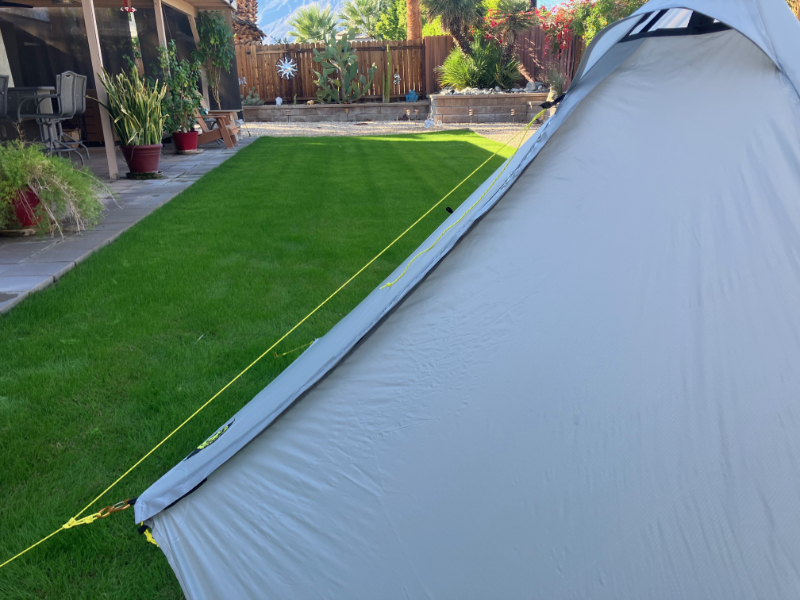
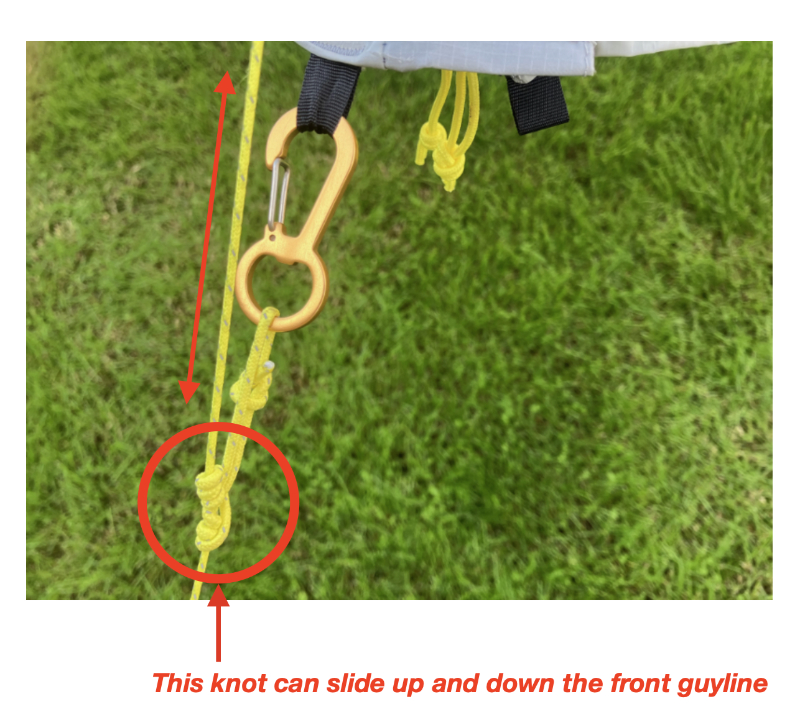
In Step 5 above, it is best to make sure the front guyline (4) is only attached to the top of the shelter and the bottom of the shelter is not. See picture below:
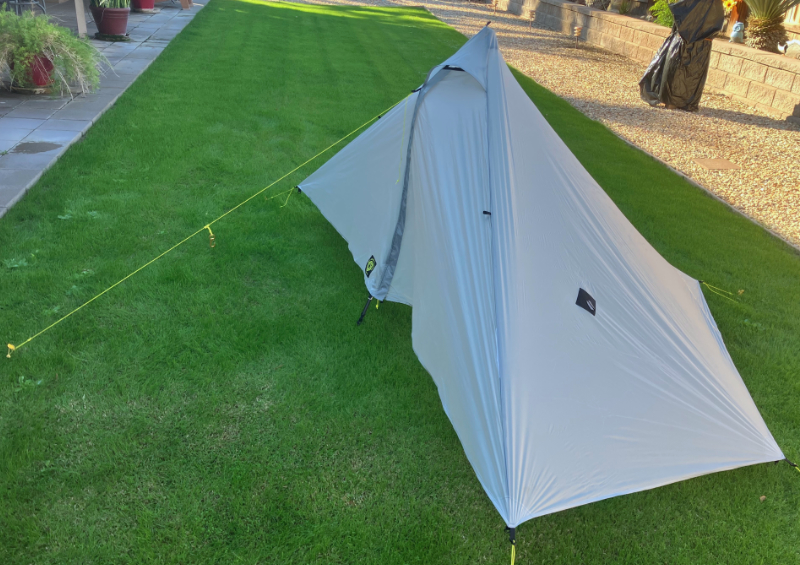
Front Guyline Slider
Door Flaps/Entrances
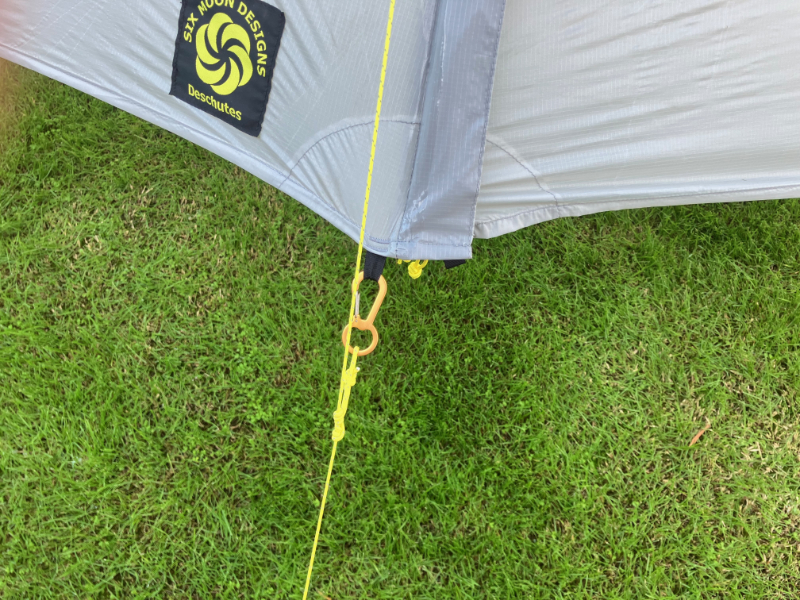
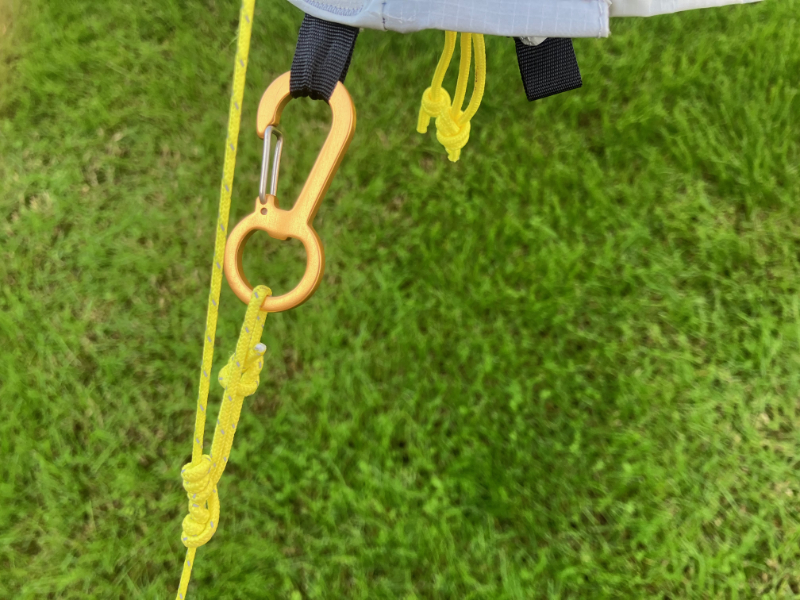
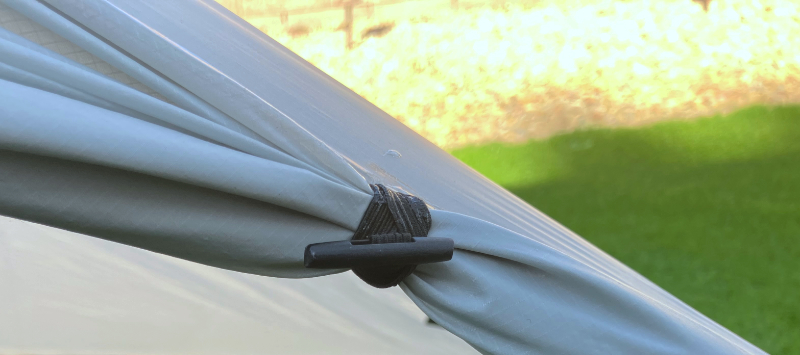
The front of the shelter has two door flaps (side-by-side). Either one or both can be opened. It is the hook at the bottom of the shelter that provides this flexibility. There is webbing on each of the flaps, so you can open either one. Just clip the slider hook into the flap you want to remain stationary.
Then roll up the opposite side flap and secure it with the built-in flap loop and toggle.
Other Features
Silpoly versus Silnylon
This is the first silpoly shelter I have owned. Many shelter manufacturers are quickly moving from silnylon to silpoly.
Back when I started backpacking most tents were made from polyurethane-coated nylon. The fabric was strong and by today’s standards heavy.
In the early 2000s silnylon became popular for ultralight shelters and backpacks. It is made by impregnating a thin woven nylon fabric with liquid silicone from both sides. This makes it strong for its weight, as the silicone substantially improves the tear strength.
Given I am to new silpoly, this is what I have read about it:
What Silnylon Does Best
Strength & abrasion resistance: Because Silnylon is nylon-based, it tends to be tougher against punctures, abrasion, and rough terrain — a plus if you often camp on rocky, rugged ground.
Flexibility and “give” under stress: Nylon has more elasticity than polyester. In windy or gusty conditions, a Silnylon tent can flex and absorb energy, which may reduce stress on seams, poles, and anchor points. So for a shelter like my Mountain Laurel Designs Trailstar, this elasticity is desired in high winds.
Proven track record / ultralight options: Silnylon has long been used in backpacking tents; many ultralight tents rely on it because it’s lighter (in some weights) and has good strength-to-weight ratio.
What Silpoly Does Best
Water & moisture stability: Silpoly uses polyester, which absorbs almost no moisture — so after rain or condensation the fabric remains tight and doesn’t sag or stretch much.
UV / sun exposure resistance: Polyester tends to resist UV-degradation better than nylon, meaning tents or tarps made from Silpoly generally hold up better over time if often used in sunny conditions.
Consistent pitch under wet conditions: Because it doesn’t stretch much, you’re less likely to need to re-tension lines after rain or humidity.
Quick drying / easier pack-up after rain: Since it doesn’t absorb any water, the tent or tarp dries faster and packs away lighter.