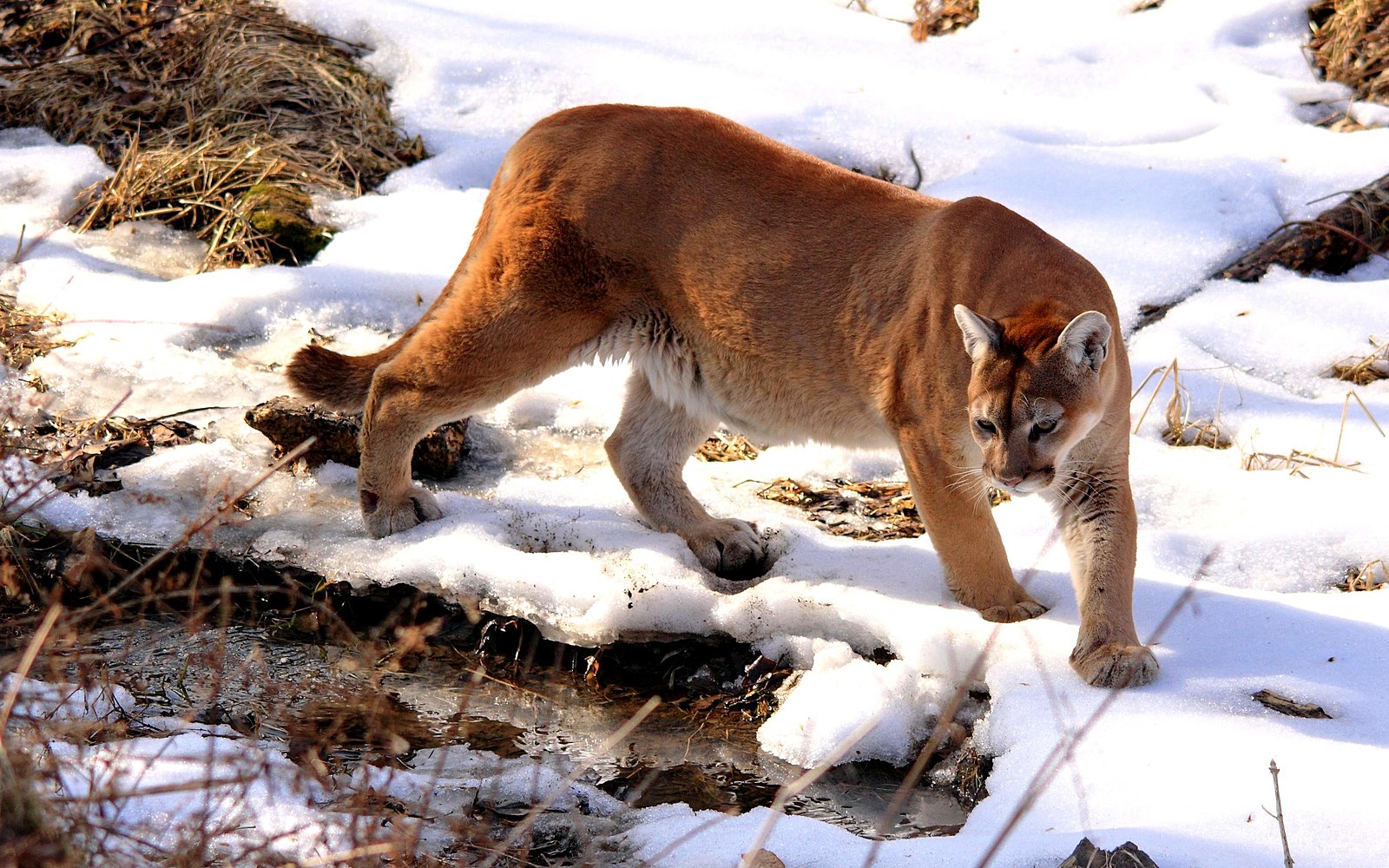
There are a few questions people, who don’t backpack, often ask me. For one, most ask, “How many miles did you hike?” In a way, this is kind of amusing to me as I wrote in How many miles did you hike? To be fair to those who ask the question, it is a part of our nature and intelligence to quantify things around us — something that separates us from all other creatures on the planet.
The other question I get is, “What about mountain lions?” Then a series of “what-if kind of questions.” Often bears or rattlesnakes are substituted for mountain lions.
So let’s examine what one should do if they encounter a mountain lion on a backpacking trip or even a day hike.
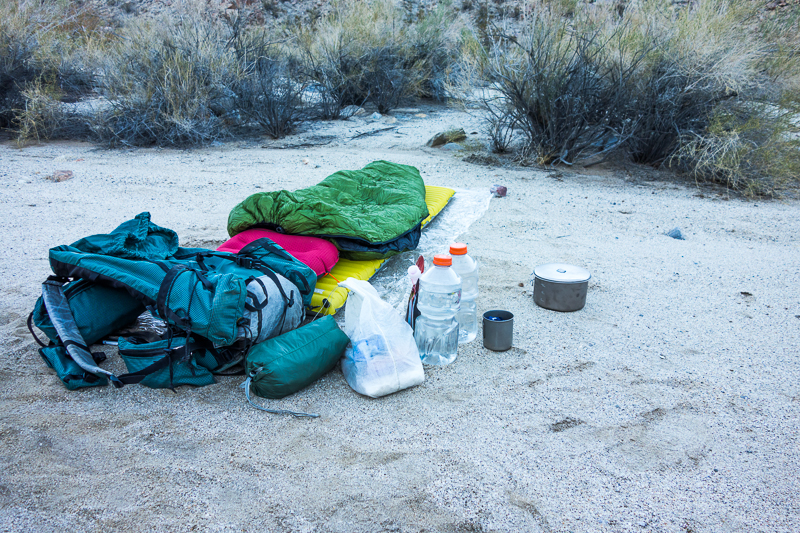
Perhaps some of these questions from friends and family are often motivated when they find out that I mostly sleep outside under the stars. Most people, including a lot of backpackers feel safer inside a tent. Somehow the tent will protect us from wild animals.
Do Mountain Lions Want to Eat Us?
For the most part mountain lions, black bears, and rattlesnakes want nothing to do with humans. One thing to keep in mind, however is that a mother bear with cubs or a mountain lion with kittens becomes a different situation and potentially very dangerous.
Mountain Lions are Rarely Seen
Oh, there are plenty of them in wild places. But they are rarely seen by us. I have many friends with thousands and thousands of trail miles worth of experience and not one of them has ever seen a mountain lion.
I have seen two mountain lions in the wild during my lifetime. This has nothing to do with any kind of skill or knowledge. Both were accidental encounters.
The first occurred about 40 years ago. I was hiking on a well maintained trail. To my right was thick brush and many pine trees. This side of the trail slopped down to a small creek. My left also had many tree and bushes. It was late afternoon. Suddenly a mountain lion leaped across the trail, fully extended and looked incredibly long. Of course fear stuck me. I just stood there for quite awhile. After I gained my composure, I saw no trace of the animal. I still wonder why it leaped in front of me. Perhaps I spooked it or perhaps it was hunting. I don’t know. And to be honest it may have still been close by watching me.
Mountain lions are solitary animals and very adept at blending into their surroundings.
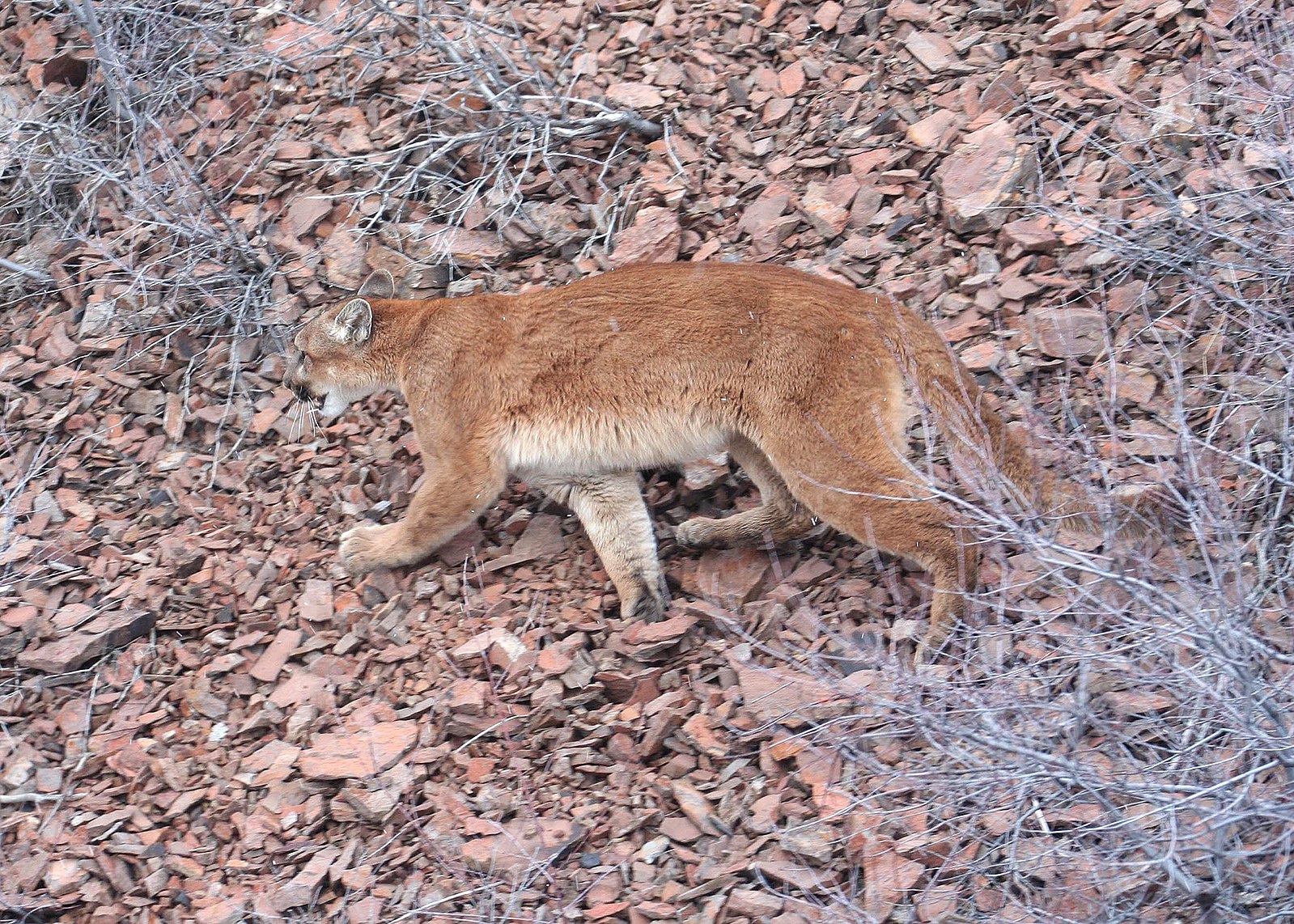
My second encounter happened about 15 years ago. At the time is was common for me to do an early morning hike in the foothills near our house (before the trail became crowded due to internet postings). I was hiking uphill near a rocky area, similar to the picture above, when I saw a mountain lion “stalking” me. The lion was above me on a hillside, probably 30 yards away and seemed to be walking parallel to my path and it was definitely watching me.
I stopped and it stopped. We definitely made eye contact. To this day I am sure it was probably a young lion and just curious. I slowly started walking backwards. It turned around and walked a few paces and stopped. I continued walking away, alternating backward steps and turning around and going forward for a few steps. The lion disappeared. But I was unnerved. I walked back to my car and went home. However, the next day I did the hike and didn’t see it.
What are the Odds of a Fatal Attack?
Several sources state that there have been 27-29 fatal attacks in all of Canada and the United States combined over more than a century. I guess that places the odds of being killed at something like 1 in a billion. The odds of winning the Powerball jackpot are 1 in 292.2 million.
When You’re Hiking in Mountain Lion Country
- Hike in groups when possible—mountain lions are less likely to approach multiple people. This is a common recommendation, which I almost never follow.
- Be aware of your surroundings, especially at dawn and dusk when lions are most active.
- Keep children close and pets leashed. Small, fast-moving animals can trigger a lion’s instinct to chase.
- Don’t wear headphones, so you can hear what’s happening around you.
If You Spot a Mountain Lion at a Distance
Remain calm and do not run
- Stop and stand your ground.
- Face the lion and maintain eye contact without staring aggressively.
- Make yourself look larger by raising your arms, opening your jacket, or lifting a backpack over your head.
- Speak firmly and loudly so the lion recognizes you as human.
Usually the lion will just check you out and then leave.
If the Mountain Lion Approaches
This is when your response matters most
- Do not turn your back or run. Running can trigger a chase response.
- Do not turn your back or run. Running can trigger a chase response.
- Continue to appear large and confident.
- Back away slowly, giving the lion space while keeping it in view.
- Pick up small children so they don’t panic or run.
If the lion hesitates, keep your posture tall and your movements deliberate.
If a Mountain Lion Acts Aggressively
Though extremely rare, attacks can happen
- Fight back with everything you have.
- Use rocks, trekking poles, sticks, or your fists to strike the lion—especially aiming for the face and eyes.
- Protect your neck and head if knocked down.
- Do not play dead.
Humans who fight back are often able to stop an attack.
After the Encounter
Once the lion has left, leave the area calmly without running.
Activities with Greater Risk
In the past, I read about two fatal mountain lion attacks: one on a mountain bike and one while trail running. These activities increase the risk of attacks because fast, erratic movements can trigger a predator’s chase instinct. Hiking is safer than these activities, though attacks remain rare. These activities may also hinder your ability to spot a lion or react quickly, especially at dawn/dusk when lions hunt and you’re most vulnerable.
Why These Activities Pose More Risk
How to Reduce Risk
While the risk is higher with these activities, remember that mountain lion encounters and attacks are incredibly infrequent. Understanding their behavior and taking precautions significantly reduces your already low risk.