For decades there has been this “rule of thumb” circulating in backpacking circles that one pound of weight on the foot is equivalent to carrying five pounds on the back.
This statement begs several questions:
- Where did the rule come from?
- Is it true?
- How do you apply it to your backpacking trips (i.e., is it of any value)?
Let’s explore these questions and more.
Disclaimer
I am not a scientist. I am not a backpacking expert. But I have been backpacking for 60 years and lived to tell about all those trips.
What is a Rule of Thumb?
From the Merriam Webster Dictionary:
rule of thumb noun phrase
1: a method of procedure based on experience and common sense
2: a general principle regarded as roughly correct but not intended to be scientifically accurate
Where Did This 5 to 1 Rule of Thumb Come from?
These Things Usually Begin With Colin Fletcher
The Complete Walker
The standard against which books about backpacking gear and techniques are held against is Colin Fletcher’s The Complete Walker edition of books. Known as the “Father of Modern Backpacking” Fletcher sold several hundred thousand copies of his book and few writers since have come close to this standard or popularity.
Fletcher wrote four editions of his famous book. A quick summary of the editions
- 1968 – 353 pages
- 1974 – 470 pages
- 1984 – 632 pages
- 2002 – 845 pages (with Chip Rawlins as co-author)
There was no Internet when Fletcher’s first three editions were published and gear information during that time-frame was sparse compared to our technology connected world of today. Fletcher’s books were more than techniques and tools, they were also the state of the market for backpacking gear, and lastly a reference guide for all things backpacking. For example, he tested and documented the performance of dozens of stoves that were on the market and reported on the best of what was available. Today, in our information age, this kind of detailed gear information is maybe no longer needed in a book.
The Expanse of Fletcher’s Influence
Here are a couple examples of Fletcher’s influence:
BOOTS
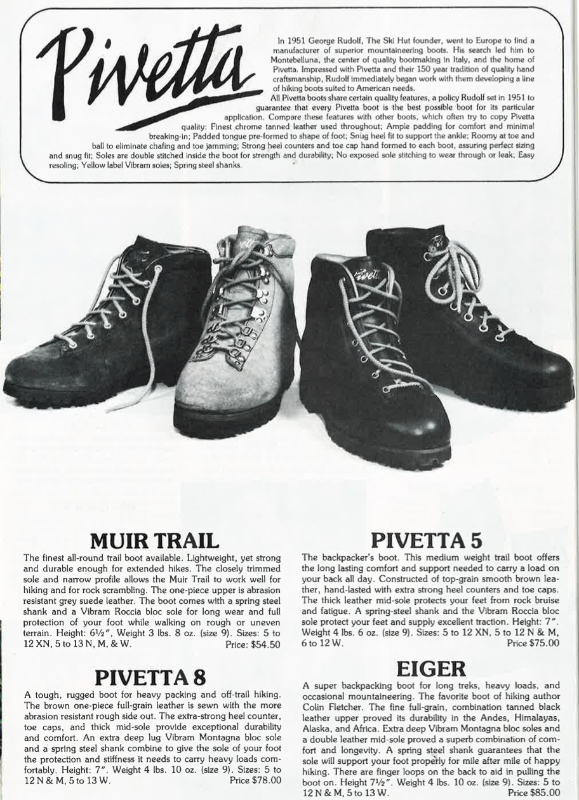
In the first two editions he sang the praises of Pivetta (he used the Eiger) boots. In the 2nd edition (1974) he wrote:
“When I described my Eigers in the first edition of this book I did not realize that the only place in the world they are sold is The Ski Hut. The Pivetta line of boots has been developed by over the past twenty years by Trailwise (Ski Hut) in conjunction with the Italian maker, working from a modified U.S. marching last, and is not sold in Italy or anywhere except the United States. Most Pivetta models are now increasing available at retail stores across the United States, but so few Eigers are made that are never wholesaled.”
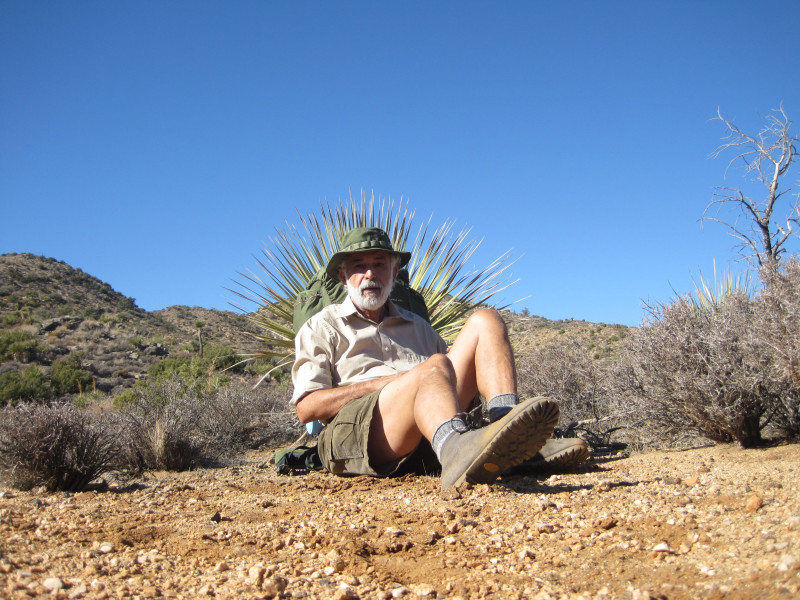
After 1974 2nd edition of The Complete Walker Pivetta boot sales skyrocketed, especially the Muir Trail and Pivetta 5 models that were sold at retail stores (and mail order catalogs) such as REI. I bought a pair from REI.
BACKPACKS
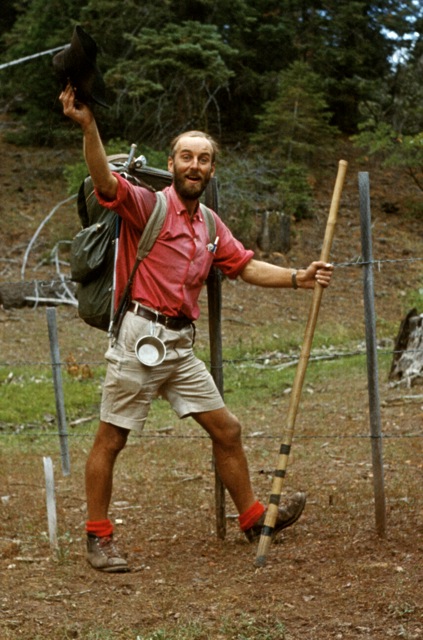
How about external frame backpacks? People often wonder why they went out of favor or just assume that internal frame packs work better. What really happened was in Complete Walker III, Fletcher revealed to the Fletcher Minions that he had retired his beloved Trailwise external frame pack, and was now using a new-fangled internal backpack made by a small startup company, Gregory Mountain Products. Oh, how he loved that Gregory pack! The Fletcher faithful dumped their external frames and Wayne Gregory got rich. That was pretty much the end of the external frame backpack.

In 1977 Wayne Gregory founded Gregory Mountain Products in San Diego, California, to focus on internal frame packs and soft packs. His first major success was the Cassin pack, an expedition-style pack with a contoured profile, which gained significant popularity after being featured in Colin Fletcher’s book, The Complete Walker III.
Fletcher’s influence dominated backpacking for decades and still does to an extent. Another example is the 5:1 boot weight “rule of thumb.”
Origin of the 5 to 1 Weight Rule
In the first edition of The Complete Walker, published in 1968, Fletcher wrote:
“ . . . the successful 1953 Mount Everest Expedition came to the conclusion that in terms of physical effort one pound on the feet is equivalent to five pounds on the back.” [page 27; bold text mine]
Fletcher repeats this quote in the 2nd Edition (The New Complete Walker) on page 37.
In the third and fourth editions (page 53 and 59 respectively), he expands the statement to:
“In 1953 the successful Mount Everest Expedition came to the conclusion that in terms of physical effort one pound on the feet is equivalent to five pounds on the back. The consensus of informed opinion now seems to support that assessment. [Bold is mine]
The interesting thing is that in all his editions, Fletcher quotes the 1953 study as an informal fact and he does not try to prove or refute the claim, nor does he make any further references to the statement. This is surprising given that he dissects and analyzes all kinds of data related to many aspects of backpacking. He seem’s to just accept this 5:1 rule without looking any further, which is pretty much out of step to everything else he wrote about.
We also need to keep in mind that mountain climbing, with heavy pack weights and the thin atmosphere isn’t comparable to the typical backpacker’s trip, something else Fletcher does not mention.
Other Studies
There have been several influential studies on the impact of weight on the feet and energy expended. I’ll share these at the end of the article.
Most of these studies are behind firewalls and require a subscription to access them. This means the general public has never read them, and some writers have extracted information to support their own biases.
What these studies cannot quantify are differences between individuals and the varying conditions that backpackers encounter on each trip, and even variations in terrain over several sections in a single day. Compound this with most studies measuring oxygen intake as a key metric, there has not been a single study to study the specifics of a typical backpacking trip.
In fact most studies look at speeds (from walking to running) or inclines on a treadmill — and the conclusions (5:1 or similar) are not applicable to backpacking at all. In several studies a walking speed of 2.5 MPH shows very little increase in energy expended when light shoes are replaced with boots. 2.5 MPH is probably the average hiking speed over varied terrain for most backpackers!
The increase in energy expended is at faster speeds, speeds which most backpackers to not hike at.
So as Fletcher seems to let the 5:1 rule pass as definitive without further comment, he does comment on hiking speeds and also on increased energy demands when gain elevation. Let’s take a look at a couple.
The Energy Cost of Activities
In all four editions of The Complete Walker, Fletcher includes a table (see below) derived from Factors and Formulas for Comparing Respiratory Exchange and Biological Transformations of Energy, by T. M. Carpenter (Carnegie Institute, 1948 edition, page 136). Using the information, Fletcher attempts to calculate the total amount of calories burned each day while backpacking.
The amount of calories burned are in addition to the basal metabolism.
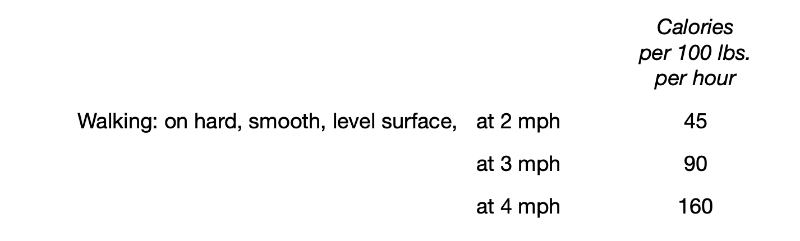
It is interesting to note that if our speed is increased by 50% (from 2 to 3 mph), our calories increase by 100%. If our speed is increased by 100% (from 2 to 4 mph), our calories increase by 360%. In other words the energy expended significantly increases the faster we walk.
Based on some of the other studies, adding 1 pound to the foot at a pace of 2.5 mph increases energy expended around 60%, which would be equivalent to adding 1.6 pounds to the back — far short of the 5:1 ratio often quoted.
I must point out that Fletcher was not trying to prove or disprove the 5:1 ratio, he was trying to calculate how many calories he burned per day so he could figure out how much food to bring.
Walking Up Hill
One problem he faced in his calculations was figuring out how much extra energy uphill walking used. His answer until the last edition (Complete Walker IV) was to just double the energy calculation used for walking on flat trails. As it turned out, this last edition included a 1986 study from the University of California Berkeley, Wellness Letter, Volume 2 Number 4 showing the number of calories per hour, per body weight while walking 3 MPH on the level compared to walking up a 10% incline. (See the Complete Walker IV, page 196). The study showed a 90% increase of energy used when walking up a 10% incline.
A couple things here . . . first, most backpackers won’t be averaging 3 MPH hiking uphill; and it will be less, usually much less on a 10% incline.
Colin Fletcher’s Conclusions
He spent over 35 years researching and writing the four editions of The Complete Walker. For each edition he challenged himself, as a non-scientist, to figure out how much energy we expend backpacking and how to create a menu to meet those energy replenishment needs.
In the end (in every edition) he concluded with this quote . . .
“At this point in my investigations I began to suspect that the right approach to the food question was, after all, trial and error and not the strict, rational, quantitative, scientific method. With considerable misgivings, I voiced this thought to several experienced research workers in the field of human nutrition. To my surprise, they tended to agree. Present knowledge, they said, left too many variables for any very meaningful quantitative balancing of energy input and output. The best way was to ‘get out in the field and establish bases for your own personal requirements.’ To do, in other words, just about what I had done in the first place.”
Ah . . . so much for science when not focused on the subject at hand.
What the Studies Don’t Measure: Fatigue
The Effect of Shoe Weights When Backpacking
Backpacking blends endurance, efficiency, and careful weight management. Every ounce carried on the body contributes to overall fatigue, but not all weight is equal. The question to ponder is whether or not there is a significant difference when comparing weight borne on the feet versus weight carried on the back. The weight of footwear—whether heavy boots or lightweight trail runners—has a an effect on energy expenditure, speed, and endurance when backpacking. But how much?
An Anecdotal Story
Earlier I shared that a study that showed walking up an incline of 10% increased energy expended when walking at a speed of 3 MPH.
Most backpackers aren’t going to average 3 MPH and won’t be walking up a 10% incline.
There is a trail near my house that I have hiked more times that I can count over the past 50 years. It starts at the base of the San Jacinto Mountains and goes all the way up to the peak of Mt. San Jacinto. The distance is 17.75 miles with an elevation gain of 10,568 feet (just over 2 miles gain). This come out to an incline of 11.3%. The most difficult part of the trail, the first 11 miles has an elevation gain of 8,000 feet, an incline of 13.8%.
The trail is named the Cactus to Clouds Trail (also known as the Skyline Trail): The trail is known as having the greatest elevation gain of any one-day hike in the continental US. I have written about the trail several times, and this post provides the most data details (see Day 1 of the trip report).
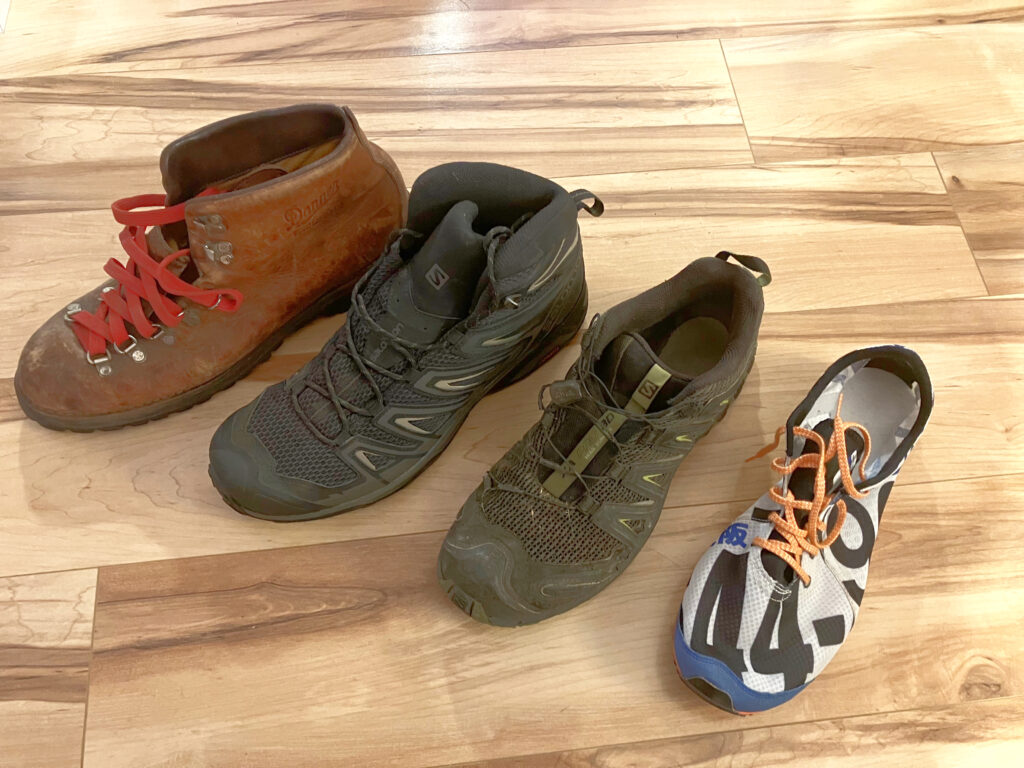
I have hiked the trail many, many times wearing Pivetta boots (3.5 lb. per pair) and Danner Mountain Light leather boots (3.75 lb. per pair).
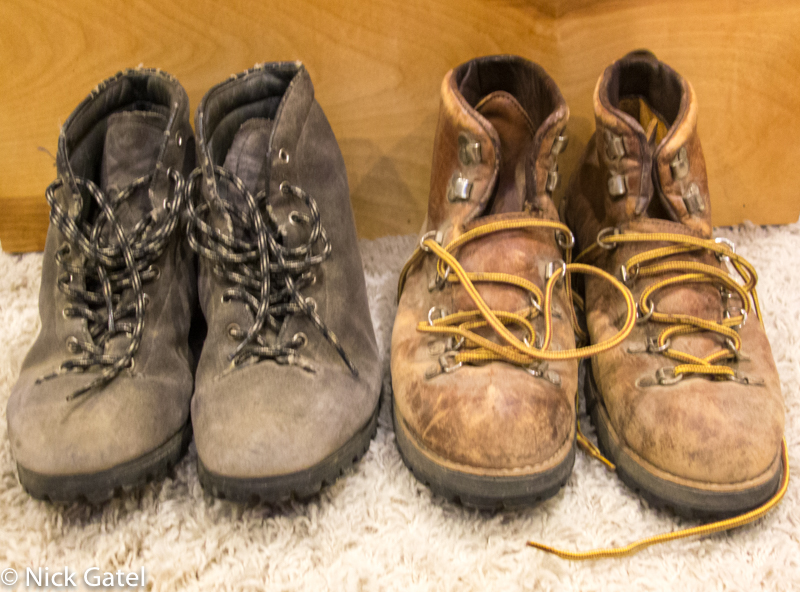
I’ve also hiked it many times with my Salomon XA Pro 3D Trail Running Shoes (2 lb. per pair).

And lastly with several pairs of Cross Country Racing Flats ranging from only 7.0 to 10.6 ounces (per pair)!


As you can see, there is quite a bit of difference between the kinds of footwear I have used on this trail. Some hikes were training hikes, others were part of longer multi-day trips that included the Cactus to Clouds Trail as the first day of the trip.
What I found, and more important than the weight of my footwear, was what kind of physical condition I was in at the time was much more important than how much my footwear weighed. When I was out of shape, I was exhausted at the 11 mile point, no matter what shoe I was wearing.
When I was in excellent hiking condition which shoe or boot I was wearing really didn’t matter. I was able to hike at a steady pace to the 11 mile point. I was a little faster when wearing ultralight cross country racing flats, but not significantly faster.
What I learned that getting into hiking shape is much more important than how much your footwear weight — it is the most important thing.
What the Studies Don’t Measure: Foot Protection
Footwear and Terrain Considerations
The trade-off between shoe weight and foot protection must also be considered. Traditional leather hiking boots, often weighing 3–4 pounds per pair, provide some ankle stability, durable soles, and protection against sharp rocks or snow. On the other hand, lightweight trail running shoes, often weighing less than 2 pounds per pair, reduce energy expenditure and increase stride efficiency but may offer less support and durability in rugged conditions.
Psychological and Practical Effects
Backpackers often describe a sense of “lightness” and freedom when hiking in lighter shoes, even if their pack weight remains the same. This is partly psychological, but it reflects the reduced muscular effort per step. A lighter shoe might promote faster daily mileage, which can have practical benefits in terms of trip planning and morale. Conversely, heavy boots may induce a feeling of sluggishness, particularly late in the day when fatigue compounds.
My Conclusion
Given an average hiking speed of 2.5 MPH over varied terrain, one pound on the foot is probably equivalent to adding 1.6 to 2 pounds on the back in extra energy expended; not the 5 pounds that has been claimed for decades.
My recommendation is to choose footwear that meets the needs of the trip. No more; no less.
How to Choose Footwear
What Footwear Should Do
The main purpose of footwear is to protect the bottom of the foot from external objects. This also includes protection from hot ground temperatures, or cold snow and ice.
Next, they add protection agains things that can make contact with the top of your foot such as brush, cacti, large rocks, talus, etc.
Lastly, although somewhat controversial, they might provide some support to the foot. I discussed this a few years ago in my post, Do Hiking Boots Protect Against Ankle Injuries.
What Other Factors Should be Considered?
Function: Shoes (or boots) should be light. But do not sacrifice function for weight. Pick your footwear that matches your needs — the result is your best option will weigh, well what it weighs.
Durability: As with any piece of gear, you want something that will last.
Cost: It needs to fit your budget. And really budget is tied to longevity — in other words — what is the average cost over a given time (or mileage).
So let’s break this down looking at several options, all of which I have experienced.
Types of Footwear
Conventional Leather Boots
Obviously less popular than the were 20+ years ago.
FUNCTION


Very common where I hike are “cholla gardens.” Cholla are known for their barbed spines that tenaciously attach to skin and clothing. Stands of cholla are called cholla gardens. If you look closely at the middle of the above picture you will see small cholla pods laying on the ground. These pods are easily accidentally kicked and then stick to clothing a skin. The spines are painful and difficult to remove. I know, I have plenty of experience with them, especially when wearing inadequate footwear.
I mostly hike off trail, meaning there is no trail. It also means I am often faced traversing difficult areas that conceal rattlesnakes and other potential problems where leather boots offer the most protection.
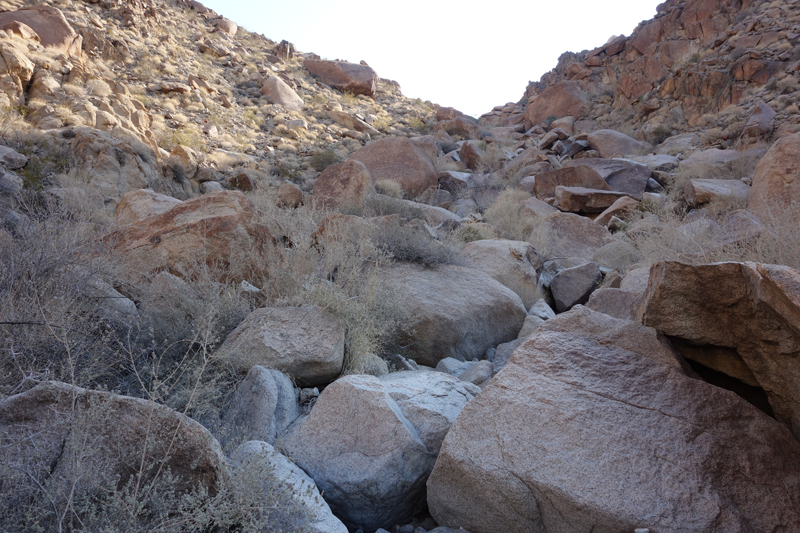
The Vibram Kletterlift soles provide the best traction over all surfaces of any boot of shoe I have ever owned.
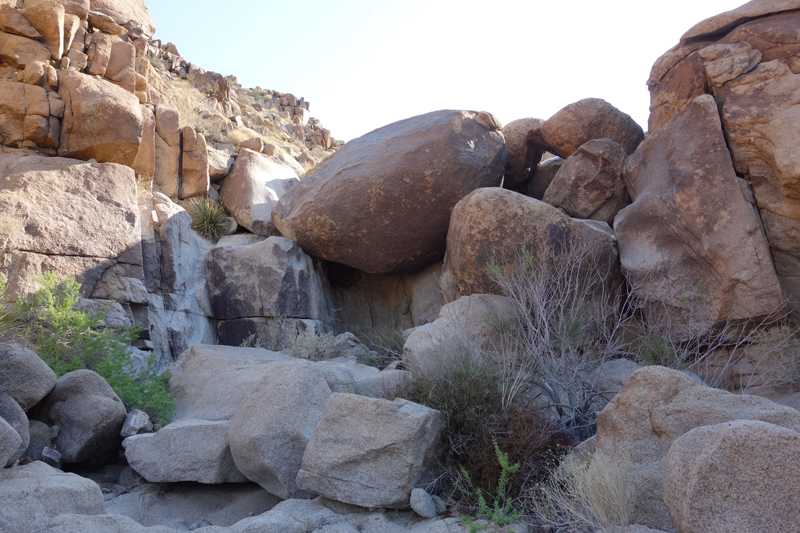
The boots do take some time to break in and also need occasional conditioning of the leather. In addition, the soles are not as flexible as newer “modern” lightweight boots. Nor are they breathable like its synthetic newer cousins.
DURABILTY
Leather outlasts synthetic material by a huge margin. My Danner Mountain Light boots are over 40 years old. The soles can be replaced. If I remember correctly, mine have been replaced twice. Other parts of the boot can be replaced, or if you are inclined, Danner can rebuild the entire boot for you.
My pair of Danner boots weigh 3.75 pounds, or 1 pound 14 ounces each.
COST
I paid about $125 for my pair around 1985. That’s a dollar cost average of $3 per year. Today the list price is $475.
They were my only hiking footwear until around 2010. I didn’t use them much over the next 10 years. I have been using them much more over the past 5 years.
At 75 years old, the extra weight of these leather boots versus my trail running shoes doesn’t hinder me much. And at my age I don’t want to buy any new footwear as I don’t know how many hiking years I have left.
These boots are made in the USA.
Below is a link on some further thoughts on boots I wrote five years ago when I decided to start wearing my leather boots again.
Synthetic Boots
In 2020 I bought a pair of Salomon X Ultra 3 Mid Aero Hiking Boots. This was sort of an experiment for something in between my trail running shoes and my leather boots.
FUNCTION
I haven’t worn these as much as my trail running shoes or Danner boots. These work about the same as my Salomon XA Pro 3D Trail Running shoes as far as traction goes, albeit with more protection for the top of my feet.
They weigh 1 pound 1 ounce each or 2 lb. 1 oz. for the pair. This is about the same as my Salomon XA Pro 3D shoes, believe it or not. I was surprised as I didn’t do any weight comparisons before purchasing them.
The soles are much more flexible than my leather boots. Leather boots require a break-in period. The X Ultra 3 Mid Aero did not.
Once I wear out my last pair of Salomon trail running shoes, I’ll probably keep these boots as a replacement.
DURABILITY
Can’t really comment. I haven’t used them that much.
I usually get around 500 miles out of a pair Salomon XA Pro 3D shoes, and I’ll expect a little less from these boots as I generally wear them for trips in more rugged terrain. In addition they weigh about the same as the X Ultra 3 Mid Aero boot, which leads me to think they might not be as durable as my training running shoes. Time will tell.
Modern synthetic boots and running shoes are not Recraftable. When they wear out, they are done. Into the landfill they go. There are a few recycling programs for athletic shoes but they are usually restricted to a few brands with many obstacles to actually get them accepted for recycling — in essence the recycling programs are just marketing ploys and not effective solutions.
COST
I bought them on sale in 2020 for $90 (they were a discontinued model) versus the list price of $120.
Trail Running Shoes
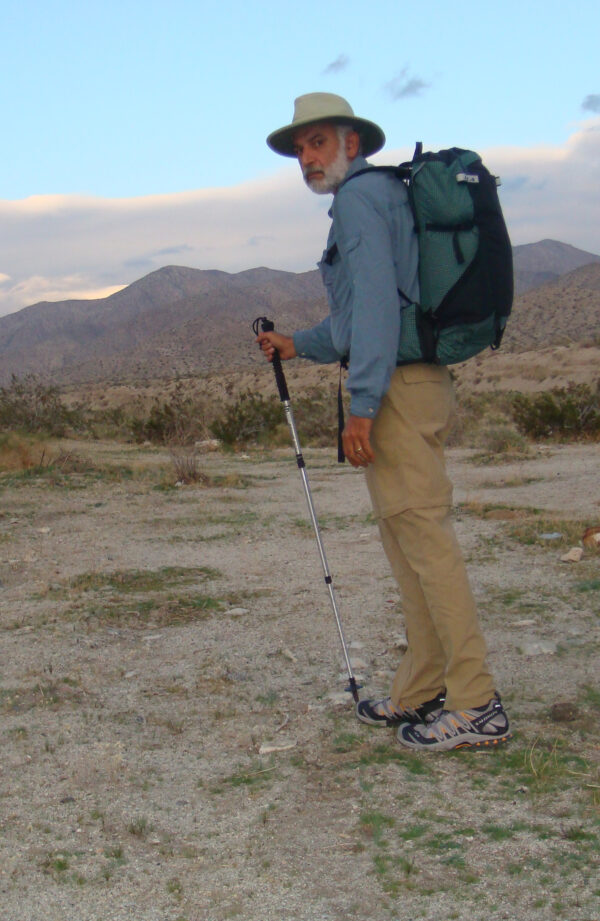
Today, although I have been using boots more often over the past five years, my Salomon XA Pro 3D Trail Running shoes are my first choice.
FUNCTION
The Salomon XA Pro 3D Trail Running shoes are the only “trail running” shoes I have ever owned, other than a couple of short-term experiences with other brands models that did not work out for me. They are known for a good mix of traction and durability.
Weight is 2 lb. for the pair, or 16 ounces each.
Overall it has been a great shoe for me. I reviewed them seven years ago.
Long Term (10 year) Product Review: Salomon XA Pro 3D Trail Running Shoes
Just in case Salomon suffers Herblock’s Law, which states, “If it’s good, they’ll stop making it.” I have a couple (maybe three) pairs in my gear closet. Thus, once I wear out the current inventory, I’ll switch to the Salomon X Ultra 3 Mid Aero Hiking Boots as my go to hiking footwear. No matter what happens in the future, my Danner Mountain Light leather boots will be able to last me for the rest of my life, assuming some disaster like our housing burning done doesn’t occur.
DURABILITY
500 miles is the average lifetime. I have owned several pair of this model over the years.
COST
Price is usually about the same as other premium name brand trail running shoes. Today the average price for my XA Pro 3D trail running shoes is $140.
Cross Country Racing Flats
I’m going to include these minimalist shoes in the choices for backpacking footwear. Not because I recommend them (I don’t for most people) but because of cons to footwear that will serve as an example if one goes too light.
Cross country (XC) flats are lightweight, minimalist racing shoes designed for running on varied terrain like dry dirt, grass, or paved paths. They are not trail running shoes.
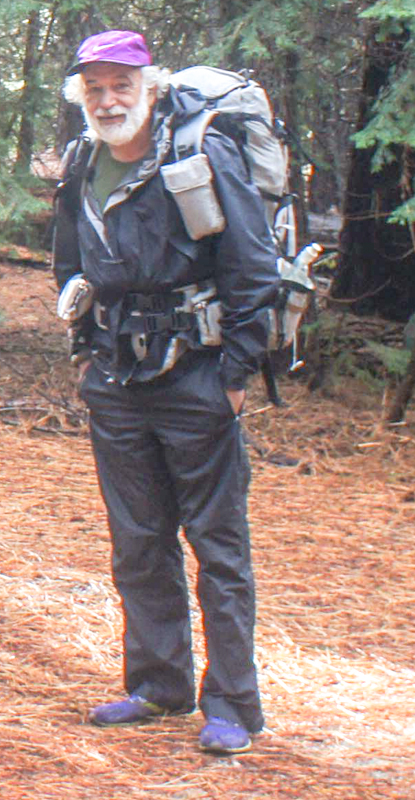
In the picture above I am wearing a pair of Mizuno Wave Universe 4 XC flats. They weigh 3.8 ounces each. This was a weekend trip with rain just about 24/7, light snow at night, and a couple very cold thigh-high river crossings.
For 10 years or so I go to backpacking shoe was the Mizuno Wave Universe 4 XC flat, and then the Wave Universe 5. These weigh under 4 ounces each!
FUNCTION
First off, you can’t just tie these on and go, unless you are in good physical condition and have acclimatized to hiking in very flat (what is called zero-drop) shoes. There is no cushioning (these lack a true mid-sole or rock plate) and therefore you are susceptible to bruising or other injuries on the bottom of your feet.
Traction is minimal, so you need to be careful on areas of loose soil, sand or pebbles.
But the shoes are light, light, light!! You feel so agile in them, akin to walking barefoot, although with a bit of bottom foot protection. Unfortunately, sometimes not enough foot protection.
In 2010 I did a 3-day, 60 mile trip with my friend Craig, wearing a pair of Saucony Shay Cross Country Racing Flats, that weighed 14.4 ounces for the pair. This was an extremely strenuous hike with steep elevation gains. On the first day, about half way to our night camp I stepped hard on something in the trail, probably a rock. By nightfall the entire ball of my foot had turned into an impact blister. I was able to complete the trip, but Day 2 was painful and very slow. You can read about it below:
This was the only serious injury I ever had in 10 years of hiking with XC racing flats, although I did loose a few spiny battles with cacti over the same timeframe.
DURABILITY
None!
I have never gotten 200 miles out of any brand of racing flats. Hiking cross country shreds the soles. On one particularly difficult trip the shoe was finished after about 80 miles. This is why I no longer use them for backpacking. It get expensive buying several pair per year.
COST
A decent name brand XC racing flat will run between $60-$120.
Other Sources
What The Classic Studies Did and What They Measured
Soule & Goldman (1969) — published in Journal of Applied Physiology
They directly measured metabolic cost (oxygen consumption) when subjects carried external loads on different body locations (head, hands, feet). They found that placing mass on the feet produced a far larger increase in metabolic cost than the same mass on the trunk/torso — this is the origin of the “pound-on-foot” rule-of-thumb.
Legg & Mahanty (1986) — published in Ergonomics
Measured energy cost of walking/backpacking in heavy boots and quantified the added metabolic cost of heavy footwear compared to lighter shoes. Their results support the conclusion that heavy boots measurably raise energy cost during loaded walking.
Browning et al (2007) — published in Medicine & Science in Sports & Exercise
Performed controlled experiments adding mass at different locations on the leg (thigh, shank, foot) and measured net metabolic rate, kinematics, and muscle activity. They showed that the more distal the added mass, the bigger the increase in metabolic cost, and identified increased leg-swing muscular demands as an important mechanism.
Modern military modeling & reviews (Natick/LCDA, Looney 2021, soldier-load reviews)
Recent work from US Army research/reviews and modeling (Load Carriage Decision Aid, soldier-load literature reviews) compiles and models how placement of mass, walking speed, terrain, and load magnitude affect metabolic rate — all reinforcing that distal mass is disproportionately costly and that simple multipliers vary with conditions. PMC+1
Numbers and Variability — What “5×” Really Means
Different experiments report different multipliers depending on walking vs running, speed, slope, and exactly where mass is attached. Reported ratios in the literature commonly range from ~4.7× up to ≈6.4× (and in some special conditions even larger). The canonical “≈5×” comes from aggregation of these findings and the original Soule & Goldman results.
Browning et al and later papers clarified that mass on the foot increases the metabolic cost mostly because it increases the moment of inertia of the limb and the muscular work required for leg swing — both of which scale with how far from the hip the mass sits. The multiplier therefore depends on stride frequency and speed. The bottom line is these multipliers are not really applicable to backpacking.
Summary
And so we have it. A rule of thumb that has been around, which no one has proven is applicable or even close to what the average backpacker will experience. I suspect, and not being a scientist can prove, that instead of 5:1 it is probably closer to something like 2:1.
The table below is a summary of the boots and trail running shoe discussed.
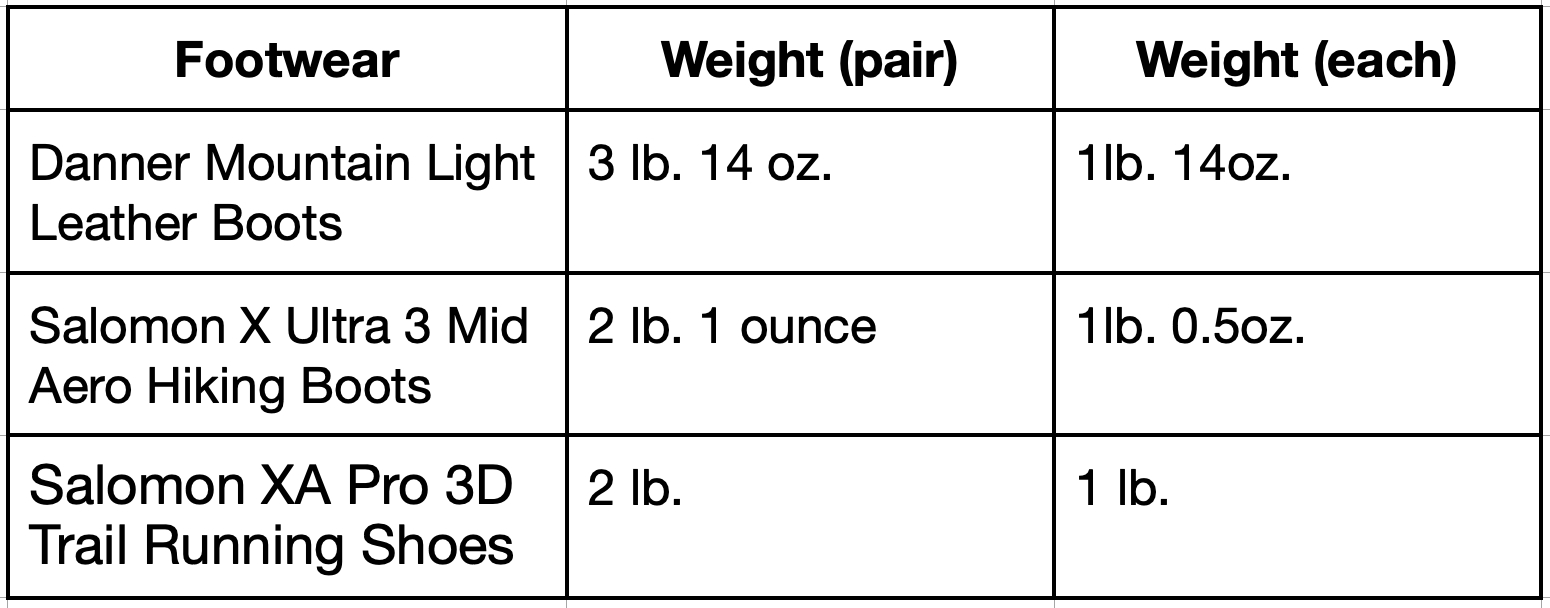
The Danner Mountain Light leather boots weight 14 ounces more than my “go to” Salomon XA Pro 3D Trail Running shoes. The Salomon boots are almost the exact same weight as the trail running shoes. And really, weight as a criteria for footwear is one of the last factor to consider. First should be fit and comfort. Then function that meets your hiking environment, then cost and durability. If you find the perfect boot or shoe for you, then it will weigh what it weighs.
It may make more sene to get into better hiking shape, lose some body weight (most of us are overweight) or par down some of the gear in your pack that isn’t necessary.