Backpacking has long been somewhat defined by its simplicity, self-reliance, and a close connection to the natural world. In recent years, however, modern technology has become deeply integrated into outdoor recreation. GPS devices, smartphones, satellite communicators, and social media have changed how people plan, experience, and remember their trips. While these tools seemingly provide benefits, perhaps we should worry that technology is negatively affecting backpacking by diminishing self-reliance, weakening the wilderness experience, increasing environmental impact, and altering the culture of backcountry travel — a culture rooted in a combination of practical skills, ethical behavior, and an appreciation for solitude and rugged beauty.
First some comments about older people not wanting to change and technology in general . . .
Am I Just an Old Person Complaining About Change?
As we age, some folks become reactionaries. Due to dwindling internal wiring of the brain, or a general pessimistic outlook of the world in general, they can no longer appreciate how things, especially our hobbies, evolve. As an aging backpacker, I’m trying to stay nonjudgmental. I never want to catch myself ranting about the inferiority of younger generations, especially since any perceived deficiencies are caused by shitty parenting. In fact, it was 10 years ago that I wrote, What We Can Learn From Our Children, when I was inspired to “cut the cord.”
Despite my best efforts, I’m having a hard time getting myself reconciled with technology in the backcountry.
Just because something is in vogue doesn’t mean everyone has to embrace it.
I am not a Technology Luddite
Actually quite the opposite. I have always embraced new technology as tools to make my life better, with an eye to increasing the amount of leisure time I can create each week, each month and each year. I have written about this often here on PopUpBackpacker
During my long career, staying abreast with technology ensured uninterrupted job security, ample leisure time, and a quality lifestyle.
Even maintaining this website takes some technical knowledge and, at times, the ability to wrote computer code.
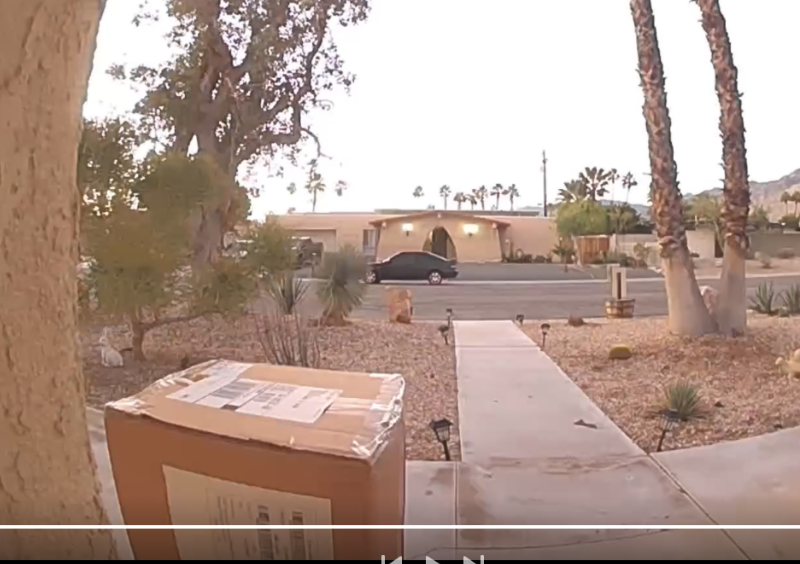
In retirement we are often gone for a month at a time. On our travels and trips I need to monitor our home, pay bills, and do other mundane chores remotely. I have completely wired our house with smart devices so I can remotely control lighting, our climate control system, monitor security, control appliances, and enjoy a rather robust home entertainment system when we are actually at home.
Part of this required replacing every single electrical outlet and switch in the house and garage, purchasing communication hubs from several competing companies, and then integrating everything into a central control application. I had to deal with bluetooth, Wi-Fi, internet, and even configure a small Raspberry Pi computer and integrate it with a Network Attached Storage server and our Apple devices.

All of this I can control by voice, phone, tablet or computer — while at home or thousands of miles away.
Now that I have established in my mind that I am not a cantankerous old reactionary, let’s proceed with the original premise . . .
The “Right Way” to Backpack
One of the great things about backpacking is just about anyone can do it, it doesn’t have to cost a lot, and each of us can do it the way we please. We do have to obey rules, regulations, and laws, plus we should be good backcountry citizens and not interfere with other people’s enjoyment of nature.
Your prime goal, while enjoying your adventure, should be to stay warm, dry and safe.
What equipment you choose to bring is up to you. If you want to take the latest technological wonders, that is fine — it is your choice. However what you bring may or may not enhance the potential enjoyment of time spent in a wild place.
How I approach backpacking works for me. Do what works for you.
The Drawbacks of Technology for Backpacking
The Erosion of Self-Reliance and the “Safety Net” Paradox
One of the most significant drawbacks of technology in backpacking is the erosion of traditional outdoor skills. Navigation apps and GPS units have largely replaced map-and-compass skills that once defined competent backcountry travelers. When hikers rely solely on electronic navigation, they may lack the ability to orient themselves if batteries fail, devices break, or signals are lost. Similarly, weather apps and online trip reports can reduce the need to read natural signs, such as cloud formations or changes in wind and temperature. This dependence can create a false sense of security and, paradoxically, increase risk when technology fails.
Technology has a big impact on how hikers think about risk. GPS and satellite messengers have made hiking more fun, but they can also make hikers feel too safe. Technology also changes the culture of backpacking by shifting expectations and attitudes toward the outdoors. Satellite communicators and emergency beacons can encourage risk-taking, as some hikers assume rescue is always just a button-press away. This mindset can reduce personal responsibility and preparedness.
The Rescue Crutch: When a rescue is perceived as being just a button-press away, hikers are more likely to take risks they are unprepared for—venturing out in poor weather or onto terrain beyond their skill level.
Skill Atrophy: Reliance on digital maps often comes at the expense of traditional navigation skills. When a battery dies or a signal drops in a deep canyon, a hiker who cannot read a topographic map is suddenly in far greater danger than their “connected” status suggested.
A Philosophical Conundrum
A last comment about a traditional outdoor skill — navigation by map and compass. Just bringing these as a backup won’t do you much good if you don’t know how to use them. Their use also implies, no requires, additional knowledge. One really needs to understand how our globe is divided into degrees of latitude and longitude, North and South; East and West respectively. One needs to understand how Earth’s magnetic field works, the difference between True North and Magnetic North, what declination is and how the drifting of Magnetic North changes yearly. Not to mention that placing a compass near a metallic source (manmade or natural) can affect a compass. All of this knowledge is needed to become expert in map and compass.
In other words, instead of knowing how to open an app; a skill often requires much knowledge. Adding many skills to one’s knowledge-base results in a well-rounded self-reliant person. Being able to press an app button while requiring some unknown force (satellite, Wi-Fi, Bluetooth, cell towers, etc.) turns us into worker bees reliant upon technology. And if the technology fails, such a the recent power outage in San Francisco that left dozens of self-driving taxis stuck and blocking intersections, what will you do? All this intertwined technology is turning us into “worker bees,” not intelligent self-reliant humans.
Robert A. Heinlein summed it up beautifully,
“A human being should be able to change a diaper, plan an invasion, butcher a hog, conn a ship, design a building, write a sonnet, balance accounts, build a wall, set a bone, comfort the dying, take orders, give orders, cooperate, act alone, solve equations, analyze a new problem, pitch manure, program a computer, cook a tasty meal, fight efficiently, die gallantly. Specialization is for insects.”
The End of “The Unknown”
Part of the magic of backpacking used to be the mystery—the “soft fascination” of discovering a hidden lake or a breathtaking vista for yourself.
Back in 2013 I wrote about finding remote places to camp. In it I shared how I find outstanding remote places for camping (and it works for backpacking too).
“Get a big-ass road atlas. A map of the entire state is preferred. Now look for large areas of land that have few roads on it. And if the road is designated “unpaved” that is a good sign!
“Now start drilling down to the large portions of vacant public land. The Internet is helpful. Your best bet are lands that are managed by the Federal Government such as the National Forest Service (NFS), National Park Service (NPS), and the Bureau of Land Management (BLM). Often you can view maps online, but it is better to contact the agency and purchase a paper map. Many maps will indicate how the land is designated for use. For example, you cannot drive in designated wilderness areas.
“Now that you have located an area you want to go, study the rules and regulations for the area. Typically, if there is a charge for a specific camping site, then there are going to be people there when you arrive — bad idea. Some areas will be designated as dispersed camping areas — that is good!
Today, social media and hiking apps have effectively “spoiled” the wilderness.
The Spoiler Effect: Through geotagged photos and detailed online guides, the sense of discovery is replaced by a checklist of “Instagrammable” spots. Backpackers often find themselves arriving at a destination they have already seen hundreds of times on a screen, turning a journey of exploration into a mere confirmation of digital data.
Digital Distraction: I read somewhere that the average thru-hiker may spend over three hours a day on their smartphone. This constant tethering prevents the “Attention Restoration” that nature typically provides. Instead of processing the sounds of the forest, the brain remains occupied by the “barking dogs” of notifications and emails.
Technology can also detract from the immersive wilderness experience that draws many people to backpacking in the first place. The constant presence of smartphones encourages multitasking—checking messages, taking photos for social media, or tracking metrics like miles and elevation gain. Instead of fully engaging with the landscape, sounds, and solitude of the backcountry, hikers may remain mentally tethered to the digital world. Notifications, music, and the urge to document every moment can interrupt reflection and mindfulness, turning a restorative experience into one that mirrors everyday life.
In the end, why worry about, how many miles did you hike?
Environmental Degradation and “Loving to Death”
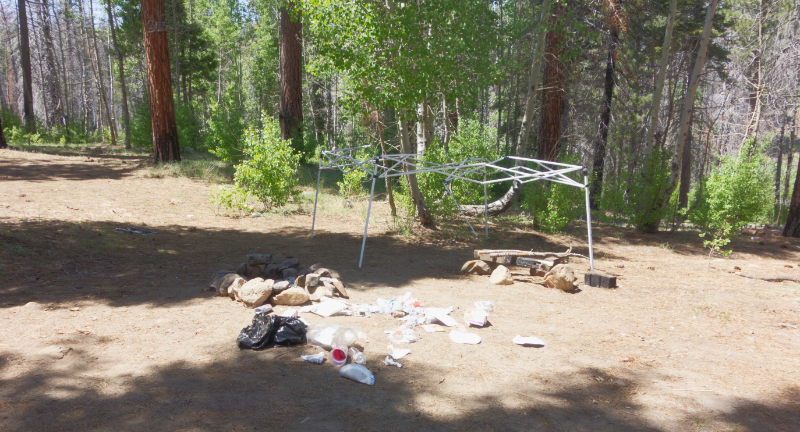
Technology doesn’t just affect the hiker; it has a physical impact on the land. The viral nature of social media creates “hiker magnets”—specific locations that go viral, leading to sudden surges in foot traffic that local ecosystems cannot handle.
There are many remote places I have hiked over the past 60 years, especially in the Sierra Nevada and some desert locales, that are no longer “remote” and are no longer pristine. Technology and the internet changed that.
Almost 10 years ago I shared how GPS tracks and online trip reports lead to a closure of one of my favorite remote spots.
These are the negative consequences the impact technology has had on wilderness environments. Social media platforms, powered by GPS tagging and location sharing, have contributed to the sudden popularity of once-remote destinations. Fragile areas can be overwhelmed by increased foot traffic, leading to trail erosion, damaged vegetation, and wildlife disturbance. Backpackers drawn by online images may arrive without adequate skills or knowledge of Leave No Trace principles, further amplifying environmental harm. In this way, technology can unintentionally accelerate overuse of sensitive landscapes.
The Social Shift: From Community to Performance
Although I mostly backpack alone, I have always been aware of a “community” on the trails and in the backcountry. Encounters with others was usually a positive experience of shared values. For those who mostly hike with others, backpacking was once a deeply social experience focused on the “here and now” of with friends and strangers alike. Technology has shifted this toward a “performance” for an audience that isn’t even there.
The Performance Trap: Hikers often prioritize capturing the perfect photo over experiencing the moment. The “story” becomes more important than the “event.”
Isolation in Company: In hostels or around campfires — places once vibrant with the exchange of stories and advice — hikers are now frequently found hunched over glowing screens, connecting with people back home rather than the fellow travelers sitting right next to them.
Several years ago I wrote an article, Wi-Fi is Coming to Your National Park! In the article I shared an experience in a campground . . .
“While I was camping in the campground that had Wi-Fi, spending a month there, there was plenty of time to observe. I know it costs money to access this Wi-Fi service, but I don’t know how much because I had better things to do with my time. For a couple of days there was a group of people near my campsite. Every day I would walk past their site on my way out of campground purgatory to a trail that led away from humanity. And each day I noticed all of them sitting around with their eyes glued to cell phone screens. The only interaction I saw between them was when someone would show the group something on their phone.
“Then I started to watch other campers. Many, if not most, seemed to have a cell phone in hand at all times. Others were sitting in their campsites playing with iPads and computers. I don’t see the purpose in camping when it is centered on technology connected gadgets. Being connected fully time to the man-made world while in campground purgatory cannot be a good thing because social media, texting, and constant cell phone conversations become a mortgage on our lives, e.g., our lives are not entirely our own because those on the other end of our Wi-Fi or cellular devices are making demands on our time.
Although it was in a campground environment, not during a backpacking trip, it demonstrates what we are allowing technology do to our humanity.
Additionally, the emphasis on sharing achievements—routes completed, peaks bagged, or gear tested—can foster a competitive atmosphere that conflicts with the cooperative and introspective traditions of backpacking.
The Fastest Known Time
Over 10 years ago I shared by thoughts on Contemplating the Fastest Known Time.
I started that post with the following:
Recently a woman hiked the entire Pacific Crest Trail (over 2,600 miles) in 61 days. The average hiker who completes this trail usually takes 6 months to do it.
Recently a couple men completed the 211 mile John Muir Trail in something like 5 days. A hike most people do in a couple weeks.
These are just two examples of the quest for the Fastest Known Time.
Over the past few years I have noticed more and more references to this phenomenon known as the “Fastest Known Time” or FKT.
Then a couple years later I posted this picture —
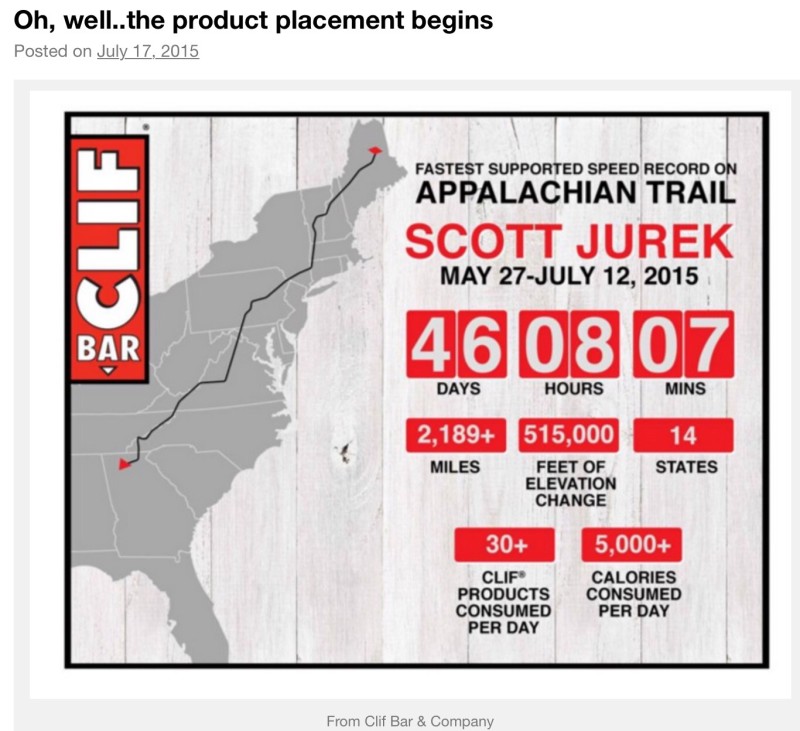
Not only did Scott Jurek set a record for hiking the Appalachian Trail, it was sponsored by CLIFF bars!! Of course Mr. Jurek celebrated this on his Facebook page.
Oh . . . and this is what Baxter State Park said about the record which ended in their parks . . .
Mr. Jurek and the corporate sponsors were careful not to mention in the media coverage that one of the unfortunate outcomes of the celebration party at Baxter Peak at the completion of the event were the three summons issued to Mr. Jurek by a Baxter Park Ranger for the drinking of alcoholic beverages in public places (BSP Rule 7 and Maine State General Law), for littering (BSP Rule 4.5) and for hiking with an oversize group (BSP Rule 2.2). In addition, media personnel were issued a summons for violation of a commercial media permit which prohibited filming within 500′ of Baxter Peak. Not much to be proud of there.
Everything Weighs Something
Finally, technology adds complexity and weight to an activity that has historically valued simplicity. Extra batteries, charging cables, solar panels, and protective cases increase pack weight and require ongoing management. Time that could be spent resting, exploring, or enjoying camp is often spent charging devices or troubleshooting technical issues. Instead of freeing backpackers, technology can become another burden to manage.
Summary
In conclusion, while technology can offer convenience and safety benefits, its overuse can negatively affect backpacking by reducing self-reliance, disrupting immersion in nature, increasing environmental pressure, and reshaping outdoor culture in less positive ways. Backpacking is most rewarding when it fosters awareness, humility, and connection to the natural world—qualities that can be diminished when technology takes center stage. A thoughtful balance, where technology supports rather than dominates the experience, is essential to preserving the true spirit of backpacking.
The Double-Edged Sword
Technology is a double-edged sword. While it can save lives in a true emergency, its constant presence dulls the very edges that make the wilderness meaningful. To preserve the spirit of backpacking, we must move toward a “digital mindfulness.” This involves treating technology as a tool for emergencies rather than a constant companion, ensuring that our packs are light—not just in weight, but in digital baggage.
Finally, here’s a link to one of my articles, Why I Don’t Take a Cell Phone Backpacking. I ended that post with this comment:
“This is why I don’t take a cell phone backpacking because it is the right way — for me. It may not be for you. But it might be something to think about.”