It is extremely important that the tongue weight of your trailer is within the specifications of the tow vehicle manufacturer and the trailer manufacturer. Almost all specifiy that the tongue weight should be between 10% — 15% of the trailer’s gross weight. In addition you should not try to tow a trailer that exceeds to the total gross weight specified by the tow vehicle manufacturer and the trailer manufacturer.
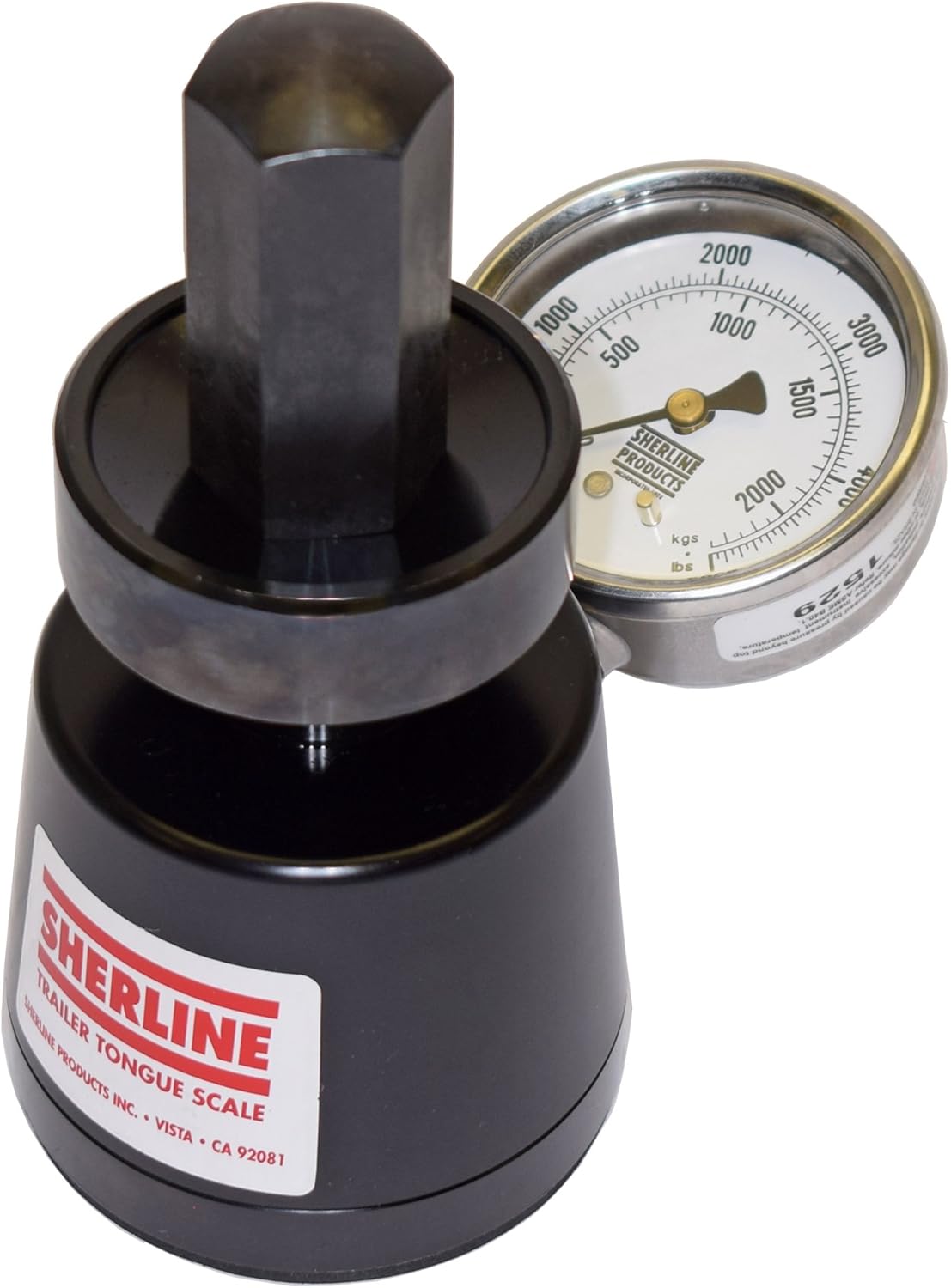
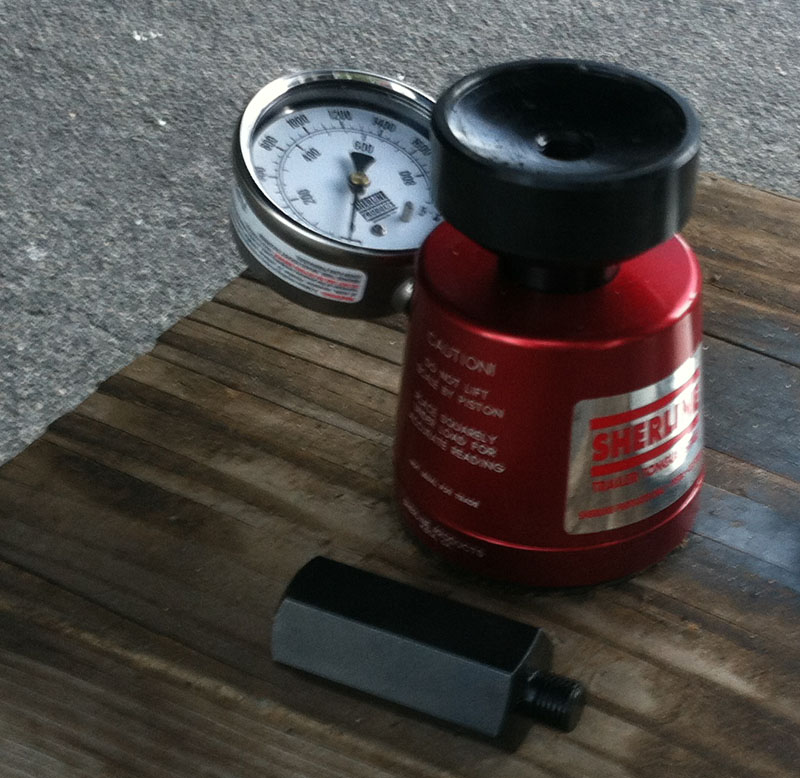
In this post I’ll discuss why you should follow the tow vehicle manufacturer’s specifications, how to use the Sherline Tongue Weight Scale and why I recommend it.
Why Tongue Weight Matters
It’s important that a travel trailer’s tongue weight (the downward force the trailer puts on the hitch) stays within the manufacturer’s specifications for several critical safety and performance reasons:
1. Towing Stability and Control
- Too little tongue weight can cause trailer sway, fishtailing, or loss of control—especially at highway speeds or in crosswinds.
- Too much tongue weight can overload the rear of the tow vehicle, making steering feel light and reducing braking effectiveness.
2. Proper Weight Distribution
- Manufacturers design trailers and tow vehicles to work within specific load ranges.
- Correct tongue weight (typically 10–15% of the trailer’s total loaded weight) helps keep weight evenly distributed across all axles.
3. Braking Performance
- Excessive tongue weight reduces traction on the front wheels of the tow vehicle, which can:
- Increase stopping distances
-
Insufficient tongue weight can cause the trailer to push the tow vehicle during braking.
4. Suspension and Hitch Integrity
- Exceeding tongue weight limits can:
- Overstress the hitch, receiver, frame, and suspension components
- Lead to premature wear or mechanical failure
- Staying within specs helps prevent damage and costly repairs.
5. Tire and Axle Safety
- Incorrect tongue weight can overload rear tires and axles on the tow vehicle or the trailer, increasing the risk of:
- Tire blowouts
- Axle or bearing failures
6. Legal and Warranty Considerations
- Towing outside manufacturer limits may:
- Void warranties
- Violate towing regulations or insurance requirements
- In the event of an accident, improper loading can increase liability.
7. Predictable Handling in Emergencies
-
Proper tongue weight ensures the trailer behaves predictably during sudden maneuvers, emergency braking, or evasive steering.
Note: The use of a Weight Distribution Hitch does not change the trailer’s tongue weight
Commercial CAT Scales
With our first two trailers I used a CAT scale at our local truck stop. This involved weighing the tow vehicle separately from the trailer, then weighing the tow vehicle and the trailer together. Almost 10 years ago I explained the steps and how to calculate the tongue weight using a truck stop CAT Scale in my post, Trailer Tongue Weight Voodoo.
When we took delivery of our Milan travel trailer in 2013, I didn’t want to deal with the truck stop CAT scale and the several steps, even though it was only 5 miles from our house. Instead I purchased a Sherline Trailer Tongue Weight Scale.
Sherline Trailer Tongue Weight Scale
Using the scale is straightforward and gives very accurate results if you set it up correctly. Here’s a step-by-step guide, plus a few practical tips for travel trailers.
Step-by-Step: Measuring Tongue Weight with a Sherline Scale
1. Park on level ground
- Park the trailer on flat, level pavement.
- Chock the trailer wheels so it cannot roll.
- Keep the trailer hitched height the same as when it’s normally towed.
This matters because tongue weight changes with trailer angle.
2. Unhitch the trailer
- Disconnect the trailer coupler from the tow vehicle.
- Raise the tongue jack just enough to clear the hitch ball.
- Move the tow vehicle forward so you have room to work.
3. Place the Sherline scale
- Put the Sherline scale directly under the coupler, centered and upright.
- You will probably need to use a solid block of wood or metal under the scale (not on top).
- The block must be flat and stable (Never stack loose items or use soft materials).
- I found that a floor jack works better for me and keeps the scale centered and vertical.
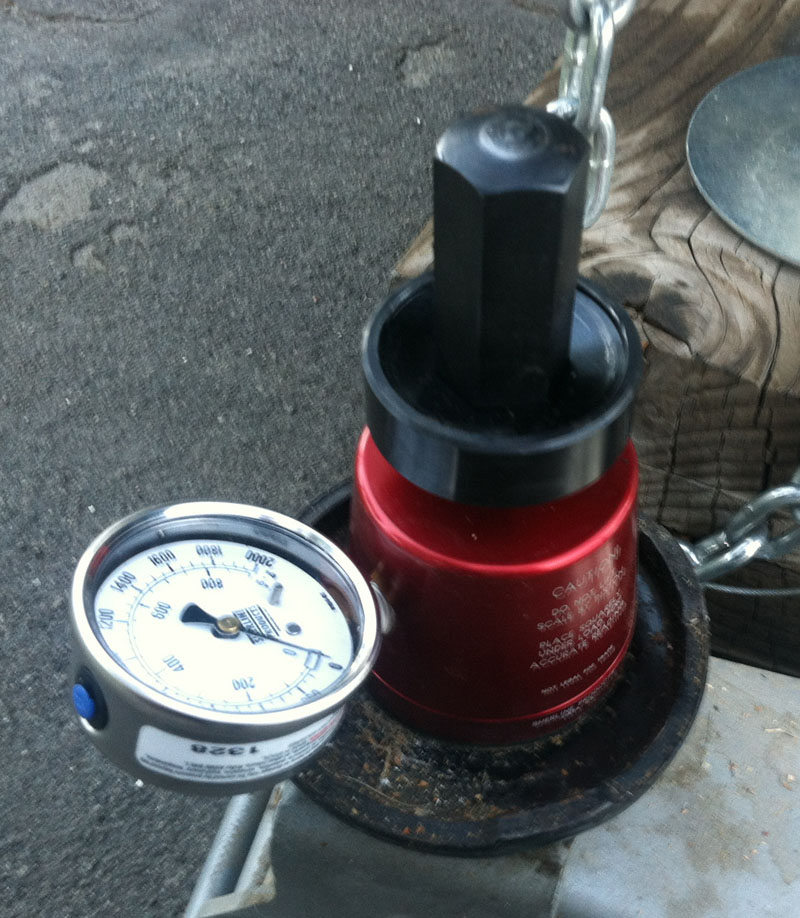
4. Lower the coupler onto the scale
- Slowly lower the tongue jack until:
- The full weight of the tongue is resting on the Sherline scale
- The tongue jack base or wheel is off the ground
- The scale should be vertical, not tilted.
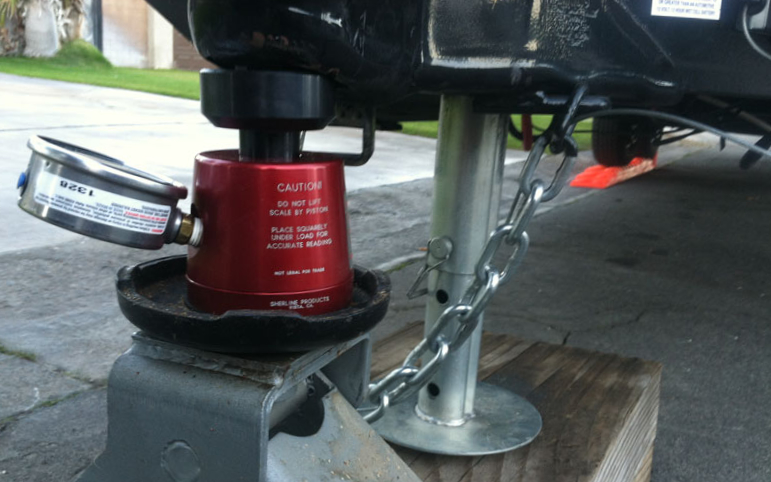
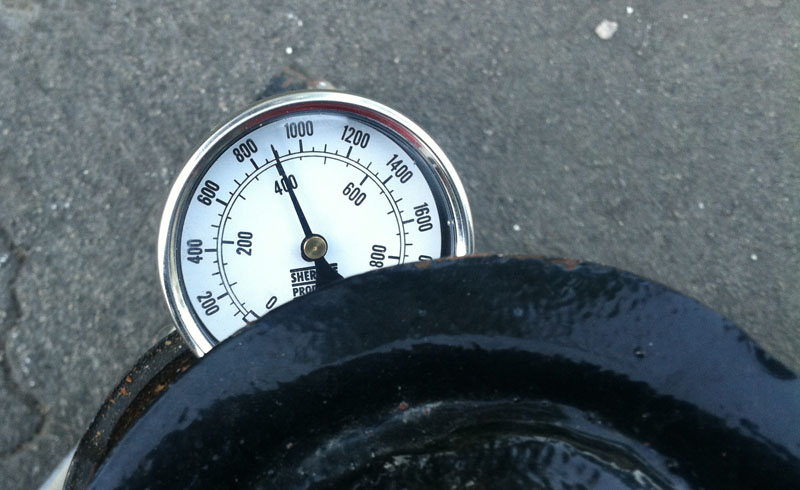
5. Read the scale
- Read the weight directly from the dial.
- That number is your actual tongue weight.
Sherline scales are mechanical, so no batteries are needed and the reading is immediate.
Important Tips for Accurate Results
Measure in “travel condition”
For a meaningful reading:
- Water tanks filled as you normally travel
- Propane tanks installed
- Batteries installed
-
Normal gear loaded
Know the target range
For travel trailers, tongue weight should typically be:
-
10–15% of the loaded trailer weight
Example:
-
6,000 lb trailer → 600–900 lb tongue weight
Staying in this range helps prevent sway and maintains proper handling.
Weight distribution hitches
- Measure tongue weight without the weight-distribution bars engaged
- The scale must see the full, raw tongue load
Common Mistakes to Avoid
- Measuring on sloped ground
- Letting the tongue jack share weight with the scale
- Measuring with the trailer empty if you tow it loaded
- Tilting the scale or placing it on uneven blocks
Which Sherline Scale?
Sherline makes three different scales:
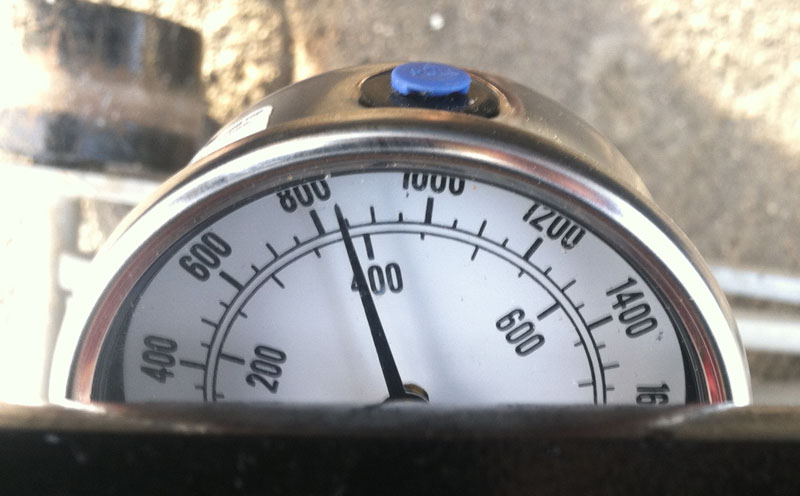
- LM-1000: The 0-1000 lb gauge reads to 460 kg
0-1000lb reads at every 100lbs and has marks at every 20lbs
0-460kg reads at every 100kg and has marks at every 20kg. - LM-2000: The 0-2000 lb gauge reads to 900 kg
0-2000lb reads at every 200lbs and has marks at every 50lbs
0-900kg reads at every 200kg and has marks at every 25kg - LM-5000: The 0-5000 lb gauge reads to 2250 kg
0-5000lb reads at every 1,000lbs and has marks at every 125lbs
0-2250 kg reads at every 500kgs and has marks at every 50kg
The LM5000 is mostly for 5th wheel trailers that usually have a higher tongue weight to gross weight ration (~ 25%) and weight more than most travel trailers.
Sherline recommends a scale where the actual tongue weight will be close to the middle of the scale. For example, I knew our final tongue would be around 900 lb. so I bought the LM200 (0-2000 lb) see below:
It’s Cheaper to go to the CAT Scale Instead of Buying a Scale
I hear this a lot. My question is, “Is it?”
At a CAT scale you will need to perform two weigh-ins. One with the trailer connected to the tow vehicle and then just the tow vehicle alone. I used to weigh the truck/trailer combo first. Then try to locate a spot to park and then unhitch the trailer.
Once unhitched, I would have to get back into the scale waiting line. Once weighed, you have to go back to your parked trailer and hitch it up. And of course after each weighing you have to go inside the building, wait in line, pay for the service and obtain the results print-out.
Sometimes my local truck stop was so busy that there wasn’t anywhere to park. So I had to go home and drop off the trailer, then go back to weigh my truck.
All of this cost time and money in fuel to get back and forth. The Sherline scale has made weighing the tongue so easy and I do it more often than I used the scales. Which brings up another question that is often asked . . .
“How often should I weigh my tongue weight?”
This isn’t an easy question, so the answer needs to be, “It depends.”
Checking the weight anytime there is a change in loading (moving things around), the addition of new equipment, unusual changes (such as towing with a full water tank when you normally tow empty), etc. Other than that, once a year might be a good idea. It really depends on each individual’s unique circumstances.
This website may be compensated for linking to other sites for sales of products. As an Amazon Associate I earn a small fee from qualifying purchases at no additional cost to the purchaser.
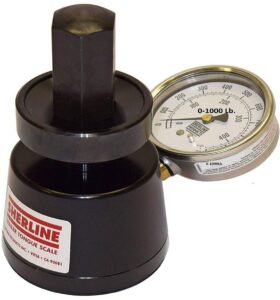
Sherline LM-1000 Trailer Tongue Weight Scale

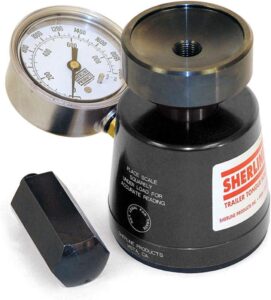
Sherline LM-2000 Trailer Tongue Weight Scale
Sherline LM-5000 Trailer Tongue Weight Scale